At a Glance
- Voice: Kate Moennig and Leisha Hailey narrate their own memoir, and the co-reading format is the audiobook's defining asset; twenty years of friendship makes the interruptions, agreements, and gentle corrections between them feel lived-in rather than staged.
- Big ideas: chosen family as primary relationship structure, the L Word's cultural impact on queer visibility, the dual lives of public queer identity
- Atmosphere: Warm and funny, with the specific intimacy of overhearing two close friends talk honestly about a shared past
- Worth it?: The co-narration by both authors makes So Gay for You an audiobook that works in ways the print edition simply cannot replicate.
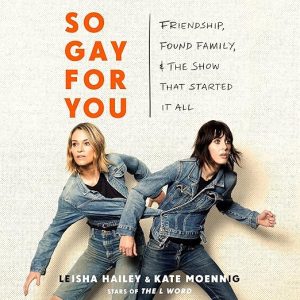
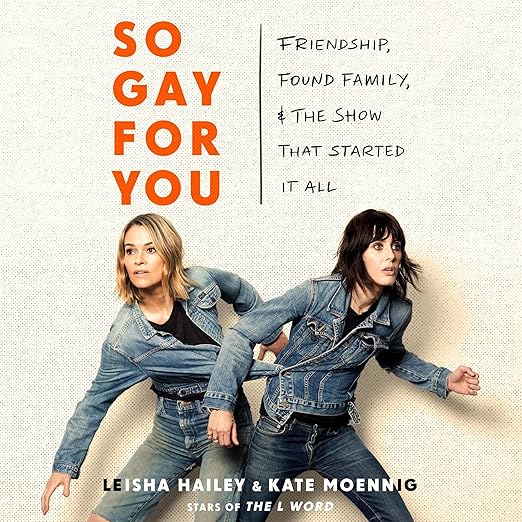
Kate Moennig opens So Gay for You with a question her manager asked at the beginning of her career: "Are you comfortable with nudity?" It is the right kind of opening for a memoir that is fundamentally about what it cost two young artists to be visibly, uncompromisingly queer on a platform that most of the entertainment industry was watching with a kind of skeptical curiosity. This audiobook, narrated by Moennig and Leisha Hailey over seven hours and forty-nine minutes, is described as an "intimate, hilarious memoir" and earns both adjectives, though the intimacy is the more surprising achievement. The two actors who played Shane and Alice on The L Word co-narrate their own lives here in a format that makes this one of the genuinely distinctive listening experiences in celebrity memoir.
Honest Critiques About the Original Show
The central argument of the book is about friendship as a structural necessity for surviving public life as queer artists in an industry that was, in the early 2000s, only beginning to understand what it had in The L Word. Moennig and Hailey write about their relationship with a specificity that resists easy sentimentality. They are not presenting an ideal friendship; they are presenting a specific, durable one that has survived real losses, professional crises, and the strange half-life of being icons for a community you are still figuring out how to represent. The sections on the show's making - what it felt like when one million people watched the premiere, how the cast navigated the industry's discomfort with an ensemble of openly queer female characters - are among the most interesting in recent entertainment memoir.
The honesty about the original show's limitations is notable. One reviewer specifically praises the authors' "honest critiques about the original show," and those passages are worth seeking out. Moennig and Hailey did not simply capitalize on the show's reputation; they also participated in its reboot, and the book's behind-the-scenes accounts include the complications of returning to something beloved and imperfect. The balance they strike between affection and critique is a skill that most celebrity memoirs do not manage. Their PANTS podcast, which has accumulated more than twenty million downloads, has given them practice at this kind of honest retrospective conversation, and the book benefits from that practiced candor.
Two Voices in Front of One Microphone
The co-narration is the reason to choose this audiobook specifically over the print edition, and it is not a minor advantage. When two people who have known each other for twenty years narrate their shared history, the texture of the relationship enters the audio in ways that a reader's eye cannot provide. There are moments where one narrative voice comments on the other's version of events, where the rhythm of their conversation makes the friendship visible rather than described. A reviewer who read the hardcover and listened simultaneously specifically recommends the combined approach "to truly feel immersed in the story" - which is an honest if somewhat unusual recommendation. The audio is the primary experience here.
Both narrators have the ease in front of a microphone that comes from significant podcast experience; the PANTS podcast provides ongoing evidence that Moennig and Hailey know how to be interesting and honest in an audio context. That experience shows. Neither narrator is performing memoir narration; they are having a conversation about their lives in front of a microphone, which is a different and more engaging thing. The bonus Q&A with fan questions at the end of the program is not essential, but it extends the listening experience with the community dimension that the book itself is partly about.
Personal and Intimate, Not Analytical
The book is primarily for L Word fans and for readers with interest in the specific cultural moment The L Word represented. A reviewer who had not seen the show before reading found the memoir entirely enjoyable, which is a useful data point - the friendship and career narrative functions independently of the show - but the richer experience almost certainly comes with familiarity with the source material. Listeners who watched the original run and the reboot will get considerably more from the behind-the-scenes material than those coming to it cold.
The scope is personal and intimate rather than analytical or historical. This is not a book about LGBTQ+ representation in television from a critical perspective; it is a book about what two specific people's lives looked like while they were making a television show and processing its aftermath. Listeners who want a broader cultural argument about queer visibility in media will need to supplement this with other sources. What Moennig and Hailey offer is texture, specific memory, and the kind of access that only self-narrators can provide. It is more honest than most and more funny than expected, which is a combination that goes a long way over seven-plus hours.
A Record of Friendship, Not a Highlight Reel
L Word fans - of both the original series and the reboot - will find this an essential companion. Listeners interested in queer entertainment history and the cultural politics of early 2000s television will get more from this book than from any number of retrospective critical pieces. Anyone drawn to the chosen-family memoir subgenre - books that center friendship as primary relationship rather than romance - will find this one of the more authentic examples available. Listeners expecting a conventional celebrity memoir organized as a career narrative may find the conversational, memory-led structure slower than expected. This is not a career highlight reel; it is a record of a friendship, and it is best listened to as such.