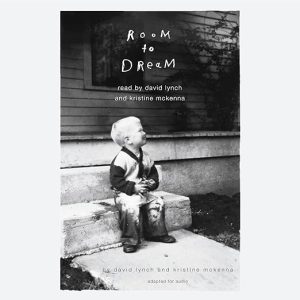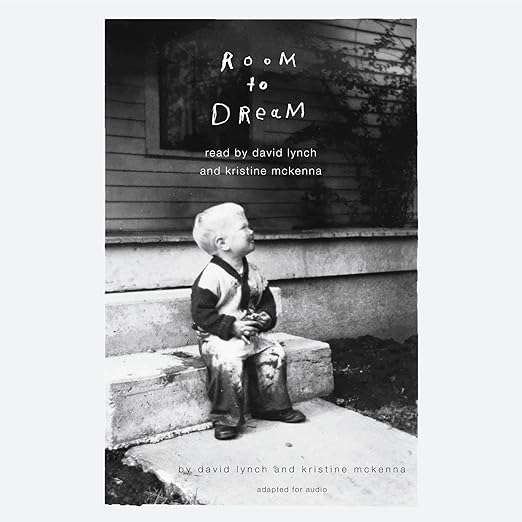
David Lynch narrates his own life in Room to Dream, and that single fact should tell you whether this audiobook is for you. The hybrid memoir and biography - Lynch's personal reflections alternating with biographical chapters by Kristine McKenna, drawn from over a hundred new interviews with colleagues, ex-wives, actors, and musicians - runs nearly sixteen hours, and Lynch adapted the material specifically for audio. This is not a studio-recorded conversion of a print book; it is a version of the story that Lynch considered in listening terms, which matters for an artist whose entire career has been built on the primacy of experience over explanation.
Two Accounts of the Same Event
The structural conceit is distinctive and it earns its complexity. McKenna writes a chapter: chronological, biographical, built from external accounts of what happened in Lynch's life. Then Lynch responds to it in his own voice - not correcting the record exactly, but layering his own memory and perception over McKenna's assembled facts. The result is a book about how a creative mind processes its own history, which is more interesting than a straightforward memoir would be. Lynch is not a reliable narrator of his own life in any conventional sense, and the format makes that unreliability a feature rather than a problem. Two accounts of the same event exist simultaneously, and the gap between them is where the most interesting material lives.
Reviewer FLAtRich, who purchased the book following Lynch's death, noted that McKenna's chapters are not ghost-written biography but something independently authored - a perspective that Lynch responds to rather than authorizes. That distinction matters enormously. The book does not smooth Lynch's contradictions into a digestible persona. His ex-wives are candid in ways that are sometimes startling. His collaborators are specific about what working with Lynch actually demanded. His own chapters are characteristically oblique and illuminating in equal measure, which is what you would expect from a person who made Blue Velvet and Twin Peaks and never entirely explained himself.
Best Friends With Lynch by the End
Lynch's voice is the primary reason this audiobook format is not just acceptable but preferable to the print version. His speaking cadence - unhurried, particular, prone to digression that eventually circles back to something that matters - is recognizable from any interview he ever gave, and applying it to the making of Eraserhead, or the production nightmare of Dune, or the long development of Twin Peaks, transforms familiar facts into something intimate. When Lynch reads his own chapter on Blue Velvet, you are not reading about Blue Velvet at a historical remove. You are in a room with the person who made it, and the difference is significant.
Reviewer TG, who was reading the book when Lynch died and continued reading after, described feeling like best friends with Lynch by the end - a reaction that the audio format specifically enables. McKenna's biographical chapters are read by a separate narrator, and the structural contrast between that external voice and Lynch's own creates exactly the dual-perspective tension the book is built around. You hear the difference between how Lynch is seen and how Lynch sees himself, and the gap between those perspectives is where Room to Dream does its most interesting work.
Impossible to Put Down at 580 Pages
The range of the biography is substantial. The book covers Lynch's childhood, his art school years, Eraserhead, The Elephant Man, Dune, Blue Velvet, Wild at Heart, Twin Peaks, Fire Walk with Me, Lost Highway, The Straight Story, Mulholland Drive, INLAND EMPIRE, and Twin Peaks: The Return. Reviewer DUNCAN L NANNEY found the 580-page print version impossible to put down despite its length - a quality the audio version preserves across its nearly sixteen hours.
McKenna's Chapters Anchor Lynch's Digressions
The book is not a making-of document in the conventional sense, and listeners expecting systematic behind-the-scenes analysis of each film will find the coverage uneven by design. Lynch's chapters follow his interests rather than a production checklist. Some projects get extended reflection; others are addressed briefly. This is consistent with how memory actually works and with Lynch's public persona as someone whose creative process resists systematic description, but it means certain films receive less sustained attention than a dedicated fan might want.
Listeners who find Lynch's associative, digressive style frustrating in interviews will have the same experience with his chapters here. The oblique quality is not affectation - it is how he actually thinks and speaks - but it demands a specific kind of patience that not every listener brings to a sixteen-hour commitment. McKenna's chapters are more conventionally structured and serve as anchors between Lynch's more atmospheric contributions.
Watch Mulholland Drive Before You Start
This audiobook is for listeners who want to understand how a genuinely unusual creative mind works from the inside, across a career that kept defying the expectations of every industry that tried to contain it. Lynch fans will find it essential, particularly with the author's own voice carrying his chapters. Listeners who are curious about Lynch but have not yet committed to his filmography should consider watching Mulholland Drive first - the book will mean considerably more with at least one major film as context. Those who want a linear, systematic career retrospective should know that this is something stranger and more interesting than that, but it requires patience with digression and with mystery that does not always resolve into explanation.
A Few Questions About Room to Dream
Does David Lynch actually narrate the audiobook version of Room to Dream himself?
Yes, Lynch reads his own chapters throughout the audiobook. Kristine McKenna's biographical chapters are read by a separate narrator. Lynch adapted the material specifically for audio presentation, so this is not simply a recorded version of the print book - it was shaped with the listening format in mind by Lynch himself.
How does the audiobook handle the book's dual-author structure between Lynch and McKenna?
The alternating chapter structure works exceptionally well in audio because Lynch's voice provides an immediate, unmistakable contrast to McKenna's biographical narration. The format makes the book's central tension - external biography versus personal memory - almost physical. Lynch's responses to McKenna's chapters, heard in his own cadence, carry a weight that reading them on the page does not fully replicate.
Does Room to Dream cover all of Lynch's major films in the audiobook?
Yes, the book covers the full arc from Eraserhead through Twin Peaks: The Return, including The Elephant Man, Dune, Blue Velvet, Wild at Heart, Lost Highway, The Straight Story, Mulholland Drive, and INLAND EMPIRE. The depth of coverage varies by project since Lynch's chapters follow his interests rather than a systematic checklist, but all the major works are addressed.
Is Room to Dream accessible to audiobook listeners who are not already familiar with Lynch's films?
The book works as an introduction to Lynch as a person and artist, but the depth of the material rewards familiarity with his work. Listeners coming in cold will follow the biographical narrative, but many of the most resonant moments depend on knowing what Mulholland Drive or Twin Peaks actually is and what it meant to the people who made it. Watching at least one major film first will significantly enrich the listening experience.