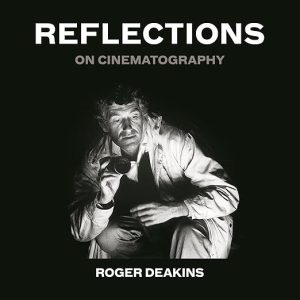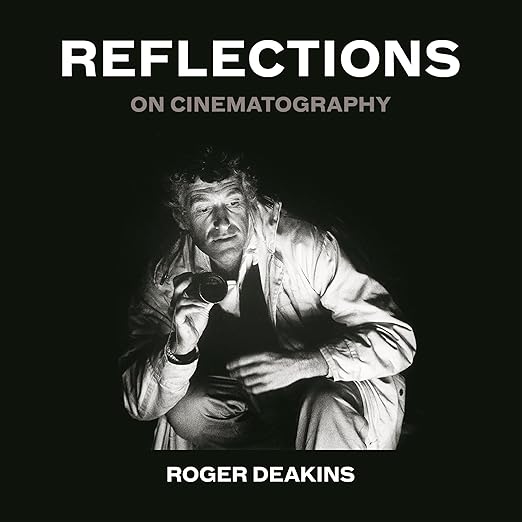
Reflections earns its place as one of the more purely enjoyable Hollywood craft audiobooks I've heard this year, and that's a higher compliment than it sounds given how many director and cinematographer memoirs turn into a list of anecdotes with no real shape. Roger Deakins narrates his own life story here, sixteen Academy Award nominations across a fifty-year career and two actual wins, and he tells it through specific films rather than strict chronology: Shawshank Redemption, Skyfall, Fargo, Blade Runner 2049, No Country for Old Men, The Big Lebowski, 1917. Eleven hours in his own voice, unhurried and genuinely curious about his own process, turns out to be exactly the right amount of time.
Self-narration is close to non-negotiable for a memoir this specific about visual craft, and Deakins earns the choice completely. He is not a trained voice performer, his cadence is conversational rather than polished, but that plainness is exactly right for a man explaining lighting, camera movement, and framing decisions he actually made rather than an actor reading someone else's account of them secondhand. When he describes shooting Herbie Hancock's "Rock It" music video or narrates the fortuitous documentary work, including a yacht race around the world, that led him into film, the specificity of memory carries the material more than any vocal technique could.
Deakins organizes the book loosely around his key collaborations, long partnerships with the Coen Brothers, Sam Mendes, and Denis Villeneuve get sustained attention, and that structure lets him go deep on craft rather than skimming a full filmography. He is candid about a genuinely difficult childhood and an unlikely path into art school before documentary filmmaking pulled him toward cinema, and hearing "the boy from Torquay, England" describe his own improbable route to Hollywood in his own unhurried voice gives the early chapters real weight rather than reading like standard rags-to-riches packaging.
One of the more unexpected threads is how Deakins actually got into filmmaking at all: not film school ambition but a demanding documentary assignment following a round-the-world sailing race, the kind of physically punishing, improvisational shoot that teaches a cinematographer to solve problems with whatever equipment and light happen to be available. He credits that documentary background directly for the practical, on-the-ground problem-solving instincts that show up later in his fiction work, and hearing him connect a small, specific early job to decades of subsequent technique is one of the more satisfying throughlines in the book.
Sixteen Nominations, Fourteen Without a Trophy
The specific pleasure of this book is hearing Deakins explain, film by film, how he actually solved a lighting or framing problem that became iconic without either of us realizing it was a problem at the time. One reviewer, glenn, describes him as "the camera wizard on many films that we've all seen" and says the book unfolds as "a series of short stories" explaining his sources and beginnings, which is exactly the right way to describe the listening experience: each chapter functions almost as a standalone case study, so a listener can dip into a favorite film's chapter without needing the full chronology.
Deakins treats cinematography as a genuine art form worth taking seriously without ever sounding pretentious about it, and one reviewer, thaumatropix, calls the book "full of practical advice and intimate recollections on a life dedicated to the first new Art of the 20th century". That phrase captures something real about the book's tone: Deakins clearly believes cinematography deserves the same critical seriousness as painting or literature, and eleven hours of him making that case through his own specific working history is more persuasive than any manifesto could be.
Deakins is candid about the long losing streak the math itself implies: sixteen nominations against two wins means fourteen nominations that didn't end in a trophy, most of them before Blade Runner 2049 finally broke through. He doesn't perform false modesty about how that stretch felt, and he doesn't pretend winning for Blade Runner 2049 and then 1917 resolved every feeling about the previous losses either. That honesty about ambition and recognition, rarely discussed this directly in a craft memoir, gives the book an emotional throughline that pure technical discussion of lighting and lenses wouldn't provide on its own.
Storyboards That Don't Survive the Switch to Audio
One format tension is worth naming clearly here: the print edition is "filled with never-before-seen storyboards, sketches, and diagrams", according to the synopsis, and none of that visual material survives the switch to audio. A book fundamentally about a visual art form, framing, light, composition, loses a real layer of its argument when the storyboards a listener cannot see are exactly the evidence Deakins is describing. Activater, one reviewer, calls it "such a great visual insight" into the work, which is true of the print or ebook edition but only partly true of the audiobook, where the insight has to survive on Deakins's description alone.
The runtime also reflects real density. Glenn's review calls the print edition "a thick book" he admits to skimming even as a fan, and the audio equivalent asks for real sustained attention across eleven hours of specific, sometimes technical filmmaking detail. Listeners without at least passing familiarity with the referenced films may find some chapters harder to picture than fans who already know the exact Shawshank hallway or the Fargo snowscape being described.
Craft memoirs from working cinematographers are rarer than director memoirs, which makes Reflections a genuinely useful entry in a thin category. Where a director's memoir tends to center story and performance, Deakins stays close to the technical and compositional choices that are usually invisible to general audiences, explaining why a shot works rather than just that it does. Listeners who gravitate toward books about the making of things, not just the finished product, will find that specificity is exactly what distinguishes this from a more general behind-the-scenes Hollywood memoir.
Deakins Rarely Gives Long-Form Interviews Like This
Film students, working cinematographers, and anyone who has ever paused a movie just to stare at how a single shot is lit will find this an unusually generous master class from someone who rarely gives long-form interviews about his own process. General film fans who loved any of the seven titles named in the synopsis will also get plenty out of it purely as an insider's tour through beloved, specific scenes, no technical background required to enjoy the anecdotes themselves.
Print loyalists chasing every storyboard and sketch mentioned in the book's description should buy a physical or digital copy instead, or alongside the audio, since Deakins's visual references genuinely need to be seen rather than just described. Listeners wanting a tidy, purely chronological life story will also find the film-by-film structure occasionally loops back in time, which suits the book's actual purpose but isn't the format everyone expects from a memoir.
Questions Listeners Ask
Does the Reflections audiobook include the storyboards and sketches mentioned in the print edition?
No. Those visual materials are exclusive to the print and ebook editions. The audiobook relies entirely on Deakins's spoken description of the visual choices those images would otherwise show.
Do I need to have seen all seven films mentioned in the synopsis before listening to this audiobook?
No, but it helps. Familiarity with films like Shawshank Redemption, Skyfall, or 1917 makes it easier to picture the specific shots Deakins describes, though the anecdotes themselves stand on their own.
Is this audiobook structured chronologically or by film?
Loosely by film and key collaboration rather than strict chronology, organized mostly around long partnerships like the Coen Brothers, Sam Mendes, and Denis Villeneuve.