Before You Press Play
- Read by: Virtual Voice's AI narration is a real but survivable limitation for this technical, jargon-light guide.
- At its heart: DSLR fundamentals, ISO and aperture and shutter speed, beginner photography technique
- Vibe: Brisk, practical, no-frills
- Short version: A tightly scoped beginner's guide that covers real fundamentals well, best paired with actual camera time.
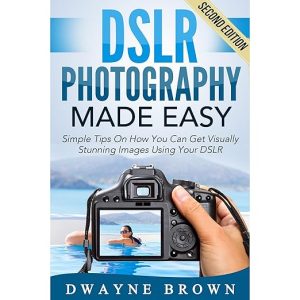
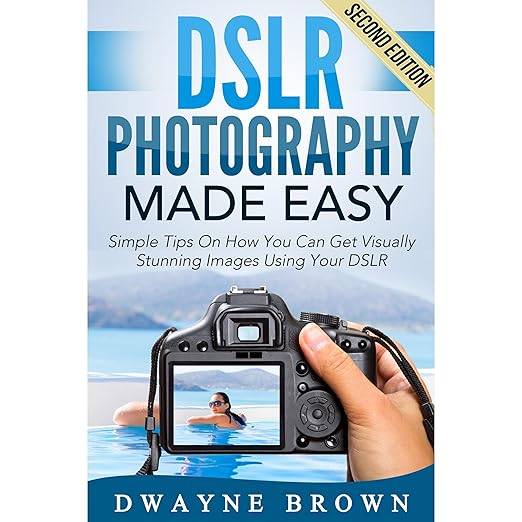
Aperture, ISO, and shutter speed make up the technical backbone of Dwayne Brown's Photography: DSLR Photography Made Easy, an audiobook built for the exact moment a new camera owner realizes automatic mode isn't actually teaching them anything. Now in what its own marketing calls a '2nd Edition,' this is a compact, plainly practical guide: how ISO, aperture, and shutter speed interact, what different apertures do to an image, and how to stop relying on a camera's guesswork. Can under three hours of listening actually replace the trial-and-error most people use to learn a DSLR? Mostly, for the fundamentals, yes.
The audiobook is narrated by Virtual Voice, Amazon's AI narration technology, which is a meaningful fact for any listener deciding whether to buy the audio edition over the ebook or print version. For character-driven storytelling, synthetic narration is a real liability; for a technical walkthrough built around discrete concepts like ISO and shutter speed, the stakes are lower, though not zero, and it's worth understanding exactly what that tradeoff looks like before committing credits to this one.
The ISO-Aperture-Shutter Triangle, Taught One at a Time
Brown organizes the book around the core technical triangle that trips up almost every new DSLR owner: ISO's relationship to grain and low light, aperture's effect on depth of field and overall image brightness, and shutter speed's control over motion and exposure. That's the right starting curriculum, the same one most serious photography courses open with, and Brown moves through it without unnecessary jargon or gear-acquisition tangents that plague a lot of amateur photography content online.
Where the book earns its 'made easy' framing is in sequencing. Rather than dumping all three concepts at once, Brown builds them one at a time and circles back to show how they interact, which matters more in audio than in print, since a listener can't flip back three pages to re-check a definition mid-chapter. The practical tips promised in the subtitle, secrets Brown attributes to working professional photographers, mostly amount to solid, unglamorous fundamentals rather than gimmicks, which is exactly what a true beginner actually needs first.
Alexandra Listened Before Her Camera Even Arrived
The self-published photography-guide category is a crowded one, and most entries succeed or fail on a single question: does the author actually clarify the fundamentals, or just restate camera-manual language in friendlier prose? Brown's material, judged by its listener reviews, lands closer to the first camp. CherylC. specifically praised the coverage of light issues, camera maintenance, F-stops, and zooming, calling the step-by-step information 'real easy to understand,' which is the exact outcome a book like this is supposed to produce.
A real practical case exists for the audio format specifically here too: reviewer Alexandra describes using the book while waiting to actually receive her own DSLR as a gift, treating it as prep material before she ever touched the camera. That's a genuinely useful way to consume this kind of content, absorbing the concepts passively before hands-on practice begins, rather than trying to read a manual and operate a new camera at the same time.
At under three hours, the audiobook also respects a beginner's actual attention span for pure theory. Photography is a hands-on skill, and no amount of listening substitutes for time spent actually shooting, so a compact runtime that gets a new owner oriented and back behind the camera quickly is arguably more useful than a sprawling, exhaustive alternative that delays the actual practice. Dan Glover's review calls it 'perfect for a beginner,' which tracks with how tightly scoped the content actually is.
Closer to a Reference Than to a Teacher
The Virtual Voice narration is the central tradeoff to weigh honestly. Synthetic narration delivers instructional content competently enough, technical terms are pronounced correctly and the pacing is even, but it cannot replicate the small vocal emphasis a human narrator would put on the single most important word in a sentence about, say, why a wide aperture blurs a background. For a book this technical and this short, that's a real but survivable limitation, closer to listening to a well-organized reference than to a warm teacher.
It's also worth being honest about scope. This is an introductory guide to DSLR fundamentals, not a comprehensive photography education, and reviewer CherylC. notes she needed a separate, more detailed book on photo editing software once she moved past the basics covered here. Treat this as the first rung of a longer ladder rather than a complete photography curriculum, and the nearly three-hour runtime makes a lot more sense as a deliberate choice rather than a limitation.
F-Stops and Zooming Suggest Real Field Experience
Self-published quick-guide photography titles like this one tend to live or die on whether the author actually shot the images being discussed, rather than repeating generic advice found in any camera manual. Brown's specific attention to F-stops and zooming technique, called out directly by more than one listener, suggests real hands-on photographic experience behind the writing rather than repackaged manufacturer copy, which is not something every book in this crowded category can claim.
The book's own marketing leans on a '50+ 5 Star Reviews' claim prominently in the synopsis, the kind of self-published credential that's worth taking with a grain of salt on its own, though the three attached reviews here back it up from three genuinely different angles, pre-purchase preparation, technical clarity, and outright beginner-friendliness, rather than one repeated talking point dressed up three ways. That kind of independent variety is a more reliable signal than the star count alone. Being now in a '2nd Edition' suggests Brown revised the material at least once based on reader feedback, a reasonable, if unverifiable, sign of ongoing attention to a niche self-published guide that could just as easily have been abandoned after a single release.
No Menu Walkthroughs, No Composition Lessons Here
Anyone who just bought, or is about to receive, their first DSLR and feels overwhelmed by manual mode is the exact listener this audiobook was built for. The core concepts translate cleanly to audio, and the short runtime means a new owner can finish it in an evening or two and start shooting with actual technical intent instead of guessing.
It also works well as commute or gym listening for anyone who wants to firm up shaky fundamentals before a trip or a big event they want to photograph well. The lack of visual diagrams is less of a problem here than it would be for composition or editing instruction, since ISO, aperture, and shutter speed are concepts that genuinely can be explained in words alone.
The format has a real ceiling here worth naming plainly: listeners hoping for camera-specific menu walkthroughs, composition and framing instruction, or post-processing guidance should look elsewhere, since none of that is really audio's strength and none of it is this book's focus. Treat it as a solid, narrow foundation, not a complete photography education, and it delivers exactly what it promises.
Before You Listen
Is the narrator of the DSLR Photography Made Easy audiobook a real person?
No. This audiobook uses Virtual Voice, Amazon's AI narration technology, which handles this technical, plainly written material more comfortably than it would character-driven fiction.
Does this audiobook cover photo editing software like Photoshop?
Only briefly. Reviewer CherylC. notes she needed a separate, more detailed resource on editing once she moved past the core DSLR fundamentals covered here.