
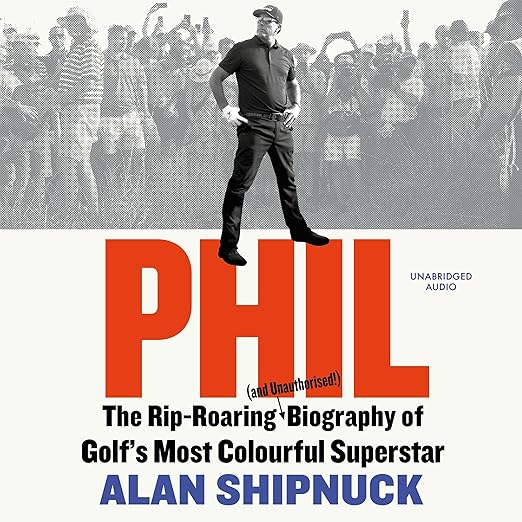
The Short Version
- Narrator: Shipnuck self-narrates with the confident directness of a print journalist, authentic and conversational, if less vocally varied than a professional narrator.
- Subjects: Athletic greatness alongside private contradiction, gambling addiction, rivalry, and the economics of professional sport.
- Tone: Candid and balanced, with the weight of decades of close observation behind every paragraph.
- Bottom line: The most complete and honest portrait of Phil Mickelson available, built on access no outside writer could have matched.
Phil Mickelson is one of the most compelling and maddening figures in professional golf, and Alan Shipnuck's unauthorized biography is exactly the book that subject deserves. This audiobook version carries a particular advantage: Shipnuck narrates it himself, and the intimacy of a reporter reading his own most controversial work gives the listening experience a texture that a hired narrator simply could not replicate. You are hearing the journalist who spent decades covering Mickelson defend and explain his own judgments, and that self-narrated honesty shapes every chapter.
A Closer Look at Phil
Shipnuck set out to write a fair book, not a favorable one or a hostile one, and the result is what serious sports biography is supposed to be: complicated. Mickelson emerges from these pages as a man of genuine contradictions that don't resolve into a lesson. He is extraordinarily dedicated to the craft of golf, a student of the game who works to an unusual standard even late in a career that would have earned most players a comfortable retirement. He is also a high-stakes gambler who cannot stop even when the losses are catastrophic. He is a devoted family man whose private life has been shadowed by rumors he has never fully addressed. He became the oldest major champion in history at the 2021 PGA Championship. He then became the face of the Saudi-backed LIV Golf breakaway, alienating much of the golf establishment in a move that Shipnuck reports was driven by a combination of financial desperation from gambling debts and a genuine grievance against the PGA Tour's treatment of its players.
The gambling material is the most revelatory section of the book. Shipnuck documents the scale of Mickelson's losses, which range into the tens of millions of dollars over a career of high-stakes sports betting, poker, and other wagering. The numbers are staggering, and Shipnuck frames them not as moral condemnation but as evidence of an addictive pattern that shaped major decisions in Mickelson's life, including his pursuit of LIV money.
The Tiger Woods counterpoint runs through the book as a structural frame. Mickelson and Woods are the two dominant figures of their era, and their contrasts are as revealing as their similarities. Woods's scandals ended with his personal life exposed and his competitive career diminished. Mickelson's career survived his own controversies partly because his personality operates differently: where Woods closed down, Mickelson charmed and deflected. Shipnuck captures this dynamic without reducing either man to a caricature.
Shipnuck narrating his own book is both its greatest asset and a small limitation. His voice is that of a confident magazine writer, conversational and direct. He reads well. But he is not a trained voice actor, and in longer passages, the lack of vocal range becomes apparent. For a book this rich in character and anecdote, a professional narrator might have found more color in the secondary figures. That said, the authenticity of the author's own voice speaking his own words outweighs what a more polished performance might have added.
What Makes Phil Worth Hearing
The access is real. Shipnuck has covered Mickelson since his amateur days, and the book reflects decades of sourcing: people who spoke on background, contemporaries who were willing to be candid after years of official silence, and Mickelson himself, who cooperated with earlier Shipnuck profiles even while refusing formal participation in the biography. The research base shows on every page.
Sports biography lives or dies on whether the subject justifies the attention, and Mickelson does. His longevity, his major championship count, his complicated relationship with fame and money, his late-career reinvention as a LIV figure: these are not small stories. Shipnuck gives each of them the space they need without inflating the lesser anecdotes.
The book won the Francis Clark Financial Planning International Sports Book of the Year, which signals something about how it was received in a serious readership. The recognition reflects a genuine achievement: a biography of a living, controversial subject that manages to be thorough without being cruel and honest without being dishonest.
Things to Know Before Starting Phil
Mickelson did not authorize this biography and has not endorsed it. Shipnuck is transparent about this, and it shapes the sourcing: much of the most interesting material comes from people around Mickelson rather than from Mickelson himself. Listeners should read the book knowing that Mickelson would contest some of what appears here, even where Shipnuck's sourcing is solid.
The LIV Golf material, which is among the most recent and most significant in the book, has continued to develop since publication. The landscape of professional golf has changed substantially, and some of Shipnuck's analysis of LIV's place in the sport reflects an earlier moment. The underlying reporting on Mickelson's motivations for joining LIV remains valuable even as the external context has evolved.
The gambling chapters are not framed as condemnation, but the scale of what Shipnuck documents is hard to absorb without some adjustment of how you see Mickelson's career decisions. Some listeners will find this section illuminating; others may find it difficult to square with the image they held of him.
Who Alan Shipnuck Is Writing For
Golf followers who have watched Mickelson's career across its full arc will get the most from this audiobook. The anecdotes from his Arizona State years, his Tour rivalry with Woods, and his five major championships read differently when placed inside the biography's full portrait. Context changes what any single moment means.
Sports biography readers who prioritize rigorous reporting over hagiography will find Shipnuck's work satisfying. This is not a book designed to make its subject look good; it's a book designed to look at its subject clearly, which is harder to accomplish and more valuable when done well.
Listeners interested in the LIV Golf controversy and what it revealed about the financial pressures and power dynamics inside professional golf will find the relevant chapters among the most detailed accounts available of how that breakaway actually happened from one key participant's perspective.
Before You Listen
Is the Phil audiobook authorized by Phil Mickelson?
No. Shipnuck's biography is unauthorized. Mickelson did not participate formally, and the sourcing relies on decades of access to people in Mickelson's orbit rather than the subject himself.
Does this audiobook cover Phil Mickelson's involvement with LIV Golf?
Yes. The LIV Golf chapters are among the most detailed in the book, covering Mickelson's role in championing the breakaway league and Shipnuck's reporting on the financial pressures that shaped that decision.
How does Alan Shipnuck perform as narrator of his own audiobook?
He reads with the natural authority of someone who knows the material deeply. The performance is more conversational than theatrical, which suits the biography's journalistic register, though a trained narrator would bring more vocal range to the secondary characters.
Do I need to follow golf closely to get value from listening to Phil?
No. The book functions as a character study of an exceptional and complicated person as much as a golf history. Non-golf followers will need minimal background on the major championships and Tour structure, but Shipnuck contextualizes what needs context.







