At a Glance
- Narration: Patrick Descamps reads with the exact gravity this text demands - his deep, measured voice matches Follett's reverence for the cathedral and carries the emotional weight of the April 2019 fire without ever slipping into melodrama.
- Themes: architectural heritage, personal creative debt, historical memory
- Mood: Mournful yet hopeful, intimate and unhurried
- Verdict: A short, sincere tribute that earns its brevity - best suited to Pillars of the Earth readers and anyone moved by the 2019 blaze.
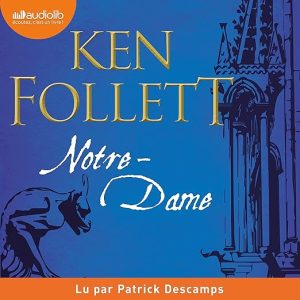
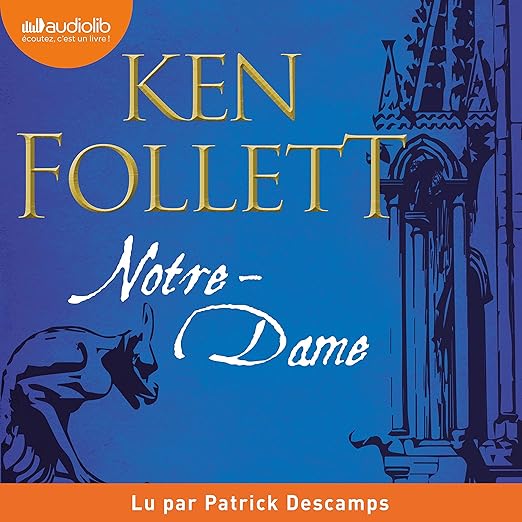
Ken Follett watched Notre-Dame burn on television in April 2019 and wrote this audiobook in something close to real time. That urgency is palpable from the first paragraph. Running just over an hour, this production - narrated by Patrick Descamps - is not a comprehensive architectural history; it is a personal reckoning with grief, admiration, and the strange debt a novelist owes to a building. Follett has been open for decades about how the medieval cathedral shaped The Pillars of the Earth, his 1989 novel about the construction of a fictional English cathedral, and that connection gives this slim essay its unusual authority. He is not simply a fan writing about a beloved landmark. He is a craftsman acknowledging his material, and that distinction determines everything about how the text reads.
Layers That Mirror the Cathedral Itself
Follett structures this piece in layers that mirror the cathedral itself: the immediate shock of the fire, then a steady descent into the history of the building's construction, and finally a meditation on what Notre-Dame has meant to French national identity across seven centuries. What keeps the essay from feeling like a Wikipedia article read aloud is the writer's willingness to stay personal. He describes the specific moment he recognized the cathedral's logic of light and shadow as a solution to a narrative problem he had been wrestling with. That passage - brief, precise, undemonstrative - is the most illuminating thing in the book about how architecture and fiction intersect. Reviewers have called this "un hymne d'amour," and that phrase is accurate without being empty. The love here is architectural and writerly, not merely sentimental, and Follett never lets it tip into piety. He acknowledges damage, restoration controversies, and the cathedral's complicated role in French politics without losing his central thread of admiration. The historical passages covering the cathedral's construction timeline are efficient rather than deep. Listeners expecting the density of detail that characterizes The Pillars of the Earth will find this deliberately lighter. At sixty-eight minutes, there is only so much ground that can be covered, and Follett makes sensible choices about what to include. The result is a summary of the cathedral's significance rather than a scholarly account, and that is exactly what the moment called for.
Descamps Also Voiced Les Piliers de la Terre
The case for the audio format rests almost entirely on Patrick Descamps, who also narrated the French edition of Les Piliers de la Terre. That casting is deliberate and it pays off. Descamps reads with the gravity of someone who has spent considerable time inside Follett's prose, and his pacing suits a text that was written quickly but demands to be absorbed slowly. There is a formal elegance to his delivery - each sentence allowed to fully land before the next begins - that prevents the essay from feeling like a transcript of an emotional reaction. The production quality is clean and unadorned, which is the right call. This is a spoken essay, not a documentary, and Descamps treats it accordingly. For listeners who encountered the French edition of Les Piliers de la Terre through his voice, hearing him return to Follett's cathedral writing will feel like a genuine reunion. For newcomers, his performance is a generous introduction to both author and building. One note: the synopsis and the production are in French. English-only listeners should verify their preferred language before purchasing, as this is a French-language release addressed primarily to the French-speaking world in the immediate aftermath of the fire.
Follett Pledged Royalties to the Reconstruction
Follett is at his sharpest when he draws specific parallels between medieval construction techniques and the demands of popular historical fiction. His observation that the cathedral's builders worked without blueprints, improvising solutions as structural problems emerged, maps surprisingly well onto his own account of how The Pillars of the Earth was written - a novel notorious for the decades it required before Follett found the right entry point. That parallel is never forced; it surfaces naturally and illuminates both subjects. Listen also for his handling of the donation announcement. Follett pledged the royalties from this text to the reconstruction fund, a fact confirmed by reviewers, and knowing that adds a layer of meaning to the essay's closing pages without changing how they read. The essay also spends meaningful time on the cathedral's relationship to French national mythology - the way Notre-Dame has functioned not merely as a religious building but as a site where French collective identity has been staged, contested, and mourned across revolutions and wars. That political dimension distinguishes Follett's account from purely architectural admiration. For a building that Victor Hugo's fiction helped save from demolition in the nineteenth century, there is a particular resonance in having a novelist serve as its mourner in the twenty-first.
A Novelist Funding His Own Mourning
Readers of The Pillars of the Earth who want to understand how that novel's architecture was shaped by this specific building will find this essay genuinely useful - not as bonus content, but as a window into Follett's creative process that the novel itself does not provide. Anyone who followed the 2019 fire and felt something they could not quite articulate will find Follett articulating it. French-speaking listeners who want a tribute in their own language from a writer with genuine ties to the cathedral's legacy will find Descamps's narration the most fitting available. Skip this if you are looking for a detailed history of Gothic cathedral construction; the essay is personal and impressionistic, and that is its purpose. At just over an hour, the commitment is minimal and the payoff, for the right listener, is real. That gesture - a novelist using the proceeds of his mourning to fund the repair of the building that made his most beloved novel possible - closes the circle of the essay in a way that feels earned.
Before You Listen
How long is the Notre-Dame audiobook by Ken Follett?
The listening time is 1 hour and 8 minutes, making it a natural single-session listen rather than a multi-day commitment.
Did Ken Follett donate proceeds from this audiobook to the Notre-Dame reconstruction?
Yes. According to reader reviews, Follett pledged the royalties from the sale of this text to the Notre-Dame de Paris restoration fund, which adds particular meaning to the listening experience.