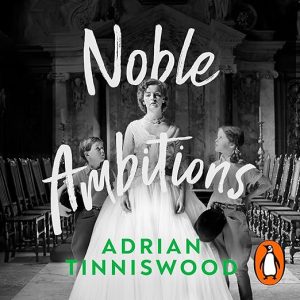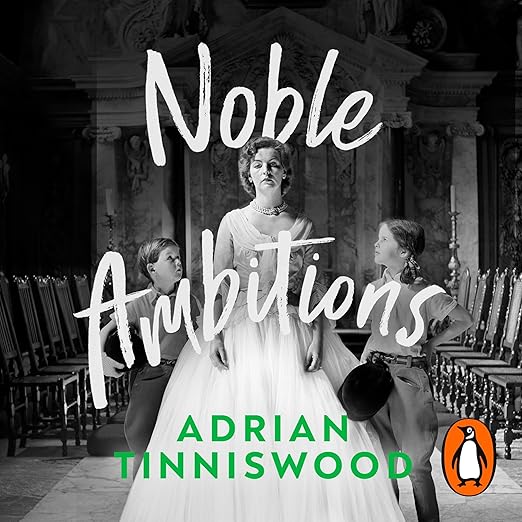
Serious social history and English country-house gossip rarely share a narrator this comfortably, and that balance is the real craft achievement of this audiobook. Adrian Tinniswood tracks Britain's stately homes from the years right after the Second World War, when rising taxes and a sense that grand estates had no place in modern Britain led to hundreds of ancestral piles being dismantled outright, through to their unlikely survival as dukes and duchesses turned tenants' balls into rock concerts and safari parks. Roger May narrates all thirteen hours and thirty-four minutes, moving from the Rolling Stones playing Longleat to Christine Keeler's scandal at Cliveden, and Tinniswood's real subject, beneath the anecdotes, is how a rakish, aristocratic Swinging London collided head-on with traditional rural values.
A Redistribution of Wealth, Not Just Nostalgia
Tinniswood frames the country house as more than a nostalgic symbol, treating it instead as a genuine lens for understanding how thoroughly Britain's social order shifted across the twentieth century. Reviewer james l carroll puts it well: the aristocratic characters populating this book aren't always likeable, but the way their lives changed and the fate of their houses still makes for a genuinely great story regardless of how sympathetic any single family comes across.
Reviewer Kelley Ridings frames the underlying mechanism plainly as a redistribution of wealth, with punishing death taxes forcing sale after sale, some estates absorbed by the National Trust for public use, others torn down entirely. That's a material, economic throughline running underneath the anecdotes, not just wistful nostalgia for lost grandeur, and it gives the book real analytical weight alongside its more entertaining celebrity material.
Longleat's Safari Park and Cliveden's Scandal
The specific case studies do a lot of the persuading. Longleat, one of the first stately homes anywhere in the world to open a drive-through safari park on its own grounds, and Cliveden, forever tied to the Profumo affair after Christine Keeler's presence there became a national scandal, both function as concrete proof of Tinniswood's larger argument, that survival meant reinvention, sometimes undignified reinvention, rather than preservation in amber.
Tinniswood's title itself carries a wink worth noting, noble ambitions doing double duty as both a literal description of aristocratic aspiration and a gently ironic comment on how threadbare some of that nobility looked by the 1960s and 1970s, families holding real titles and real financial desperation at the same time, forced into decisions their own grandparents would have found unthinkable just to keep a roof over the ballroom.
May Moves Smoothly From Tax Law to Scandal
Roger May's narration is an excellent match for material that functions simultaneously as serious social history and genuinely delicious gossip. He modulates between grave and comic registers without ever losing narrative authority, which is exactly the skill a book spanning tax law, architecture, and celebrity scandal within the same chapters actually requires.
Reviewer Amazon Customer notes the print edition comes loaded with photographs, worth naming honestly since audio can't replicate that visual record. What the audio edition gains instead is May's tonal control carrying you smoothly between chapters that swing from bureaucratic tax policy to rock-and-roll scandal without ever feeling like a jarring gear change.
The Real, Messier History Behind Downton Abbey
This is a Penguin production, which situates it squarely in mainstream popular trade history rather than academic press territory, and May's narration matches that positioning, accessible and entertaining without ever talking down to the material. For listeners who enjoy the Downton Abbey image of the English country house but want the real, messier history behind that aesthetic, this audiobook is built almost exactly for that specific curiosity.
The book's chronological range, essentially the back half of the twentieth century, means Tinniswood gets to track individual families across genuine decades of change rather than a single dramatic moment, watching the same houses cycle through crisis, reinvention, and sometimes a second crisis as tastes and economics shifted again. May's steady, controlled delivery keeps that decades-long sweep from feeling episodic, carrying threads about specific families and houses across chapters that jump forward in time without losing the listener's sense of where in the century they currently stand.
Too Many Houses to Follow While Distracted
Tinniswood's cast includes real aristocrats and celebrities across several decades, and the sheer number of family names and houses in play across thirteen and a half hours can blur together if you're listening in short, distracted bursts. This rewards a more continuous listen over a scattered one.
Given how photograph-heavy the print companion is, listeners who specifically want the visual record, before-and-after shots of demolished houses, interior photography, should know the audio edition trades that documentary evidence for Tinniswood's own descriptive prose in its place.
Amplifiers in a Great Hall, Lions on the Lawn
The postwar demolition wave itself deserves a direct mention as one of the book's quieter tragedies: hundreds of ancestral houses lost outright, not to war damage but to tax policy and changing fashion, with far less public mourning at the time than the surviving grand estates now receive in heritage tourism. Tinniswood doesn't dwell on the lost houses at length, understandably, since they left less material to work with, but their absence is worth keeping in mind as the quieter counterpart to every survival story the book does tell.
The comic set pieces earn their place alongside the more sober economic history too. A rock band setting up amplifiers inside a centuries-old great hall, or a duke discovering his ancestral grounds have become a tourist attraction complete with lions roaming the old deer park, land as genuinely funny scenes in Tinniswood's telling, not just as ironic footnotes, and May's narration finds real comic timing in these moments without ever tipping into mockery of the families living through them.
Recommended for Anglophiles Who Love Class Wit
Recommended for Anglophiles, British social history readers, and anyone who enjoys class-conscious history delivered with real wit, especially listeners drawn to stories where architecture and celebrity scandal intersect directly.
Readers of twentieth-century British political and cultural history more broadly will also find plenty here, since figures and events well beyond the aristocracy itself, rock musicians, tabloid scandals, tax policy debates, keep intersecting with the country house story throughout.
Listeners who enjoyed other narrative social histories built around a single institution under pressure, rather than a single biography, should find the format familiar and satisfying, since Tinniswood uses the country house the way other historians use a company or a neighborhood, as a fixed vantage point for watching decades of wider change unfold.
Building Design Isn't Really the Point Here
Listeners who enjoy their history with a strong authorial voice, opinions clearly attached rather than scrupulously neutral reporting, will appreciate how willing Tinniswood is to editorialize gently on which families handled decline with grace and which didn't, a stance May's narration carries comfortably without ever tipping into outright mockery of anyone involved.
This isn't the choice if you want a straightforward architectural history focused on building design rather than the social and economic drama surrounding these houses, since Tinniswood's real interest sits with the people and the politics, not the floor plans.
Before You Press Play
- Narration: Roger May modulates gracefully between grave social history and outright gossip without ever losing narrative authority.
- Themes: Postwar British aristocracy in decline, class change, the country house as cultural symbol.
- Mood: Witty, elegiac, socially sharp.
- Verdict: A genuine pleasure for Anglophiles and British social history fans, especially anyone who enjoys history with real bite.
Does this audiobook include the photographs from the print edition?
No, the audio edition relies entirely on Tinniswood's own descriptive prose in place of the print book's photographs, which one reviewer specifically praises.
Is this audiobook more about architecture or about the families who lived in these houses?
Primarily the families, the politics, and the social change around them. Architecture functions as backdrop rather than as the main technical subject.
How long is the Noble Ambitions audiobook?
Thirteen hours and thirty-four minutes, narrated throughout by Roger May.
Do I need prior knowledge of British aristocracy to follow this audiobook?
No, Tinniswood introduces each family and house as the story requires it, so no specialist background knowledge is necessary going in.