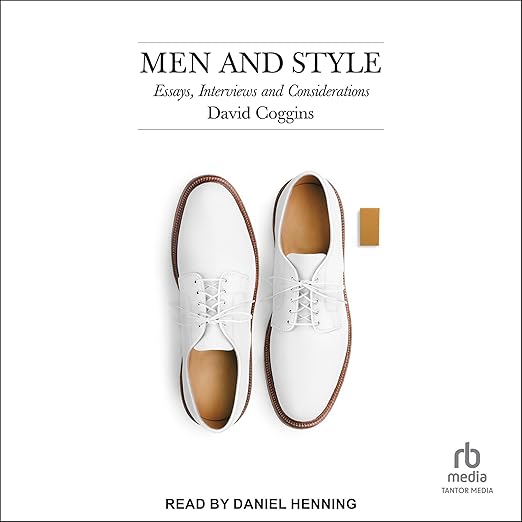
David Coggins' style guide succeeds precisely because it refuses to be a style guide in the conventional sense. This audiobook is closer to a series of conversations about masculine identity than a list of wardrobe rules, built from essays and interviews with men Coggins considers genuinely well put together, the kind of men who can discuss a bad mustache or a misguided cologne choice from decades of hard-won perspective. The New York Times bestseller status suggests plenty of readers came looking for outfit advice and found something more reflective instead: a book about how men learn from their fathers' mistakes, make their own, and eventually arrive somewhere worth having a point of view about. That reframing is the whole appeal.
Henning Re-Performs a Performance That Already Happened
Daniel Henning narrates with a register that suits this material better than a punchier, more performative delivery would. The book moves constantly between Coggins' own authorial voice and quoted interview subjects describing their own formative fashion disasters and eventual self-possession, and Henning keeps that distinction legible without turning every interviewee into a caricature. His pacing has the unhurried confidence of good conversation rather than a lecture, which matters for a book that is explicitly more interested in how men think about presentation than in prescribing exactly what to wear. It is a calm, literate performance, well matched to material that is, at its core, about earned calm and literate self-presentation.
The structure itself is part of the pleasure. Coggins interviews men across fashion, journalism, and the arts, and one listener described the result as informative, funny, and touching in roughly equal measure, a combination that is harder to pull off in audio than it sounds, since a single narrator has to sell the humor and the vulnerability in the same breath. Another reviewer called it less a catalogue of what to wear than a near-anthropological study of how today's most recognizable style icons developed their sensibilities over entire lifetimes, which is a fair description of the book's real ambition. It is watching taste get formed, not just displayed.
This particular book also benefits from audio in a way many essay collections do not. Interviews are, at their core, spoken material, conversations that happened out loud before they were transcribed onto a page, and hearing them read aloud restores something closer to their original register than silent reading does. Henning's narration effectively re-performs a performance that was already happening once, when Coggins sat across from each of these men and got them talking, which gives the audiobook a legitimate claim to being closer to the book's actual source material than the printed page is.
Serious Style Writing Used to Be Women's Territory
The specific material is genuinely entertaining even setting the bigger themes aside. Bad mustaches, misguided cologne choices, and unfortunate prom tuxedos all get their moment, recounted by men secure enough in where they have landed to laugh at where they started, and that self-deprecating honesty keeps the book from ever tipping into the kind of self-satisfied lifestyle-guide tone this genre can fall into. One listener, who noted he belongs to Coggins' father's generation, found real resonance in the generational gap the book explores, the specific lessons men learn from their fathers and the mistakes they make trying to define themselves against or apart from that inheritance. That throughline gives the book emotional stakes a typical style guide never bothers with.
A real thesis sits underneath the anecdotes, too: that the best-dressed men are not the ones following the most rules, but the ones who have absorbed enough hard-won wisdom to wear it lightly, without visible effort. That idea recurs across nearly every interview subject Coggins profiles, and hearing it echoed by multiple distinct voices, tastemakers who otherwise have little in common with one another, gives the argument more weight than if Coggins simply asserted it himself in a single introductory chapter. By the time the book closes, the throughline feels earned rather than repeated for emphasis.
Serious, reflective writing about personal style has traditionally been treated as women's territory in publishing, the domain of fashion criticism and memoir alike, while men's style writing stayed largely confined to practical buying guides. Coggins' book, and its crossover commercial success, is part of a broader shift treating masculine self-presentation as worthy of the same kind of thoughtful, essayistic treatment, rather than assuming men only want a checklist. That shift in seriousness is audible throughout the narration too: Henning never undercuts the material with irony or a wink to the listener, treating a chapter about cologne choices with the same genuine attention as a chapter about a father's influence.
Style Over Fashion, and No Numbered Wardrobe List
Anyone hunting for a numbered list of wardrobe essentials, capsule-closet formulas, or step-by-step outfit combinations should adjust expectations before starting. This is deliberately not that kind of book, and one reviewer's note that it is a book about style rather than fashion gets at the distinction precisely: Coggins is more interested in the philosophy behind good taste than in giving readers a shopping list to execute. Listeners who prefer concrete, actionable style guidance, exact brands, cuts, or seasonal rules, will likely find themselves waiting for specifics that never fully arrive, since the book's real currency is perspective and self-awareness rather than a checklist.
At seven and a half hours, the book moves through a lot of interview subjects fairly briskly, and the essay-interview structure means depth on any single tastemaker can feel limited compared to a full profile. Listeners most drawn to one particular interviewee's story may wish that section ran longer before Coggins moves on to the next voice. The pacing overall favors breadth, a wide survey of how different men across different fields arrived at their own sense of self-presentation, over a deep dive into any one figure's complete biography, which is a reasonable trade for the book's stated ambitions but worth knowing going in.
Readers From Two Generations Found the Same Resonance
Readers drawn to cultural criticism as much as style content will get the most out of this, especially anyone who enjoys personal-essay writing that uses a specific subject, in this case masculine self-presentation, as a way into bigger questions about identity and inheritance. Fans of thoughtful men's lifestyle writing more broadly, the kind that treats taste as a form of self-knowledge rather than a set of purchasable rules, are exactly who Coggins is writing for. The multigenerational appeal is real too: listeners of Coggins' own generation and listeners old enough to be his father both found genuine resonance here, according to the attached reviews.
Anyone shopping specifically for outfit formulas, brand recommendations, or a practical capsule-wardrobe guide will be better served by a more conventional style manual instead. The interview format also means individual voices get less depth than a dedicated profile would offer, so listeners hoping for one sustained biographical portrait rather than a chorus of shorter perspectives should temper expectations. And because the book leans conversational and reflective rather than instructional, anyone wanting Coggins to simply list what to buy, rather than think alongside him about why taste matters in the first place, may come away wanting a different kind of book entirely.
Is this audiobook a practical wardrobe guide, or something else?
Something else. It is built from essays and interviews about masculine identity and personal style philosophy rather than specific outfit formulas or shopping advice.
Does Daniel Henning's narration handle the interview segments differently from Coggins' own essays?
He keeps a consistent, literate register across both, distinguishing quoted interview subjects from Coggins' own voice without turning any interviewee into caricature.
Do I need to be interested in fashion specifically to enjoy this audiobook?
Not really. Listeners drawn to personal-essay writing about identity and inheritance tend to get as much out of it as listeners specifically following menswear.
How long is the Men and Style audiobook?
It runs seven hours and thirty minutes, moving briskly through essays and multiple interview subjects rather than lingering long on any single figure.