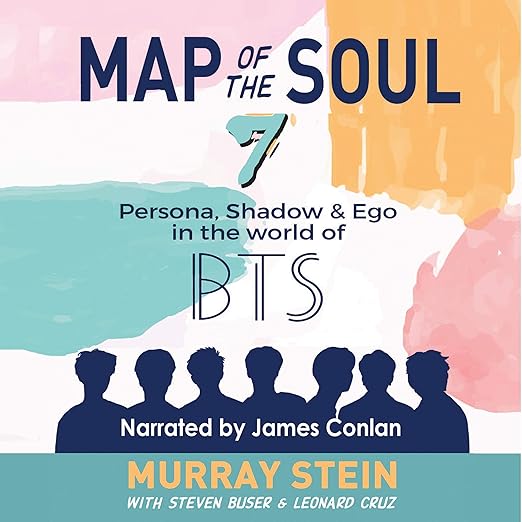
A Jungian analyst treats BTS's Map of the Soul: 7 as a text worth close reading, line by line, and that's exactly what this audiobook delivers across 3 hours and 44 minutes. Murray Stein examines the K-pop group's three-album project through Carl Jung's concepts of persona, shadow, and individuation, starting with the layered symbolism packed into the number seven itself and working outward through the album's lyrics track by track.
Black Swan as a Foretelling of the Pandemic
Reader techy2023 described the structure precisely: 'the format is more like a collection of essays than a typical chapter book,' which tracks with how Stein organizes the material, moving song by song rather than building one continuous argument. That essay structure makes the book easy to dip into around specific tracks rather than requiring a single start-to-finish sitting, a real advantage given the short runtime.
The boldest interpretive move comes late: Stein suggests the song 'Black Swan' may function as a kind of collective foretelling of the pandemic that overtook the world in early 2020, drawing a parallel to how Jung's own dreams anticipated the twentieth century's wars. This is Stein's speculative reading, not an established claim, and it's worth hearing as exactly that, an interpretive leap rather than a documented fact.
The synopsis's own tone is worth noting as a critical data point: it closes by suggesting listeners owe BTS real gratitude for their 'great service,' language pitched squarely at devoted fans rather than skeptical outside observers. That fan-forward framing carries through the book itself; this isn't a detached academic study of K-pop as cultural phenomenon so much as a genuinely admiring close reading written by someone who clearly enjoys the source material.
Stein's own background matters for how much authority the book carries: he's a practicing Jungian analyst, not a music journalist or cultural critic dabbling in psychology for a trend piece. That distinction shows in how seriously the book treats concepts like persona and shadow, working from real clinical grounding rather than a simplified pop-psychology gloss on Jung's actual ideas.
The essay-collection structure, confirmed by reviewer techy2023's description, means individual chapters can genuinely stand alone; a listener specifically curious about how 'Black Swan' connects to Jung's own wartime dreams could reasonably skip ahead to that chapter rather than working through the full album sequentially, though the book rewards sequential listening for the way its ideas build.
Conlan Balances Fandom and Academic Audience
James Conlan's narration carries genuinely dense psychological terminology, persona, shadow, ego, individuation, at a pace built for a music fandom audience rather than academic specialists. That calibration matters for a book trying to serve two different readerships at once: listeners who know Jung and want the BTS application, and listeners who know BTS and want the psychology explained clearly.
Listener vp156 credited the format directly: 'track by track lyric analysis helps me to appreciate the songs even deeper,' with 'lots of good real life takeaways for mental health and reflections.' Kenz, reviewing as a self-identified ARMY, was 'fascinated with the insights into BTS's work' and specifically drawn to learning more about 'Jung's psychology and the different aspects, especially the shadow self.'
At 4.7 stars across 242 ratings, this holds up as a genuinely consistent, well-received title for a single-album companion piece designed around fan discussion, suggesting Stein's specific combination, real psychological credentials paired with genuine fan enthusiasm, lands well with the audience it's built for.
The Number Seven Gets Extended Symbolic Treatment
The number seven itself gets extended treatment early in the book, tracing its symbolic weight across the mythological and psychological traditions Jung drew on, before Stein applies that layered meaning specifically to how the album closes out the larger three-album Map of the Soul project. That kind of patient groundwork before the pop-culture application is what separates this from a quicker, more superficial fan guide.
Kenz's review captures something genuine about the book's appeal: reflection prompted by the material itself rather than passive fan content consumption. Being pushed to think seriously about the shadow self while listening to an album you already love is a different kind of engagement than typical music journalism offers, and that's the book's real differentiator in a crowded field of BTS-adjacent content.
Almost the Same Title as the Album
This book is calibrated for listeners who already know the album well; it rewards existing familiarity with Map of the Soul: 7's tracklist rather than functioning as a cold introduction to either BTS or Jung on their own. If you haven't heard the album, some of the track-by-track analysis will land without the context that makes it resonate.
Worth clarifying directly: this audiobook does not include the actual BTS songs, it's analysis and commentary about the album, not the music itself. At under four hours, each track also gets efficient rather than exhaustive treatment, and the accompanying PDF mentioned in the listing won't reach audio-only listeners.
Because the album and the book share almost the same title, Map of the Soul: 7 versus Map of the Soul 7, double-check the listing before buying if you're searching by name; it's easy to click through expecting the original album and land on Stein's commentary instead, or the reverse, if you're specifically hunting for this analysis.
A Speculative Reframe You Get in Four Hours
Some of Stein's interpretive claims run more speculative than others, and the book doesn't always clearly flag the difference between documented artistic intent and Stein's own extended reading; listeners should bring some independent judgment to distinguish between what BTS has said about their own work and what Stein is proposing as his personal interpretation.
At under four hours, this is realistically a single commute or workout's worth of listening, which makes it an easier recommendation to make on a whim than most nonfiction audiobooks that demand a longer, multi-sitting commitment to finish; a low time investment for a potentially rewarding reframe of an album you already know well.
A Low-Risk Pick for Curious Non-Fans Too
Recommended for BTS fans, especially ARMY, who want the album's ideas unpacked with real psychological grounding rather than surface-level fan commentary. It's also a low-risk pick simply because of the short runtime; even a curious non-fan could reasonably finish this in one sitting to see whether the approach clicks.
It's also a reasonable pick for anyone generally interested in how Jungian psychology gets applied outside clinical or academic contexts; using a specific, beloved pop album as the case study makes abstract concepts like the shadow self considerably more concrete than a standard introductory psychology text would. It also functions reasonably well as a light introduction to Jungian ideas for listeners who might otherwise never pick up a straight psychology text, using genuine curiosity about a beloved album as the on-ramp.
Skip it if you have no familiarity with or interest in BTS's discography specifically, since the album's lyrics are the throughline the entire analysis depends on. Also skip it if speculative interpretive leaps, like the pandemic-foretelling reading of 'Black Swan,' aren't something you want presented as serious analysis.
A Few Questions About Map of the Soul 7
Do I need to be a BTS fan to enjoy the Map of the Soul 7 audiobook?
It helps significantly. The analysis works track by track through the album's lyrics, so listeners already familiar with Map of the Soul: 7 will get far more out of it than someone coming in cold.
Does this audiobook require background knowledge of Carl Jung's psychology?
No. Murray Stein, a practicing Jungian analyst, introduces concepts like persona, shadow, and individuation as he goes, aiming the explanations at BTS fans rather than psychology specialists.
Does the Map of the Soul 7 audiobook include the actual BTS songs?
No, this is analysis and commentary about the album, not the music itself. Listeners should plan to have the actual album available separately if they want to follow along with specific tracks.
Is Map of the Soul 7 audiobook more academic or more fan-focused?
It sits closer to fan-focused, using accessible language and a track-by-track essay structure rather than dense academic prose, while still drawing on real Jungian psychological concepts throughout.