Before You Press Play
- Voice: Lorne Buchman reads his own book, which matters here because he conducted the interviews it is built from; the interviewer and the reader are the same person.
- Big ideas: Creativity as process rather than epiphany, productive uncertainty, making as a route to self-knowledge
- Atmosphere: Measured and generative, an argument delivered at conversational pace
- Worth it?: Strong when it stays with specific creators solving specific problems, thinner when the frame widens to everyone.
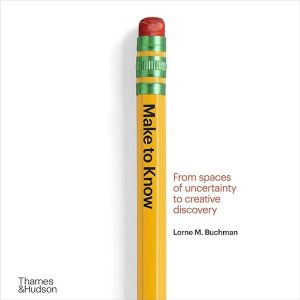
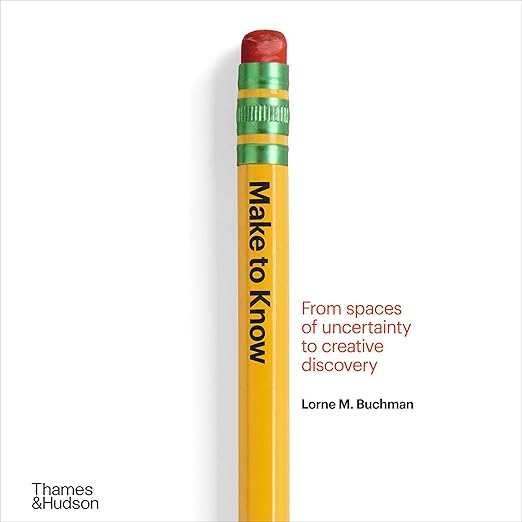
Michelangelo is said to have seen the angel in the stone and carved away until he set him free, and the description of this audiobook puts that anecdote right at its center. Most of us hear it as a story about vision: the sculptor already had the finished figure in his head. Lorne Buchman shifts the weight onto the second half of the sentence, the carving, and builds a whole book on the idea that the making is where the knowing happens.
Buchman runs ArtCenter College of Design in Pasadena, which gives him a phone book most writers on creativity would envy. Yves Béhar, Chris Kraus, Zack Snyder, Paula Scher and Frank Gehry all turn up, alongside Apple and Tesla, and the argument he draws out of them is that creative work arrives through "entertaining uncertainty and improvising new paths to knowing" rather than through a single flash of insight.
Eighteen Silent Raters, Markedly Cooler
Every one of the five reviews on this listing awards five stars. The aggregate score is 4.1 across twenty-three ratings. Do that arithmetic and something interesting falls out: the eighteen who rated it in silence gave it an average below four. Whoever they are, they were markedly cooler on it than every single reader who took the trouble to explain themselves.
The Case Studies Are Load-Bearing
Alison Shapiro pushes the book well past its stated audience, arguing that "Every human being is inherently creative and every one of us faces uncertainty" and calling disciplined discovery "a skillset the world needs very badly right now." Scott, who says life leaves him little room to read for pleasure, singles out the analysis rather than the anecdotes: "Elucidating the details of the creative process is this book's genius." J Sunny, an artist and entrepreneur, relates to the ideas without elaborating much. Ellen Hoffman reports coming away with a deeper understanding of a personal creative process, which is precisely the outcome the book sets out to produce.
Where I part company slightly is with the widening. Buchman is strongest when he stays close to a specific person solving a specific problem, and the material earns its authority from access rather than from theory. The moment the frame opens out to daydreamers and doodlers, some of that specificity leaks away. Alison Shapiro clearly found the widening the best part; my instinct is that the case studies are, and that the general principle would look thin without them holding it up. A creativity book stands or falls on whether its examples are load-bearing, and these are.
Buchman Is Both Interviewer and Reader
Buchman reads it himself, and for once that decision has a reason beyond thrift. The substance of the book is other people's testimony, gathered by the man now speaking it. He asked the questions, he chose which answers survived, and he decides where the emphasis falls when the sentence returns as speech. A hired reader would be performing an interview transcript at one remove. Here the interviewer is the reader.
A Genuine Coin Flip Either Way
Ellen Hoffman, who was holding the printed book, wrote that "I feel like the author Lorne Buchman is speaking directly to me" and signed off with "It's inspiring & a joy to read." That reaction to a page is exactly the thing an author reading his own work makes literal. Whether that effect strengthens in the reading or turns self-conscious is the single thing to sample first, because self-narration by somebody who runs a design school rather than a recording booth is a genuine coin flip either way.
Six hours and forty-three minutes is also the right size for this material. The book moves person to person, so the natural stopping points fall between one profile and the next rather than being buried inside long chains of argument. music1978 gets at why the spoken form suits it: "if you really wanted to know how it's done, you'd want to hear what the creators themselves have to say about what they do."
Available on a Kitchen Table, or Not
Access cuts both ways. A roster running from Frank Gehry to Tesla is a roster of people and organizations operating with budgets, staff and second chances that a listener working evenings does not have. Buchman's answer, filtered through Alison Shapiro, is that the underlying process is human rather than professional. I find that half convincing. The book does show how uncertainty gets navigated at the top of a profession; whether the same navigation is available on a kitchen table, with a day job attached and nobody waiting for the result, is a question it raises more than settles.
Four of Five Reviews Predate the Recording
Four of the five reviews you can read predate this recording. Alison Shapiro filed in November 2021, J Sunny in January 2022, Scott in May 2022 and Ellen Hoffman in August 2022, all of them before the audio edition appeared in December of that year. Only music1978, writing in January 2025, arrived after the recording existed. Treat the enthusiasm on this page as a verdict on the text and its interviews, earned over the year the book spent in print before anyone recorded it.
Scott flags the last thing to weigh, probably without meaning to: "The themes running throughout feel familiar, something we have all stumbled onto at one point or another, but haven't fully understood." Familiarity is a risk as well as a comfort. If you have already read widely on creative process, a good deal of the framework will feel like confirmation, and the value will sit in the interviews rather than in the thesis holding them together.
Not Knowing as a Working Condition
Designers, writers and anyone who makes things for a living are the core audience, particularly the ones stuck in the gap between having ideas and finishing anything. Teachers of creative subjects are the second obvious group, since the book is essentially an argument about pedagogy delivered by a working college president. And people who manage creative teams will find the chapters on uncertainty more useful than most management writing on the same subject, because Buchman treats not knowing as a working condition instead of a problem to be eliminated.
Pass on it if you want a technique manual, because the payoff here is a change in how you understand your own process rather than a set of steps to run on Monday. Pass too if hearing an author read his own book grates on you, since that is the entire proposition of this edition. The trade is a compact, generous survey of how working artists actually get from nothing to something, told by the person who asked them.