Quick Take
- Narration: John H. Mayer brings an accessible middle-grade voice to Greg’s entrepreneurial scheming, he captures a kid who is both genuinely clever and blissfully unaware of how he comes across.
- Themes: Childhood entrepreneurship, the ethics of money, competition versus collaboration
- Mood: Warm and gently comic, with a school-corridor energy that middle-grade listeners will recognize immediately
- Verdict: Andrew Clements at his most commercially sharp, a school story with real economic literacy embedded in its comedy.
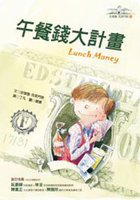
Andrew Clements built a career on school stories that take one specific premise seriously and follow it to its logical conclusion. Frindle gave a kid the power to invent a word and watched what happened. The Report Card put a secretly brilliant student in the position of deliberately underperforming. Lunch Money hands its protagonist Greg Kenton a talent for making money and asks what happens when that talent collides with the systems, expectations, and moral frameworks of a fifth-grade classroom.
I finished this one on a Sunday afternoon, which felt appropriate, it is exactly the kind of book that occupies a quiet weekend hour and sends a child back to school Monday thinking slightly differently about how things work. At just over five hours, it is a comfortable single-session listen for a motivated middle-grade reader, or a two-to-three-session experience for younger listeners sharing it with a parent.
Greg Kenton, Entrepreneur in Training
Greg is a satisfying protagonist for a reason that is not immediately obvious: he is genuinely competent at what he does. Clements does not treat Greg’s money-making instincts as a character flaw to be corrected or a superpower to be celebrated, he treats them as a talent with real ethical dimensions, the same way athletic or artistic gifts carry responsibilities. Greg has been accumulating and managing money since early childhood, and by fifth grade he has developed a fairly sophisticated sense of market opportunity.
The premise that emerges from the synopsis, every student in a school has pocket money, and what if that money could be collected together in some systematic way, captures Clements’ method of starting from a child’s actual observation about the world and following it rigorously. The school as a potential economic ecosystem is an insight that feels authentically kid-logic: large, contained, poorly monetized.
Where the Comedy Meets the Ethics
Lunch Money gets more interesting as it develops because Clements is not writing a simple cautionary tale about greed, nor a simple celebration of capitalist instinct. The ethical terrain Greg navigates, competition with a classmate who has her own creative ambitions, the question of what counts as fair exchange, the gap between adult economic values and child economic values, is genuinely rich for a middle-grade novel.
John H. Mayer’s narration suits this territory well. He handles Greg’s internal calculation, the constant awareness of opportunity and cost, without making the character sound mercenary. The comedy of Greg’s schemes lands because Mayer plays them straight rather than signaling to the audience that Greg is being ridiculous. The book trusts its readers to have their own reaction to Greg’s logic, and the narration respects that trust.
Clements’ Method and Why It Translates to Audio
Clements’ school novels work in audio because they are dialogue-rich and plot-driven without depending heavily on visual elements. The social dynamics of a fifth-grade classroom are conveyed through conversation and internal monologue rather than description, which means the listening experience captures most of what the reading experience offers. The five-hour runtime is well-paced: the story builds steadily without padding, and the resolution earns its emotional moment without reaching for sentimentality.
For families looking for audiobooks that quietly do something useful alongside the story they are telling, this one introduces economic concepts, asks questions about fairness and competition, and portrays a child being genuinely clever rather than merely likable, Lunch Money is a strong choice. It sits comfortably alongside Clements’ other school novels and would be a reasonable next listen for anyone who has already worked through Frindle or The Landry News.
Frequently Asked Questions
What age range is Lunch Money most appropriate for as an audiobook?
The novel is typically classified for ages 8 to 12, with 9 to 11 being the sweet spot. It handles economic concepts accessibly enough for younger listeners in that range while offering enough ethical complexity to engage older middle-grade readers who might otherwise consider themselves past the target audience.
Does this audiobook work as a standalone, or should listeners have read other Andrew Clements books first?
Completely standalone, Greg Kenton appears only in Lunch Money, and no knowledge of other Clements novels is required. If listeners enjoy it, Clements’ other school novels like Frindle, The Report Card, and The Janitor’s Boy explore similar themes through different premises.
How does John H. Mayer handle the balance between Greg’s inner monologue and the school story’s external action?
Mayer is a reliable middle-grade narrator who keeps the internal and external registers distinct without exaggerating either. Greg’s calculating inner voice is conveyed with enough wryness to signal character without becoming a parody of a calculating child, the comedy is understated rather than performed.
Is the financial or economic content in Lunch Money accessible for listeners with no particular interest in money?
Yes, because Clements grounds all of it in the specific social logic of fifth grade rather than abstract economic principles. The questions Greg navigates, is this fair, who benefits, what is something worth, are relatable to any child who has ever negotiated a trade or argued over allowance, regardless of whether they share Greg’s particular passion for accumulation.