The Short Version
- Narration: Chris Fabry delivers Gary Chapman's counselling material with warmth and genuine pastoral care, making the heavier case study sections feel compassionate rather than clinical.
- Themes: staying in troubled marriages, personal responsibility in relational dynamics, the intersection of faith and practical counselling
- Mood: Supportive and direct, with a clear Christian worldview throughout
- Verdict: Chapman's revised edition is a serious resource for people in genuinely difficult marriages, covering a spectrum of behaviours from emotional unavailability to abuse, and Fabry's narration treats every scenario with appropriate gravity.
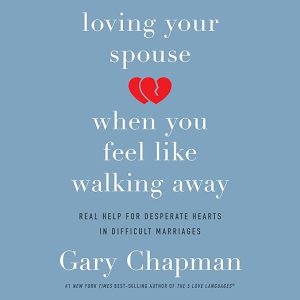
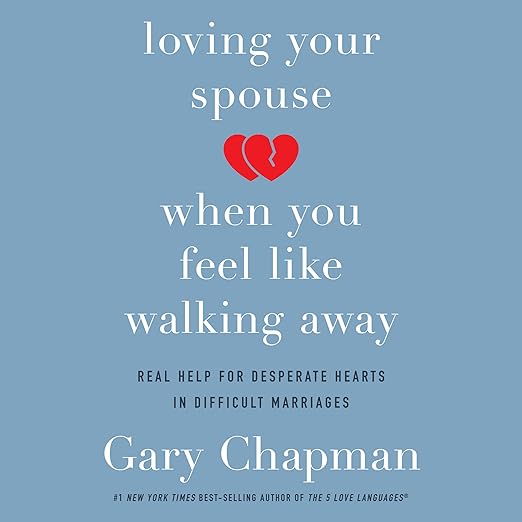
Gary Chapman is best known for The Five Love Languages, but Loving Your Spouse When You Feel Like Walking Away occupies harder territory. This audiobook, the revised and updated edition of the earlier Desperate Marriages, is not about optimising a functioning relationship. It is about what to do when a marriage feels genuinely untenable, and Chapman's counselling framework addresses that reality more directly than most relationship audiobooks that traffic in the same general space. Chris Fabry narrates across six hours and forty-seven minutes, and the voice suits the material's combination of pastoral warmth and frank practical guidance for people who are not looking for reassurance but for a concrete way forward.
Chapman's central argument is both simple and, for many listeners, counterintuitive: even in a troubled marriage, one or both partners can take steps that change the emotional climate without waiting for the other person to change first. This is not passive acceptance or advice to tolerate harmful behaviour without response. Chapman addresses a specific range of difficult spousal profiles, including the controlling partner, the workaholic, the verbally and physically abusive, the addicted, and the chronically depressed, and his guidance for each differs substantially from a one-size-fits-all self-help framework. That specificity is what makes the audiobook useful where more general relationship guidance falls short.
Where This One Lands
What distinguishes this audiobook from the generic marriage advice space is its willingness to be specific about difficult situations. Chapman does not build a single unified methodology and apply it uniformly. Instead, he works through the distinct dynamics of different kinds of troubled marriages, acknowledging that the right response to an uncommunicative spouse is very different from the right response to one who is verbally abusive. Fabry reads these distinctions with care, and his narration of the more difficult case studies, particularly those involving abuse and addiction, maintains a tone that is compassionate toward both the struggling listener and the genuine complexity of the situations being described.
The Christian worldview running through the book is present throughout but not overwhelming to the point of inaccessibility. Chapman is a marriage and family counsellor with theological commitments, and those commitments shape his framing of marriage as a covenant and his belief in the possibility of genuine transformation. Listeners who share that worldview will find the book deeply compatible with their values. Listeners from secular backgrounds may find some of the framing less resonant, though the practical counselling advice is largely separable from its theological context and remains useful regardless of the listener's religious orientation.
The Best Parts of Loving Your Spouse When You Feel Like Walking Away
Fabry is an experienced narrator and author in the Christian content space, and his familiarity with this kind of material shows throughout the audiobook. He does not read the book as a self-help performance. The delivery is quiet and attentive, which is appropriate for content that many listeners will be encountering during genuinely painful periods in their marriages. One listener described using it to reflect on nearly eighteen years of toxic patterns in their own relationship, and another described it as the book they wished they had had during a period of near-separation that ultimately led to reconciliation. The weight of those experiences shapes the kind of listening this audiobook receives.
The six-hour-and-forty-seven-minute runtime works well for a book of this kind. It is long enough to be thorough across the range of difficult marriage scenarios Chapman addresses but short enough to be completed in a focused week of listening. The chapter structure means listeners can return to the sections most relevant to their situation without needing to re-listen to the entire audiobook, which is a practical consideration for content that many people will process in stages rather than all at once.
The revised and updated edition adds material to the original Desperate Marriages text, and the revisions make the book feel current rather than dated. Chapman's core counselling methodology has not changed substantially, but the updated framing and new case material bring the examples closer to contemporary relational dynamics and the kinds of situations couples are more likely to recognise from their own experience.
What Gives Us Pause
Chapman writes from a conviction that marriages can be repaired, and this audiobook is aimed at people who want to try before giving up. This means it does not spend significant time on the decision to leave a marriage, and it is not designed as a guide for people who have already made that choice. Listeners in situations involving serious ongoing abuse should be aware that Chapman's framework emphasises personal agency and the possibility of positive change, which is valuable but should be situated within safety planning advice from a counsellor or professional resource working directly with their situation.
Some chapters will be more directly applicable than others depending on the specific circumstances of any given listener's marriage. One reviewer noted that not every chapter is relevant to every marriage but found the overall approach useful even where specific examples did not precisely match their circumstances. This is a fair summary of how the book functions: it is more useful as a framework and a source of language for difficult dynamics than as a precise prescription for a specific situation.
The Right Listener for Loving Your Spouse When You Feel Like Walking Away
This audiobook is best suited to listeners in troubled but not irreparably broken marriages who share or are genuinely open to a broadly Christian relational framework. It will also be useful to people who have been through difficult marriages and want retrospective insight into the dynamics they experienced, and to counsellors or pastoral care workers looking for a resource to recommend to couples in crisis. Listeners seeking secular, therapy-based relational frameworks will find Chapman's perspective compatible in its practical dimensions but different in its foundational assumptions. Those in marriages involving ongoing serious abuse should treat this as one resource among several and prioritise direct professional support alongside any self-help material.