Key Details
- Narration: Marshall reads his own memoir, putting the person who lived it and the person telling it in one chair.
- Themes: A diagnosis withheld since birth, two closets, family illness, comedy as survival, growing up gay in Utah
- Mood: Warm, quick, unexpectedly funny about terrible things
- Verdict: A disability memoir that is genuinely funny, if you can take the swerves between registers.
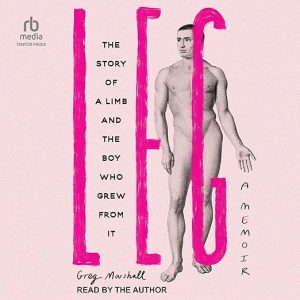
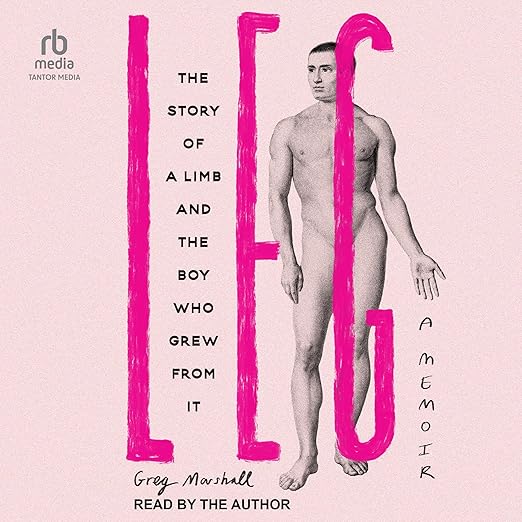
Two closets, one leg, and a Utah family loud enough to fill a gym: this audiobook runs all three at once, with Greg Marshall reading it himself. Tantor Audio released it in June 2023, just under ten hours long, with Marshall credited as both author and narrator. The premise is that he spent his childhood limping, was told his tendons were simply tight, and found out only in adulthood that his parents had known since his birth that he has cerebral palsy. Everything funny in the book grows out of that.
Behind the Microphone, Entitled to the Jokes
Marshall's memoir sits on this page under a single word. Somebody awarding five stars in July 2023 quotes it properly as Leg: The Story of a Limb and the Boy Who Grew from It, which is the version that tells a buyer what the book contains. The same reader reaches for a fairground comparison and rejects the obvious one: not a rollercoaster, a tilt-a-whirl, gleeful squeals mixed with gravity-defying twists, plus a warning that the involuntary laugh-snorts come out loud enough to draw looks in a public park.
Cerebral palsy anchors the book without being the whole of its subject. A four-star response posted on the release date itself lists the range as family, sexuality, disability and, in that reader's phrase, so much more. Marshall grew up in Utah as a gay kid, walked with a limp that everyone explained away as tight tendons, and learned what had been withheld only much later. His mother wrote a newspaper column between chemotherapy sessions. His father was losing ground to ALS at the same time.
Tantor Audio put the memoirist behind the microphone himself, which is one of the three ways an author-narration credit can go. This is not a celebrity reading a ghostwritten script, and it is not a professional smoothing over a rough manuscript. It is the person whose family this is, reading his own sentences about his mother's chemotherapy and his father's diagnosis. Whatever else the arrangement does, it settles any question of who is entitled to make the jokes. Nobody else appears in the credits at all, which on a memoir this personal reads as the correct decision rather than a cost-saving one.
Dry Humor Feels Like a Close Friend
Comedy is why this memoir works where a straighter version would collapse. The raw material is punishing: a diagnosis withheld for decades, two parents seriously ill at once, a body that refuses to do what a high school stage requires. Marshall keeps reaching for the ridiculous detail instead of the noble one, the home video footage, the crush on half the Utah Jazz, the siblings swearing at each other across a kitchen, which leaves a book you can stay inside without needing rescue.
Dry humor is what the second four-star entry, dated July 2023, singles out, and its phrasing is worth quoting: the author's dry humor, that reader writes, made the whole story an enjoyable one to listen to. The same response describes the sensation as sitting with a close friend, and calls the book everything a memoir should be, interesting and well told, with slices of life that tie into a greater narrative rather than floating loose.
Family is the actual subject, and Marshall draws his without flattery or softening. A mother clacking at her column between appointments, a father losing ground to ALS, a cast of foulmouthed siblings, and a household that handled catastrophe by talking over the top of it. The disability material would be affecting on its own. What makes it land is that Marshall is one voice in a loud room rather than the sole object of everyone's attention, which is unusual for a memoir built around a body.
A Half-Attentive Listener Can Mislay Ten Years
Tonal range is the thing to test before committing. This book moves from a laugh-out-loud anecdote to a parent's terminal diagnosis inside a single chapter, occasionally inside a single paragraph, and by ear you never see the turn coming the way a page break quietly warns you. Anyone who prefers grief and comedy in separate containers will find those transitions abrasive, and the most abrasive ones arrive with no runway at all.
Disability listeners hoping for a clinical or political account should know this is not that book. The cerebral palsy diagnosis works as a family secret and a personal reckoning rather than as a topic with research attached, and Marshall writes about his own body instead of a condition. That is a legitimate choice and a narrowing one, and the People with Disabilities tag attached to this release promises something broader than what arrives.
Chronology moves the way home video does, rewinding and fast-forwarding across a childhood, and the description leans on that conceit openly. On paper you can glance up and re-anchor yourself in a decade. By ear, the jumps between the lopsided teenager crossing a school stage, the wheelchair after leg surgeries and the settled adult take a beat longer to place, and a half-attentive listener can mislay ten years without noticing it happen. The upside is that no individual jump matters much, since each anecdote carries its own frame.
Ten Hours in a Loud Family's Company
Memoir skeptics turn out to be the surprise audience. One September 2023 reader, five stars, opens by admitting that memoirs are not a habitual choice, then explains the conversion: the form drags a reader out of their own echo chamber and into a life they could not otherwise imagine. That reader grew up near the same Salt Lake City neighborhood and still describes Marshall's reality as nothing like their own, which is a fair account of what this book does to people who assumed they had the local geography covered.
Comic memoir regulars have the strongest case for buying. The September 2025 entry calls it one of their favorite memoirs ever, describes not wanting to put it down while simultaneously wanting to savor every word, and pins the register accurately as poignant, heart-warming and laugh out loud funny. Anyone who enjoys a family disaster told at speed, without self-pity and without a redemption arc bolted onto the end, will recognize the appeal fast.
Steady emotional weather is not on offer, so anybody who needs it should look elsewhere, as should anyone hoping for a straightforward disability narrative that resolves into tidy acceptance. Everyone else gets a writer being funny about things nobody is supposed to be funny about, reading his own sentences aloud. Ten hours in that family's company passes faster than the running time suggests.
What does the 4.4 average on this audiobook actually cover?
Ratings pooled across formats and every buyer since 2023. Only five written responses sit beneath the number, and their scores add up to a visible mean of 4.6, comfortably above the headline. Something in the silent majority is pulling it down, and no part of this page shows you what.
Does the audiobook suit short sessions or one long listen?
Short sessions work well. The book is assembled from discrete anecdotes stitched onto a loose chronology, so pausing between them costs almost nothing, and the emotional swings land better with a gap. The only risk is that the time jumps get harder to place when you return after several days away.