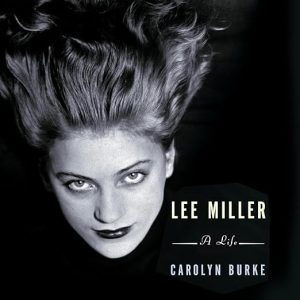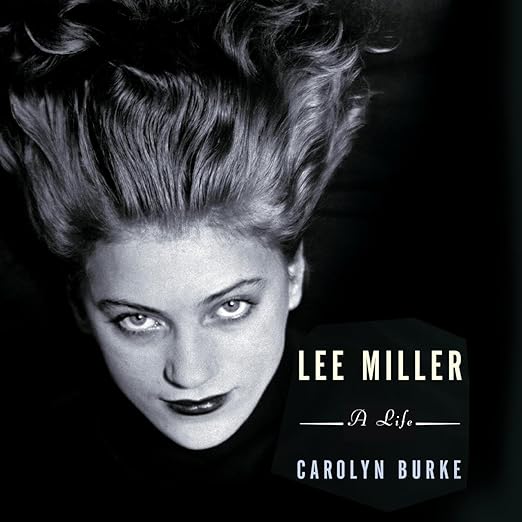
A former Vogue cover model climbing out of Adolf Hitler's own bathtub, hours after his suicide, is the image that opens most conversations about Lee Miller, and I kept coming back to it during a week of long evening walks with this audiobook running in my ears. Carolyn Burke's biography does not save that photograph for a late dramatic reveal. It treats the bathtub scene as one data point inside a life built almost entirely out of reinvention: Vogue's favorite model in Paris and New York, Man Ray's lover and creative collaborator, then one of the first women to work as a war correspondent, photographing a devastated Europe and walking into Dachau alongside Allied troops. Ann Richardson narrates all eighteen hours and forty-eight minutes of it, and the first thing I noticed was how unglamorous Burke's own prose stays about a woman who spent two decades surrounded by literal glamour.
A Bonus PDF of Miller's Own Dinner Recipes
Burke's real subject is the sheer number of Miller's transformations, model and photographer, muse and reporter, sexual adventurer and mother, and, late in life, a gourmet cook so devoted to the craft that this audiobook program comes with a downloadable PDF of her own dinner party recipes. The biography treats each of these identities as genuine rather than as a costume Miller put on and discarded, which is part of what makes the book feel honest rather than tidy. Burke places Miller inside a specific, glamorous circle, close to Edward Steichen, Charlie Chaplin, Jean Cocteau, and Pablo Picasso, without letting that name-dropping overwhelm the more difficult material underneath it.
That difficult material is the book's real spine. Burke traces Miller's troubled personal life honestly, from unsettling childhood photo sessions through her pivotal affair with Man Ray to a string of unconventional marriages, and reads Miller's own photographic eye, her sense of form, pattern, and light, as something forged directly out of what she survived rather than despite it. The synopsis calls this a journey from object to subject, and that framing holds up across the full listen: a woman who spent her twenties being looked at learns, deliberately, how to look back.
Burke also refuses to let the postwar chapters read as an afterthought, which is where a lesser biography would rush toward the finish. Miller's late-life turn toward gourmet cooking gets treated as a genuine, serious transformation rather than a quirky footnote after the drama of the war years, consistent with the synopsis's own insistence that this was simply the last in a long line of dramatic reinventions rather than a retreat from public life. That choice to keep taking Miller seriously even once she's out of the spotlight is part of what separates Burke's approach from a more conventional celebrity-adjacent biography.
Richardson Carries 'Amazing Woman, Amazing Story' Across Decades
What makes this worth the eighteen-hour commitment is the sheer range of one actual life. You get Jazz Age Paris and Surrealist art history in the same book as hard World War II reporting, the same woman photographing avant-garde nudes in one decade and the ruins of a concentration camp in the next. Few biographies earn a swing that wide without feeling like two different books stapled together, and Burke's throughline, Miller's own evolving eye, keeps both halves connected rather than merely adjacent.
Ann Richardson has to carry that same swing vocally, moving between bombshell-era glamour and hardened wartime reportage without either register undercutting the other, and the long runtime works in the book's favor here rather than against it. A shorter treatment would have to pick a lane, war correspondent or muse, tragedy or triumph. At eighteen hours and forty-eight minutes, Burke gets to hold the contradictions together the way an actual complicated life holds them together, which is the whole point of the book's own framing of Miller as sleek bombshell, war photographer, and later cook all at once.
Reviewer woodstock sums up the appeal in four words, 'amazing woman, amazing story,' and that plainness carries real weight. Miller's life doesn't need embellishment to justify a nineteen-hour listen; the documented facts alone, Vogue model to Surrealist collaborator to one of the first women photographing a liberated Dachau, already read like fiction. Burke's job, and by extension Richardson's, is mostly to get out of the way of material this inherently dramatic while still supplying the connective analysis that keeps a listener oriented across decades and continents.
It helps to place Miller inside the small, specific group of women who reported from the European theater with a camera at all, a category that also includes photographers such as Margaret Bourke-White, since so few women had that kind of institutional access to the front lines in the 1940s. Burke doesn't lean on that comparison heavily, Miller's own path through fashion photography into war reporting is unusual enough on its own terms, but knowing the wider context helps explain how genuinely unlikely her trajectory was: a career that began with being photographed for magazine covers and ended with her holding the camera at Dachau. That inversion, from the most-photographed woman in a room to the person deciding what the world would see of a liberated Europe, is the real engine running underneath Burke's book, worth keeping in mind through every earlier chapter about Miller's modeling years.
A Reviewer Wished Burke Had Chased Prosecution
One reviewer, who otherwise rated the book highly, admitted to bogging down in the first half and specifically wished Burke had addressed whether the man responsible for the child abuse Miller suffered ever faced prosecution. That gap is real and worth knowing about before you commit: Burke documents the harm plainly but doesn't chase a legal resolution that may simply not exist in the historical record. The same reviewer found Miller's sexually liberated Paris years, presented as a precursor to 1960s freedom decades early, less compelling than the war reporting that follows, a pacing complaint worth taking seriously if you're listening for momentum rather than portraiture.
Because this is a serious literary biography rather than a breezy celebrity profile, don't expect Burke to soften the harder passages for comfort. Child abuse, wartime atrocity, and a genuinely unconventional sex life all get direct treatment rather than euphemism, which is exactly what a subject this complicated deserves, but it does mean the book asks real emotional stamina of its listener across nearly nineteen hours.
Miller, Simplified Into Neither Victim nor Icon
This is a strong match for WWII history listeners, photography and art history readers, and anyone drawn to biography subjects who refuse to be simplified into either victim or icon. If you already know Miller only as a striking photograph or a Man Ray footnote, this audiobook fills in an entire complicated person behind both.
Skip it if you want a fast-paced single-throughline listen or a purely celebratory portrait with the rough edges sanded off. Between the length, the heavier subject matter, and a first half that at least one reviewer found slow going, this rewards patience more than it rewards casual, in-the-background listening.
Common Questions
Does this audiobook cover Lee Miller's photography career in technical detail, or mostly her life story?
Mostly her life story. Burke reads Miller's photographs through what was happening in her life at the time rather than offering a technical history of photographic method, so expect biography first and craft analysis second.
How does the audiobook handle the more difficult content around Miller's childhood?
It addresses the abuse directly as part of the larger portrait, though one reviewer felt frustrated that Burke never confirms whether the man responsible ever faced legal consequences, a gap worth knowing about going in.
Is the downloadable recipe PDF actually included with the audiobook edition?
Yes. The program includes a PDF of Miller's own dinner party recipes, assembled by Burke, tied to the later chapters covering her postwar life as a cook.
Do I need prior knowledge of Man Ray or 1920s Vogue before starting?
No. Burke introduces Miller's circle, including Steichen, Chaplin, Cocteau, and Picasso, as the story unfolds, though existing familiarity with that era will deepen the listen.