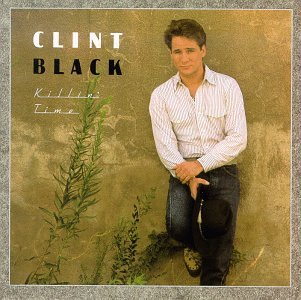
Straight From The Factory kicks off this one, and it took about four bars for me to remember exactly why Clint Black's debut mattered so much when it first landed. This is worth saying plainly before anything else: Killin' Time is a country album, not a narrated audiobook in the usual sense, and anyone browsing an audio catalog expecting a spoken memoir or a story should know that going in. What is actually here is Black's own voice, performing his own songs, start to finish.
That distinction matters less than it might sound like it should, because the listing's own attached reviews confirm exactly what people are getting and loving. One listener called it simply 'a tremendous album from first to last song,' another said it 'plays great,' and a third promised to 'wear it out' from repeat listens. Nobody attached to this title is reviewing a book. They are reviewing a record, and a beloved one at that.
Black's 'A Better Man,' Heard in Full Context
Judged as the album it actually is, Killin' Time holds up as a genuine touchstone of late-1980s neotraditional country, the movement that pulled the genre back toward fiddle, steel guitar, and plainspoken songwriting after a decade leaning pop. Black wrote or co-wrote most of these songs himself, which gives the record a coherence a pure interpreter's album rarely has: the guy singing about factory floors and hard-won self-respect is the same guy who put those words on the page.
A Better Man, referenced right in the track data here, became one of the songs that defined Black's early run, and hearing it again in full-album context rather than as a radio single clarifies how deliberately the record was sequenced. Slower, reflective numbers sit beside brisker honky-tonk cuts, and the pacing across the full listen rewards hearing it start to finish rather than picking out a favorite single and skipping the rest.
The Sharpest Debut of Country's Class of '89
Black arrived in Nashville as part of a wave now often nicknamed country's 'Class of '89,' new voices including Garth Brooks, Alan Jackson, and Travis Tritt who all debuted within roughly the same stretch and collectively pulled the genre's commercial center back toward fiddle and steel guitar after years leaning pop-country. Killin' Time is frequently cited as one of the sharpest, most fully formed debuts of that entire cohort, arriving with a clarity of voice some of his peers took a second or third album to find.
The title 'Straight From The Factory' alone signals the record's whole lyrical register: plainspoken, working-class, unpretentious in a genre that has always drawn real power from exactly that kind of directness. Black's warm baritone matches that plainness note for note, never oversinging a line that a simpler, steadier reading would serve better, part of why the record aged as well as it did rather than sounding dated the way more ornately produced late-1980s records sometimes do.
Music Meant to Be Heard, Not Read
The obvious reason to choose audio here is the one every one of the attached reviews points at without saying it directly: this is music meant to be heard, not read. No print equivalent reproduces Black's phrasing, his particular twang on a held note, or the studio arrangement underneath him. A near five-star average built from actual listeners, not readers, says plenty about how well this specific recording has aged.
Primary-Source Listening for the Neotraditional Boom
For anyone curious about the roots of the neotraditional country boom that dominated the following decade, Killin' Time is close to primary-source listening rather than a later imitation of the sound. This debut in particular gets cited often as one of the records that proved a stripped-down, classic country sound could still top the charts in a pop-leaning era, well before that revival became the genre's dominant commercial mode.
All three attached reviews land at or near five stars, and uniform enthusiasm, rather than a mix of praise and complaint, tracks with an album this widely and consistently regarded rather than reading as suspiciously curated. A record this loved across decades tends to earn exactly that kind of uncomplicated agreement from listeners who already know what they are getting before pressing play.
A Dozen Songs, Not Chapters
Because this is a full album rather than a narrated work, the runtime runs short for anything labeled an audiobook, just over three hours by the listing's own account, and that number reflects roughly a dozen songs rather than chapters. Anyone budgeting listening time the way they would for a memoir or novel should recalibrate expectations around song lengths instead.
By nature of the format, no narrative arc exists to track and no character development unfolds across the album. Individual songs stand largely on their own, connected by voice and genre rather than plot, so listeners hoping for a through-line story about Black's life specifically, rather than a set of individually written songs, will not find that here even though the material is clearly personal to him.
Legacy Baggage From Its CD-Era Release
It is also worth noting plainly that this listing carries some real legacy baggage from its original CD-era release: a track list standing in for a synopsis, review titles referencing how well it 'plays' rather than anything about narration. None of that undermines the music itself, but it does mean this reads more like an archival release landing in an unfamiliar audiobook catalog than a purpose-built spoken-word production.
Anyone arriving here specifically because a browsing category grouped it alongside spoken-word content should recalibrate before pressing play, since nothing about the experience resembles narration once the music actually starts. For a listener who already knows exactly what they are getting, three hours of a genuinely accomplished debut country record, the mislabeling becomes a minor curiosity rather than a real obstacle, more a quirk of how the catalog is organized than a flaw in the recording itself.
A Digital Reissue Finds a New Audience
Country fans, especially anyone with any nostalgia for the genre's late-1980s revival, are the obvious audience, and newer listeners curious where that sound originated will get an honest, well-loved entry point. It rewards a full, uninterrupted listen more than shuffled single tracks, since the sequencing itself is part of the craft.
Digital reissue also means a record originally built for a CD changer now reaches listeners who never owned the physical release at all, a genuinely different audience than the one this album originally charted for, and the songwriting holds up well enough to earn new listeners on its own terms rather than surviving on nostalgia alone.
Come to this expecting spoken-word narrative and disappointment will set in inside the first thirty seconds, so listeners specifically seeking narrated nonfiction, memoir, or fiction should look elsewhere entirely rather than mistaking the audiobook categorization for a guarantee of narration. Everyone comfortable with that, and simply wanting to hear a genuinely good country record performed by the man who wrote it, will find exactly what the reviews describe.
Good to Know
Is Killin' Time actually a narrated audiobook, or is this a music album?
It is Clint Black's own country album, performed and largely written by him, not a spoken-word audiobook, despite how the listing is categorized.
Do the reviews on this audiobook listing describe an actual audiobook experience?
No. All three attached reviews describe it plainly as a CD or album, praising the songs and sound quality rather than any narration or story.
Does Clint Black narrate or write the material himself?
He performs the songs himself and wrote or co-wrote most of them, giving the record a personal, self-authored feel even without spoken narration.