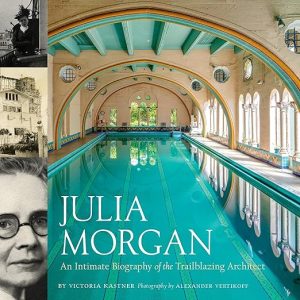
- Narrator: Victoria Kastner narrates her own research with the quiet authority of someone who has lived inside this material for years.
- Subjects: Architectural trailblazing against institutional odds, a three-decade creative partnership, family, faith, and legacy
- Tone: Intimate, richly researched, reflective
- Bottom line: A rewarding listen for anyone drawn to Julia Morgan's story, though the book's 150-plus photographs are a real loss in audio-only form.
Thirty years is how long Julia Morgan spent on a single commission, the Hearst Castle estate she built for newspaper magnate William Randolph Hearst, and that number alone gives some sense of the scale this audiobook is working with. Victoria Kastner narrates her own biography, and the effect from the opening minutes is less like being read to and more like sitting across from someone who has spent a career inside this material, since Kastner has spent years compiling interviews, letters, drawings, and diary entries, including reflections never published before. Morgan was the first woman admitted to study architecture at the Ecole des Beaux-Arts in Paris and the first woman licensed to practice architecture in California, and across roughly 700 built projects she left a mark on the American West that took decades to be fully credited.
More Interested in the Woman Than Blueprints
Kastner's own voice turns out to be the right choice for material this personal. She isn't performing detachment the way a hired narrator sometimes has to; when the book moves into Morgan's private reflections on faith, art, and her own family's struggle with dementia, an audible familiarity with the material comes through that a stranger to the archive couldn't fully replicate. The biography resists turning Morgan into a simple triumph narrative too. Her friendship with Hearst gets real texture, a genuine creative partnership as much as a client relationship, and the book doesn't shy away from the toll thirty years on one project must have taken alongside the roughly 699 other commissions she completed in the same career.
One review from Rick Kennedy is worth taking seriously as a framing device before you press play: this is 'neither an analysis of Morgan's greatness as a designer nor a deep study of key aspects of her education and career.' Kennedy is right, and it's worth knowing going in. Kastner is far more interested in the woman than the blueprints, her family life, her relationships with the people who worked for her, where and how she actually lived. That choice makes the audiobook a genuinely different listen than a design-history survey, closer to intimate portraiture than architectural criticism, and it rewards listeners who came for the person rather than the floor plans.
A Gold Medal That Arrived Decades Late
The scale of what Morgan built is easy to state and hard to absorb until you hear it laid out project by project: hotels, churches, private homes, and the single most famous of all, an opulent estate on the California coast that now welcomes hundreds of thousands of visitors every year. Kastner threads that scale together with the slower, more personal story of a woman who had to fight for admission to a school, then fight again for a license, then spend decades proving both were deserved. The 2014 American Institute of Architects Gold Medal, awarded to Morgan posthumously as its first female recipient, lands with real weight after eight hours of hearing exactly what it took to earn that recognition, a recognition that arrived decades after her death and, on this evidence, felt overdue even then.
Reviewer JJS adds a different kind of value here, the perspective of someone who has visited Cambria on California's Central Coast for nearly fifty years, watching Hearst's estate on the hill from San Simeon Bay across generations of family vacations. That kind of long, personal relationship with the physical building gives the audiobook an unusually rich audience of listeners who already know the place and want the woman behind it explained properly. For listeners who've never set foot in California at all, Kastner's own evident affection for the landscape and the buildings does real work translating that sense of place into something you can feel through narration alone.
Not One Woman Admitted Until Morgan
The Ecole des Beaux-Arts context is worth dwelling on a moment longer than the synopsis does, since the scale of the obstacle rarely gets spelled out. The school was, at the time, one of the most prestigious and rigidly traditional architecture programs in the world, and it did not simply have informal barriers to women, it had none admitted at all until Morgan forced the issue through repeated applications. Kastner's narration lingers on this period with evident respect for how deliberate and sustained that effort had to be; this wasn't a single lucky break but years of pressure before the door opened even a crack. Hearing that persistence laid out in Kastner's own voice, rather than summarized in one biographical sentence, gives the achievement a weight a quick timeline reference never quite manages.
Photographs the Audio Format Can't Carry
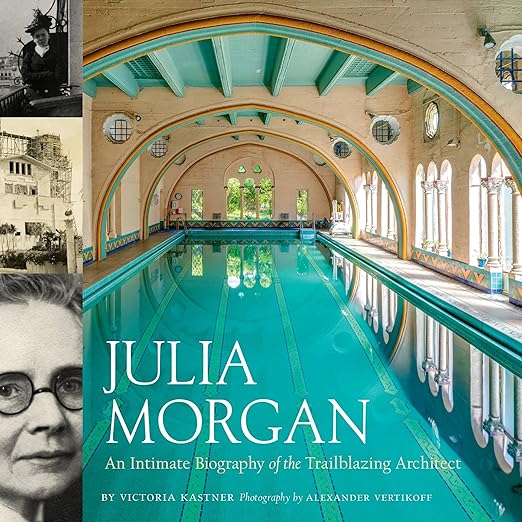
The print edition includes more than 150 photographs, archival images alongside full-color contemporary shots of Morgan's buildings, and reviewer Ethel D. specifically called them stunning. None of that visual material survives in audio. For a biography this tied to a visual medium, architecture, that's a real trade-off worth naming plainly rather than glossing over; listeners who want to actually see the buildings under discussion will want the print or ebook edition open alongside the audiobook, or at minimum photos of Hearst Castle pulled up separately while listening.
Because Kastner deliberately steers away from technical design analysis, listeners hoping for a working architect's breakdown of Morgan's structural choices, materials, or stylistic influences will find the book lighter on that front than the 'trailblazing architect' subtitle might suggest. Ethel D.'s review captures the intended emotional register well: exhaustion just from hearing everything Morgan accomplished in one working life. That's the book's real currency, awe at the sheer output and endurance, rather than a seminar on Beaux-Arts design principles.
Kastner's Self-Narration Earns Its Place Here
History buffs, aspiring creatives in any field, and anyone who has ever visited Hearst Castle and wanted to know more about the woman who built it are the clearest audience here. Feminists looking for a role model whose achievements predate most of the institutional support that exists today will find plenty to hold onto, and Californians in particular get a biography deeply rooted in their own state's landscape and history. Self-narration by an author this steeped in her subject is a genuine asset rather than a novelty; Kastner's familiarity with every letter and diary entry she's citing comes through in small, unforced ways throughout.
Deep technical analysis of Morgan's architectural drawings, materials, or design methodology is not what this audiobook sets out to do, so architecture students or working professionals wanting that kind of study should look toward a more specialized text instead. Anyone who relies heavily on the printed photographs to appreciate a biography like this should also budget for a print or ebook copy alongside the listen, since the visual archive Kastner spent years assembling simply isn't reproducible in sound. Neither caveat diminishes what the book does well; it just means the audiobook is the wrong format for readers whose primary interest is technical or visual rather than biographical.
Common Questions
Is author Victoria Kastner's narration a strength for this audiobook, or would a professional narrator have been better?
It's a strength; her years of direct research access give the reflective and personal sections a familiarity a hired narrator likely couldn't match.
Do I need to have visited Hearst Castle to enjoy this audiobook?
No, though visitors and longtime Central Coast regulars will get an extra layer of recognition that first-time listeners won't have.