- Narration: Alison Fensterstock's narration is authoritative and warm, but the real audio distinction is the archival interview material woven throughout; hearing Nina Simone, Joni Mitchell, and Patti Smith in their own voices is the book's defining feature.
- Themes: Women's creative history in popular music, the politics of best-of lists, genre-crossing influence
- Mood: Celebratory and critical in equal measure, like a great music documentary that asks hard questions
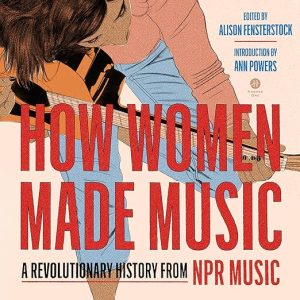
- Verdict: How Women Made Music is the audiobook edition that surpasses the print version, not merely supplements it, because the rare interview excerpts spanning fifty years of NPR archives make this a different and more essential experience in audio form.
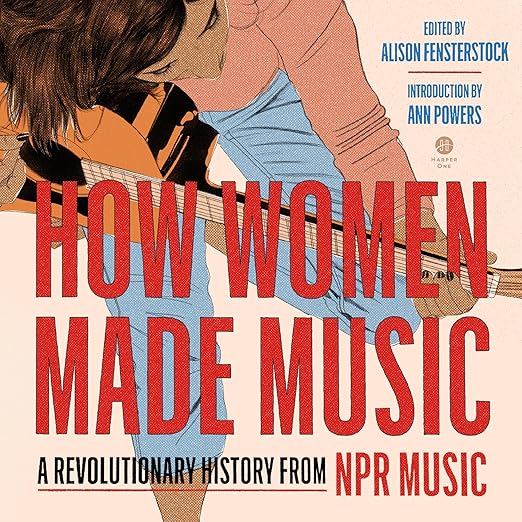
Verdict first: How Women Made Music is one of the clearest cases I can point to where listening is the correct format, not simply one option among several. The audiobook has won a 2025 Association for Recorded Sound Collections Certificate of Merit and the AudioFile Magazine Earphones Award, and those recognitions make sense the moment you understand what makes this edition distinct. Alison Fensterstock narrates Ann Powers' history with authority and clarity, but the archival interview excerpts woven into the audio are simply not present in any other format. These are the voices the history is about, and hearing them speak for themselves is irreplaceable.
The book originates in NPR's Turning the Tables project, which launched in 2017 as a direct response to the consistent underrepresentation of women in "Best Of" lists and music halls of fame. Ann Powers, the critic and co-founder of Turning the Tables, draws here from every season of that series and from the full fifty years of NPR's sound archives. The scope is correspondingly wide: folk, rock, rap, hip-hop, salsa, bubblegum pop, and more, organized around a sustained argument about how women have not merely participated in popular music history but made it.
A List Intervention, Not Just a Celebration
The project's origin in a list intervention is worth understanding. When Turning the Tables launched, it pushed more women onto "Best Of" compilations and into award consideration not through sentiment but through critical argumentation: the claim that the lists were wrong, not that they needed to be polite. How Women Made Music inherits that combative clarity. This is not a celebration of women in music that softens its edges for broader appeal. Powers makes arguments about genre, about the politics of what gets canonized, about how the industry's gatekeeping operated in specific periods, and the arguments are documented through interviews rather than asserted through rhetoric.
Nina Simone on the Edge in Her Voice
The archival material includes Joan Baez discussing nonviolence as a musical principle in 1971. Nina Simone, in 2001, reflecting on how she developed the edge in her voice as a tool against racism. Patti Smith describing art as her "jealous mistress" in 1976. Taylor Swift, in 2012, talking about early uncertainty in her music career. Odetta, in 2005, explaining how shifting from classical to folk music allowed her to express her fury over Jim Crow. Each is specific to a particular moment in that artist's development. Hearing Simone explain her technique in her own words, at a remove of decades, is a different experience than reading about that technique. The connection between a musical choice and a political reality becomes audible rather than abstract.
The resulting history covers ground that ranges from familiar to genuinely surprising. Powers makes choices about who to include alongside the universally recognized names, and the inclusion of Lucinda Williams, Sinead O'Connor, Solange, and others gives the history texture that a narrower selection would not provide. Each artist covered adds something specific to the argument about how women made music, not just evidence that they did.
Fifty Years of NPR Sound, Carefully Integrated
The Earphones Award from AudioFile is a useful signal for listeners who use it as a quality marker. The recognition reflects both the critical substance of Powers and Fensterstock's work and the exceptional quality of the audio production. The archival material spans fifty years of NPR sound, and its integration into the narrative has been done with care: the transitions between Fensterstock's narration and the interview clips maintain consistent audio quality rather than sounding like material stitched together from incompatible sources.
The supplemental PDF accompanies the audiobook for those who want additional context, though the core experience is complete without it. At ten hours and fifty minutes, the book covers a genuinely vast period of musical history without feeling rushed. The breadth of genres covered is intentional; Powers argues that women's contributions cross genre lines, and the history reflects that by moving between folk, hip-hop, rock, salsa, and pop while tracking what each tradition offered women specifically and what it demanded in return.
Interview Clips Function as Primary Evidence
The structural through-line of the book is the argument that the revolution in how women are perceived in popular music has been driven by women themselves, often against active institutional resistance, and that understanding this history changes how you hear the music. Listen for how the interview clips are deployed: not as illustration of points already made, but as the primary evidence. When Nina Simone explains in her own words how she trained herself to project a specific quality of controlled anger, the description of her art and the art itself become temporarily inseparable. That effect is unique to audio and repeats throughout the book.
The book covers genres that have had very different relationships with women's participation. The hip-hop and rap sections address the specific conditions under which female artists found space in a genre that often made that space contingent on particular kinds of performance. The folk and singer-songwriter sections address a different set of constraints and a different mode of resistance. Powers tracks these differences rather than collapsing them into a single narrative of women overcoming obstacles, and the resulting history is more honest for it.
Print Gets the Argument, Audio Gets to Hear It
Music enthusiasts across any genre covered here will find the history illuminating even for artists they know well. The archival interviews provide context that standard music criticism rarely captures: the artists speaking about their own work at specific historical moments, before the retrospective narrative had solidified. Listeners interested in cultural history and the mechanisms by which some voices get amplified and others suppressed will find Powers' analysis as useful as any dedicated cultural studies text. Those who want to understand what Turning the Tables accomplished and why it mattered beyond the chart positions will find this audiobook the most complete and sonically satisfying answer available. Print readers can access the argument; only audio listeners can hear it.
Questions Listeners Ask
What makes the audiobook edition of How Women Made Music different from the print version?
The audiobook includes rare archival interview excerpts drawn from fifty years of NPR's sound archive, featuring Nina Simone, Joan Baez, Patti Smith, Joni Mitchell, Taylor Swift, Odetta, and others speaking in their own voices at specific historical moments. This material does not exist in the print edition, making the audiobook a substantially different and in many ways richer experience.
Is this audiobook accessible to listeners who are not deeply familiar with music history or criticism?
Yes. Alison Fensterstock's narration is clear and the historical narrative is built to be accessible rather than academic. Specialist knowledge of music history is not required to follow the argument or enjoy the archival material. Music lovers across any genre covered will find entry points.
Does the How Women Made Music audiobook cover only a particular genre, or does it span multiple styles?
The book spans folk, rock, rap, hip-hop, salsa, bubblegum pop, and more. The breadth is intentional. Ann Powers argues that women's contributions cross genre lines, and the history reflects that by moving between very different musical traditions and the specific conditions in each.