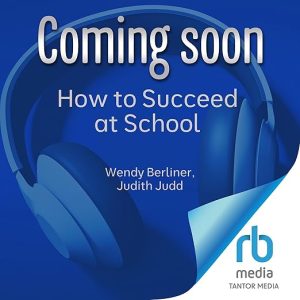
Nothing about the modern argument over how children learn is settled, which is exactly where the description starts: a confused, noisy and crowded learning landscape where ideas compete and nothing can seem clear. How to Succeed at School is an audiobook built to cut a path through that, eight hours and twenty-five minutes of research summary pitched at teachers and parents who want to know which findings hold up once a real classroom is involved.
One Byline, Though Two Authors Are Claimed
Ambition here is the sorting job rather than a new theory. The chapters, as the description lays them out, take on the use of neuroscience in education, the role of parents and what all parents can do to help, and what actually works in a classroom alongside the best ways of teaching a child. Common misconceptions and myths get their own treatment. That is a service book, and a useful one, provided the listener understands that its value lies in triage rather than discovery.
One credit gap sits right at the top of the page. The description opens by saying the book was written by two distinguished education journalists, while the byline carries a single name, Wendy Berliner. A second author is asserted in the publisher's own copy and is named nowhere else on this page, which means a buyer searching for the co-writer will not find this recording, and anyone citing it will credit half the authorship. Publishers do this more often than they should, and it is worth naming when it happens.
Vocabulary is the second thing a buyer in the United States should notice. The description addresses primary and secondary teachers, student teachers and policymakers alongside parents and anyone else interested in how children learn. Those are not the American names for American school stages, and a research base assembled around them is unlikely to be an American one either. None of that makes the findings less true. It does mean a listener here will be translating institutional detail as it arrives, with no glossary to check against and no way to pause on a term that has quietly shifted meaning.
Konig Must Keep Quoted Researchers Distinct
Myth-busting is argument, and argument is what spoken audio carries best. A chapter explaining why a popular claim about the developing brain does not survive scrutiny works perfectly well through headphones, because the shape of it is a case rather than a table. Eight and a half hours is generous room for that, and a parent can absorb the reasoning while doing something else with their hands, which is not true of the textbooks this material usually lives in. Recognition helps as well. Anyone who already teaches will know most of these myths on first hearing and can let the familiar ones slide past, which is a far more comfortable way to meet a digest than grinding through it in print.
Olivia Konig is named as the reader, with Tantor Media on the publisher line. The assignment is more demanding than a research digest sounds, because the description promises expert analysis, interviews and example studies braided together. In print, a reader can see where a quoted researcher stops and the authors resume; in audio, that boundary has to be carried by voice alone, and how cleanly it is marked will decide whether the evidence stays attached to the person who produced it.
Parental material is the part I would buy this for. The description is unusually specific about it: not just that parents matter, but that a teacher might want to encourage the right kind of parental support, which implies the existence of a wrong kind. That distinction is where most advice of this sort collapses into reassurance, and a book willing to draw the line has already earned more attention than the shelf around it.
No Reviews Yet, and a Retrieval Problem
Judging this recording means judging it without help. The page carries no star average, no rating counter and not one written response, so nobody has yet said anything in public about either the book or the reading. A May 2026 release explains some of that, but it leaves a buyer with the description, the credit and the running time, and nothing else to weigh.
Retrieval is the structural problem. Everything the description promises, crucial topics, example studies, chapters that tackle particular myths, is the shape of a reference work, and it says so outright when it calls the book a unique resource for six different kinds of reader. A resource is something you return to. A linear recording is the worst possible container for returning to a specific claim, and the listing points to nothing you could keep beside it.
Copy quality is worth a glance too. The topic list in the description runs its items together without breaks, so phrases about brain science and about parental influence collide mid-sentence, and the whole block reads as a print blurb dropped into an audio page unedited. Phrases like this seminal text and an essential read belong to a hardback jacket. Neither an ISBN nor a page count is recorded, so the print original this was made from goes unidentified.
Teachers First, Parents a Close Second
Teachers and student teachers are the most obvious buyers, and the publisher's copy puts them first. If your job involves defending a method to a skeptical colleague or a skeptical parent, a book that separates evidence from folklore earns its place. The same goes for anyone training now, who will meet every one of these misconceptions within a term of walking into a classroom. The chapter on brain research in the classroom should be worth the purchase on its own for that group, since it is the corner where confident nonsense circulates fastest and gets repeated with the most authority.
Parents are the second audience and, I would argue, the better fit for this format. A parent wants the reasoning, not the citation, and reasoning is what survives a listen. Anyone who intends to quote the studies, though, should plan on a text copy alongside, because the moment you need the name of a researcher rather than the sense of their finding, the recording stops being able to help.
Lesson plans are not what this supplies, so anyone shopping for classroom activities should look elsewhere. It will also frustrate a listener who wants a single method advocated confidently, since triage is the opposite of advocacy. Buyers who need the evidence tidied rather than delivered can start here with reasonable confidence, as long as they accept that they are the first people on this page to form an opinion about it.
- Narrator: Olivia Konig carries a text that braids interviews, studies and authorial argument, with no typographic cue to mark the handoffs.
- Subjects: Evidence versus folklore in education, parental influence on learning, classroom method
- Tone: Calm, corrective, quietly opinionated
- Bottom line: A sane research digest for parents and teachers, bought on the strength of its description alone since the page carries nothing else.
Before You Listen
Why does the byline name one author when the description credits two journalists?
No explanation appears on the page. The opening line of the description states that two education journalists wrote it, and the credit carries only Wendy Berliner. The co-writer is named nowhere on the listing, which is a search problem as much as a fairness one, since the second name will not return this recording.
Is this audiobook aimed at teachers or at parents?
Both, deliberately. The publisher's copy addresses families and classroom professionals in the same breath, and dedicates separate chapters to what parents can do and to what works in the classroom. Parents will get more out of the listening format; teachers will probably want the text within reach.
Should I expect classroom-ready lesson plans from this audiobook?
No. The description promises a summary of research, an examination of common misconceptions and an account of how a child is best taught, which is analysis rather than activity design. Treat it as background for the decisions you make, not as material you can carry into a room and use.
How do I judge a recording with no ratings and no written responses yet?
By the parts that are verifiable: an eight and a half hour running time, a Tantor Media production, a named reader, and a description specific enough to check against your own needs. Anyone wanting crowd confirmation before spending a credit should wait a few months for the page to fill in.