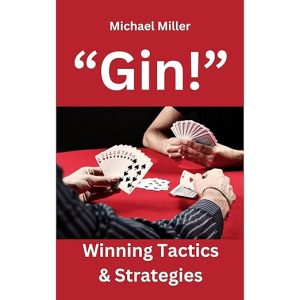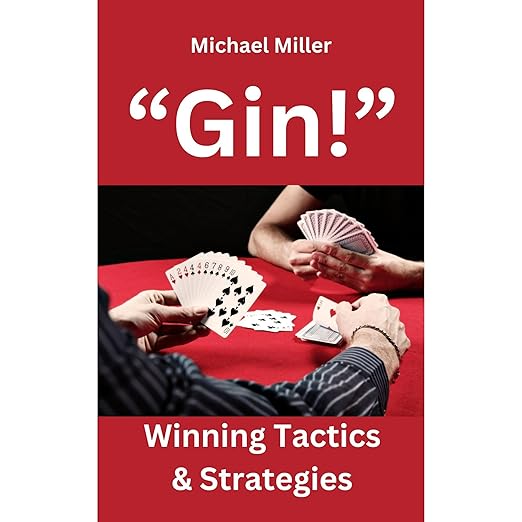
Card game strategy guides occupy a narrow and often underserved corner of the audiobook market, and Michael Miller's Gin! is transparent about exactly what it is and who it is for. At fifty minutes, this is not a deep-dive historical treatment of Gin Rummy or a philosophical meditation on card games and probability theory. It is a concise, practical guide for players who already know how to play Oklahoma Gin and want specific tactics and strategies to win more consistently. The book's honesty about its own scope is one of its most useful features.
Miller opens with a clear statement of purpose: finding rules for Oklahoma Gin is easy; finding a concise, actionable collection of recommendations for how to improve your play is genuinely difficult. That gap is what Gin! attempts to fill. The table of contents reflects that practical ambition - history, tactics, strategies, memory techniques, scoring, dealing, shuffling, playing defense, managing high-value cards, and a section on playing Gin for cash are all covered within fifty minutes. That is a lot of ground to cover in a short runtime, which means each section necessarily runs brief.
Personal Expertise, Delivered via AI Narration
Miller's approach is confessional and specific rather than formally instructional. He writes in first person, including a section on his own story and his family's relationship with the game, which gives the guide a personal texture that distinguishes it from purely technical card game manuals. The "my one big rule" section, where he distills his most important strategic principle into a single directive, is the kind of thing that only comes from a player with genuine experience rather than from someone who has synthesized other people's writing about the game.
The narrator for this title is Virtual Voice, which means AI-generated audio rather than a human performance. For a fifty-minute strategy guide organized into clearly labeled sections, the AI narration is less of a concern than it would be in a longer or more emotionally resonant work. The content is structured and practical enough that the absence of human warmth and inflection does not significantly impede comprehension. Listeners who find AI narration distracting should opt for the print edition, where the same information would be consumed faster and with better retention for the tactics-heavy later sections.
Internet Strategies Plus Miller's Own Cash-Game Tactics
The strategy content covers both basic and advanced approaches, with a specific section on strategies gathered from internet research alongside Miller's own developed tactics. That combination is honest - he is not claiming to have invented everything here from scratch - and useful, because it gives the reader a sense of the broader consensus on Oklahoma Gin strategy alongside his personal variations. The section on playing Gin for cash adds practical advice for those who play in money games, which is a specific enough sub-audience that its inclusion here is a sign Miller knows exactly who his readers are.
Built for Players Who Already Know Oklahoma Gin
The fifty-minute runtime positions this audiobook as something you can absorb in a single sitting - during a commute, while doing something else around the house, in the time before a game night. That accessibility is the format's primary virtue. The content is organized well enough that listeners can remember which sections covered which topics and return to the print version for reference if needed.
Miller is transparent about the book's limitations and assumptions: it requires that you already know how to play Oklahoma Gin. If you are new to the game entirely, this is not the starting point - it is the next step for players who have gotten past the basics and are frustrated by inconsistent results. The book assumes a specific level of existing knowledge and builds from there, which makes it more immediately useful than a general introduction would be for the right reader.
The memory section, which covers how to track cards and make better probabilistic decisions about what your opponent is holding, is likely to be the most practically valuable section for intermediate players. Card memory is one of the skills that separates consistent winners from inconsistent ones, and Miller treats it with enough specificity to be genuinely helpful rather than generically advice-like.
This Guide's History Section Stays Atmospheric
The short runtime means that some sections are thinner than their topics warrant. The history of Gin, for instance, is brief to the point of being atmospheric rather than informative - Miller covers it quickly before moving on to the practical material. Listeners who want a comprehensive history of the game should look elsewhere; this book gives them just enough context to situate the strategy content.
The absence of any ratings or reviews at time of writing means no community signal exists to calibrate against. The book reads as a genuine practitioner sharing what they have learned, but without peer validation no easy way exists to know how the strategies hold up against competitive Oklahoma Gin players. The advice is internally consistent and specific enough to feel credible, but listeners should bring their own critical evaluation to sections they cannot immediately verify at the table.
The Virtual Voice narration is the most significant caveat for listeners who prioritize audio experience. At fifty minutes it is unlikely to cause sustained frustration, but the difference between AI-read strategy content and human-read strategy content is particularly noticeable in sections that require emphasis and rhythm to communicate importance - such as the tactical recommendations and the "my one big rule" section, where tone is part of how the advice is meant to land.
Regular Players Get a Fast Strategy Refresher
This audiobook is designed for a specific listener: someone who plays Oklahoma Gin regularly, knows the rules well, and wants to be more strategic and consistent. At fifty minutes and a straightforward structure, it is the right length for that purpose. Newcomers to the game should start with the rules before reaching for this title. Those who prefer human narration or who want a more comprehensive treatment of card game strategy will be better served by the print edition or by seeking out more complete treatments of the topic. For intermediate Oklahoma Gin players who want a fast, practical strategy refresher, Miller delivers exactly what he promises.
Is this audiobook suitable for complete beginners to Gin Rummy or Oklahoma Gin?
No, Miller explicitly states that the book assumes you already know how to play Oklahoma Gin and want to play a better game. It is designed as a strategy improvement resource, not a rules introduction. New players should learn the basic rules elsewhere before returning to this title.
How does the Virtual Voice narration affect the listening experience for this audiobook?
For a structured, practical guide of under an hour, the AI narration is less disruptive than it would be in a longer or more emotionally textured work. The tactical sections where tone matters most for emphasis are where AI narration shows its limitations most clearly. Listeners who find AI-generated voices distracting should opt for the print edition.
Does this audiobook cover playing Gin for real money or just for fun?
Both. Miller includes a dedicated section on playing Oklahoma Gin for cash, covering specific considerations and strategic adjustments for money games. The core tactical and memory content applies equally to both contexts, but the cash game section addresses the particular pressures and decisions that arise when real stakes are involved.