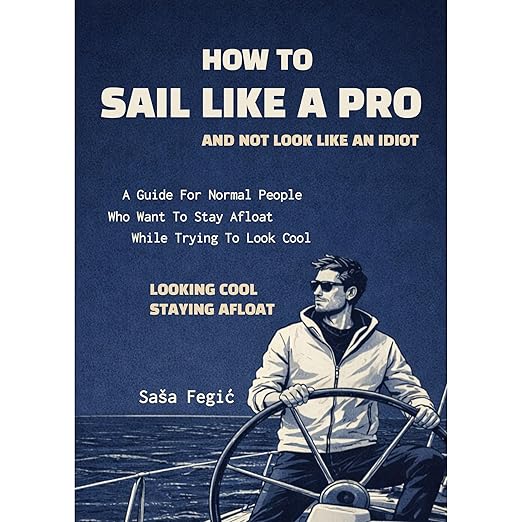
Falling overboard while shouting nautical terms you don't understand is the comic engine driving How To Sail Like a Pro And Not Look Like an Idiot, Sasa Fegic's entry in the My Way series, delivered here as an audiobook read by Virtual Voice's AI narration.
The synopsis itself sets the tone from the first line, describing the book as a journey through the wonderful, ridiculous, and often chaotic world of sailing rather than a dry technical manual, and promising everything from basic sailing techniques to advanced maneuvers alongside a running joke about the very real possibility of embarrassing yourself in the process. It even ends with a warning that reading it may cause an uncontrollable urge to either buy a boat or sell one.
A Closer Look at How To Sail Like a Pro And Not Look Like an Idiot
This is book three in Fegic's My Way series, suggesting an established comedic voice already built across earlier titles, and the sailing-specific content here ranges genuinely wide, from beginner fundamentals through advanced techniques, wrapped consistently in self-deprecating humor about the gap between looking competent on a boat and actually being competent.
At four hours and four minutes, this sits comfortably as a quick, entertaining primer rather than a comprehensive reference text, which fits the tone the synopsis establishes: this is a book meant to be enjoyed as much as consulted, with the comedy doing as much work as the instruction.
Instructional sailing guides tend to split into two camps: dense technical manuals heavy on terminology and diagrams, and looser, narrative-driven introductions that prioritize confidence-building over comprehensive reference. This book plants itself firmly in the second camp, trading systematic technical depth for an approachable, story-driven tone that treats early mistakes as part of the fun rather than failures to avoid at all costs.
The title's specific promise, sailing like a pro without looking like an idiot, sets up a running tension the whole book plays with: competence and confidence do not arrive on the same schedule, and most of the humor here comes from the gap between the two, the moment when technical knowledge has been absorbed but the body has not yet caught up to executing it smoothly under pressure.
Blending comedy with technical instruction is a well-tested formula in hobbyist nonfiction generally, since humor does real work lowering the psychological barrier to trying an activity that looks intimidating from the outside, and sailing, with its dense specialized vocabulary and visible risk of public embarrassment, is arguably an ideal candidate for exactly that treatment.
What Makes How To Sail Like a Pro And Not Look Like an Idiot Worth Hearing
For beginner sailors intimidated by dry technical manuals, a guide willing to admit that most people's early sailing experiences involve genuine chaos and mild humiliation offers a more honest, more approachable entry point than a purely instructional text. The two ratings attached to this listing average 4.5, a small but positive early signal.
Readers who enjoy self-deprecating adventure writing generally, where the narrator's own mistakes are as central to the appeal as their expertise, will find that same register here applied specifically to sailing, a sport whose learning curve genuinely does produce the kind of stories this book promises to deliver.
The kind of topics a beginner sailing guide typically covers, reading wind direction, basic points of sail, docking without embarrassing yourself in front of an audience, tacking and jibing without capsizing, all get the same self-deprecating comic treatment here, which should lower the intimidation factor for listeners who have avoided sailing specifically because it seems to demand expertise before you are even allowed to try.
Things to Know Before Starting How To Sail Like a Pro And Not Look Like an Idiot
The narration here is Virtual Voice, an AI-generated reading rather than a human performer, and that distinction matters more for comedic material than for straightforward instruction. Timing, inflection, and delivery carry a huge share of what makes self-deprecating humor land, and a synthetic voice reading the jokes flatly is a real, honest tradeoff worth knowing about before purchasing.
With only two ratings behind that 4.5 average, this listing offers very little crowd-sourced signal on how the humor specifically holds up in audio form, as opposed to on the page, where comic timing is entirely the reader's own to control.
Spelling choices in the synopsis, maneuvers rendered in the British style, for instance, along with the author's name, suggest the original text may come from outside American English conventions. That is not a real barrier to understanding, but American listeners expecting entirely US-style idiom throughout should be aware the voice on the page leans international.
The My Way branding suggests Fegic has applied this same comedic-instructional formula to other subjects beyond sailing, and listeners who enjoy the tone here specifically may want to look into those companion titles as well, though this listing does not detail what other subjects the series covers.
Listeners primarily looking for sailing instruction rather than sailing comedy specifically may want to sample a chapter first to confirm the tone matches their expectations before committing to the full four hours, since the jokes are not an occasional garnish here but the book's main organizing device.
Who It's For
Beginner sailors who want practical tips wrapped in genuine entertainment rather than dry instruction, and readers who enjoy comedic nonfiction built around embracing rather than hiding the learning curve, are the clear audience here. Existing fans of Fegic's My Way series already know what they are getting.
Skip this one if a synthetic narrator reading comedic material is a dealbreaker, or if you need a serious technical reference rather than an entertaining primer. Sailors wanting detailed instruction on specific advanced maneuvers may also want a more specialized, less joke-forward resource alongside this one.
This also suits listeners who have already tried a dry, purely technical sailing manual and bounced off it; pairing that reference material with this book's more entertaining framing of the same fundamentals could genuinely work better than either approach alone for a true beginner.
Common Questions
Is the narrator of this audiobook a real person or AI narration?
This audiobook is narrated by Virtual Voice, an AI-generated reading rather than a human performer, which is worth knowing upfront given how much the book's comedic tone depends on delivery and timing.
Do I need sailing experience before starting this audiobook, or is it truly beginner-friendly?
The synopsis describes covering everything from basic sailing techniques to advanced maneuvers, framed for readers ranging from aspiring sailors to seasoned skippers, so no prior experience is assumed going in.
How long is this audiobook, and does the humor come through well with the AI narration?
The audiobook runs four hours and four minutes. The practical sailing content translates cleanly to AI narration, though the comedic timing the text is clearly written for comes through more flatly than a human comic performer would likely deliver it.