The Short Version
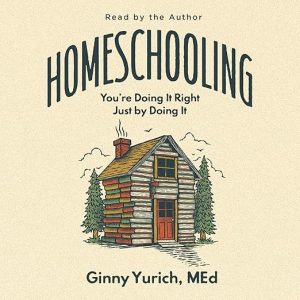
- Performance: Ginny Yurich MEd narrates her own book, bringing the same conversational warmth and genuine relatability that her podcast audience already knows, which makes the audiobook feel like a direct conversation.
- What it covers: Parental confidence, child-led learning, the case for slowing down
- Feel: Encouraging and grounded
- Our call: An unusually affirming entry point into homeschooling literature that prioritizes parental confidence over curriculum prescriptions.
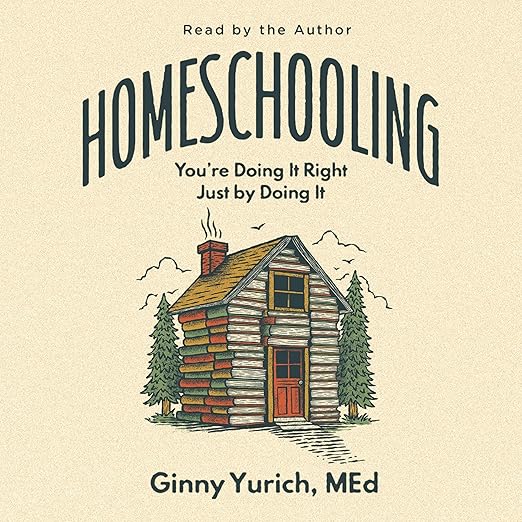
The homeschooling conversation is full of voices telling parents what they are doing wrong. Ginny Yurich's Homeschooling audiobook, which she narrates herself, starts from a deliberately different premise: you are already doing it right just by doing it. That inversion of the usual instructional posture is not just a marketing hook. It shapes the entire structure of the five-and-a-half-hour audio experience, and it explains why reviewers who came to the book uncertain and anxious left it feeling both informed and genuinely encouraged. The book starts where parents actually are rather than where a curriculum framework needs them to be.
Yurich is the founder of the 1000 Hours Outside Movement and holds a master's degree in education from the University of Michigan. Those credentials are relevant, but what makes the audiobook land is the way she deploys them: not to establish hierarchy over the listener, but to ground the encouragement in something more substantial than optimism. When she explains why individual timelines, space for boredom, multiage experiences, and the practice of slowing down are educationally meaningful rather than mere accommodations, the backing is research-based. The self-narration amplifies this quality. Reviewer Lindsay Setters noted that Yurich writes in the same voice she uses on her podcast, characterized by relatability, insight, and a genuineness that comes through even in text. In audio, that quality is even more direct and harder to dismiss as positioning.
Doing It Right Already, Whatever the Method
What distinguishes this audiobook from the broader field of homeschooling guides is Yurich's refusal to align with any particular curriculum philosophy. She does not advocate for Charlotte Mason over classical approaches, or unschooling over interest-based learning. Reviewer Jen confirmed that the book works regardless of what type of homeschooler you are, whether you are new to it, thinking about starting, or a veteran who has been doing it for years. That universality is a genuine achievement in a field where competing methodologies often function more like competing tribes than like overlapping approaches to a shared goal.
The emotional argument at the center of the book is that homeschooling parents are closer to doing it right than they typically feel, and that the anxiety driving the constant self-questioning is itself a symptom of a broader cultural message about what education requires. Yurich pushes back against that message with both evidence and experience, drawing on her own years of homeschooling five children. That combination of personal testimony and educational research is the book's real structural strength, and it is what gives the encouragement its durability beyond the first listen.
Yurich's Narration Feels Like Direct Conversation
The audiobook format suits Yurich's approach particularly well. The conversational register of her prose is designed for listening, not for academic reading, and hearing her narrate her own work creates the experience of being spoken to directly rather than being assigned a reading. Reviewer Amazon Customer described the book as accessible not just to those already homeschooling but to anyone who might want to start, and that accessibility is built into the audio delivery itself.
For parents who are managing the logistical reality of homeschooling, the five-and-a-half-hour length is manageable across a week of morning listening or driving. The material does not demand sustained focused attention in the way that technical content does. It can be absorbed in stretches, returned to, and revisited without losing coherence. That quality of re-listenability is something Yurich's format naturally supports, and reviewers who described coming back to specific passages suggest the content rewards that kind of ongoing engagement.
Mindset Over Lesson Plans, Rooted in Nature
Listeners looking for a detailed curriculum guide, specific subject-matter instruction, or a how-to breakdown of homeschooling logistics will find this audiobook more philosophical than practical at a granular level. Yurich's focus is on the mindset and confidence of the homeschooling parent rather than on lesson planning, assessment strategies, or grade-level benchmarks. The book equips parents to believe in what they are doing more than it tells them specifically what to do at any given stage of their children's education.
The 1000 Hours Outside framework informs the book's values, and listeners who are skeptical of outdoor-learning approaches or nature-based education philosophy may find some of the underlying assumptions in tension with their own. Yurich is not exclusive in her framing, but her own educational commitments are present throughout and will resonate differently depending on where you are coming from. This is honest rather than neutral writing, which is one of its strengths and one of its limitations depending on alignment with the reader's own approach.
Parents in Doubt or Burnout Will Recognize Themselves
This audiobook is best suited to parents who are either already homeschooling and experiencing doubt or burnout, or who are seriously considering homeschooling and need something that will help them believe they can actually do it. Reviewer Jen described it as the best homeschooling book she had ever read, and the breadth of that endorsement across different homeschooling philosophies speaks to the book's genuine inclusivity. The high rating from 313 reviewers reflects consistent satisfaction across a diverse audience of homeschooling families.
Parents who are looking for validation, encouragement, and a coherent intellectual framework for why homeschooling is worth the difficulty will find all three here. Parents who need a curriculum-specific manual or a subject-by-subject guide will want to pair this audiobook with more technical resources. Yurich's contribution to the field is emotional and philosophical rather than procedural, and within that scope it is both honest and genuinely useful as an ongoing companion for parents navigating the uncertainty that homeschooling inevitably involves.
Questions Listeners Ask
Does this audiobook work if I am not affiliated with the 1000 Hours Outside movement or any specific homeschooling philosophy?
Yes. Reviewer Jen specifically confirmed that the book serves homeschoolers regardless of their methodology, including Charlotte Mason, classical, unschooling, and interest-based approaches. Yurich is deliberate about not aligning the book with a single curriculum framework.
Is the Homeschooling audiobook practical enough to use as a guide, or is it primarily motivational?
It occupies a space between motivational and philosophical rather than functioning as a practical manual. Yurich provides a framework for thinking about homeschooling and the specific educational values that make it effective, but listeners looking for detailed curriculum plans or lesson structure will want additional resources alongside this one.
How does Ginny Yurich's self-narration affect the audiobook experience?
Significantly. Reviewer Lindsay Setters noted that Yurich's podcast voice, characterized by relatability and genuine warmth, translates directly to the audiobook. Hearing the author narrate her own work creates a conversational quality that makes the content feel more like a personal exchange than a textbook or lecture.
Is this audiobook worth listening to if I am only considering homeschooling rather than already doing it?
Yes. Reviewer Amazon Customer and others confirmed that the book is excellent for those thinking about homeschooling as well as those already committed to it. The confidence-building frame is specifically useful for people who are uncertain about whether they are capable of taking the step.