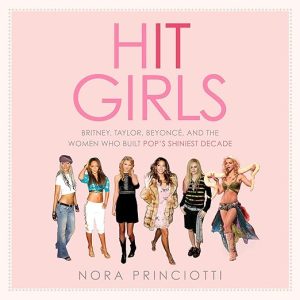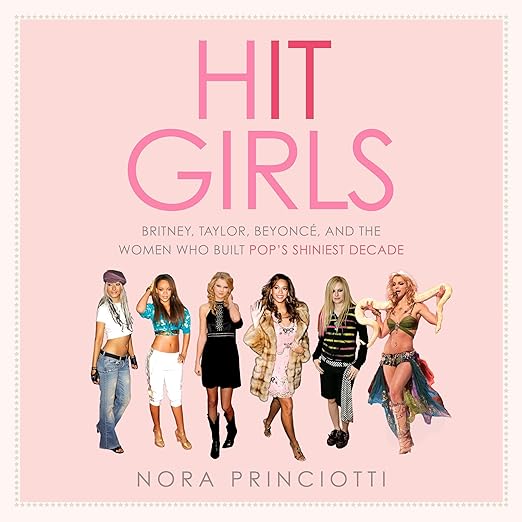
Britney, Beyoncé, Rihanna, and Taylor built more of today's pop landscape than most casual listeners realize, and this audiobook makes that throughline explicit rather than leaving it implied. Nora Princiotti, a Ringer writer and cohost of the Every Single Album podcast, narrates her own history of how female pop stars broke through in the 2000s and reshaped the culture around them. I put this one on during a stretch of long drives where I wanted something that felt like catching up with a friend who happens to know an enormous amount about pop music, and Princiotti's own voice, already familiar to her podcast audience, made that feeling immediate rather than something the book had to work to earn.
Britney Spears and the Bubblegum Floodgates
Princiotti's central argument is that the 2000s were a genuinely unusual decade, the only one in recorded music history when women made up more than half the list of highest-grossing performers, and she builds the book around tracing how specific artists drove that shift. Britney Spears, in her account, opened what the synopsis calls the bubblegum floodgates, inspiring copycats like Christina Aguilera and Jessica Simpson on one side and mall punk antagonists like Avril Lavigne and Ashlee Simpson on the other. That is a genuinely useful framework, not just a list of names, since it explains how one artist's success created space for artists positioned directly against her.
Self-narration is close to essential here, since Princiotti is not an outside historian reconstructing this era secondhand, she lived through it as a fan first and covers music culture professionally now, and reviewer LL captures that dynamic well: 'One of my favorite podcasters wrote a book about the music of the early 2000s? Say less.' That kind of built-in trust from an existing podcast audience is a real asset for a self-narrated pop culture book specifically, since the author's speaking voice and her writing voice are already the same instrument for a chunk of her readership.
The opening imagery list, low-rise jeans, butterfly clips, The Lizzie McGuire Movie, Paris Hilton's nights out, does real work beyond nostalgia bait. Princiotti uses those specific, dated cultural touchstones to establish the decade's aesthetic before pivoting into the harder argument: that the music itself, not just the fashion and tabloid ephemera surrounding it, permanently reshaped what a female pop star was allowed to be and do within the industry.
Princiotti's own framing of the project as 'the ultimate love letter to pop music' comes through clearly in the tone throughout: critical enough to note real industry problems, how tabloid coverage of these stars often turned openly hostile, without ever losing genuine affection for the music and the women who made it.
Rihanna's Studio Work and the Rise of EDM
The book's back half tracks the shift from tabloid-era celebrity, the Lindsay Lohan paparazzi years, into the MySpace and Instagram era, and connects that media shift directly to how Taylor Swift built what the synopsis calls one of the largest, most dedicated fandoms the world has ever seen. Rihanna's technical experimentation gets its own thread too, tracing how her sound work helped drive the rise of EDM alongside Ke$ha and Katy Perry's embrace of the party anthem, a genre-evolution argument that goes beyond simple nostalgia into real analysis of how pop actually changes shape over time.
Kate Kennedy, the New York Times bestselling author of One in a Millennial, frames the book's appeal precisely: 'Hit Girls bridges our butterfly-clipped, bedazzled past with today's music world, revealing how the pop songs we belted in our bedrooms shaped everything we're streaming now.' Reviewer Tony McMatter backs that up from the listener side, name-checking Taylor, Beyoncé, Sabrina, Olivia, and Tate in the same breath and arguing the book speaks directly to fans of pop's current generation, not just people who remember the 2000s firsthand.
That statistical claim from the opening chapters is not just stated and left to stand on its own. Princiotti builds the entire book around explaining how it actually happened, tracing genre shifts, technology changes, and celebrity culture evolution as three separate but connected forces that briefly aligned to put women at the commercial center of pop rather than its margins.
That shift, per the synopsis's own claim, earned 'a new respect for female artists' and, just as importantly, for pop stardom itself as a legitimate creative pursuit rather than a lesser commercial category deserving less critical attention than rock or hip-hop.
Baseline Versus Bass Line, a Text Mix-Up
Rigorous music criticism is not really the goal here, and it should not be judged against that bar. Reviewer Nunya, who otherwise enjoyed the book and calls it a fun read where 'the author clearly loves her subject', flags repeated word mix-ups in the printed text, baseline used where bass line was clearly meant, bearing appearing where bar should have. Whether those slips register the same way read aloud as they do on the page is worth knowing going in, since a spoken 'baseline' and 'bass line' sound close enough that the audio edition may smooth over exactly the error a print reader would catch immediately.
Breadth Over Depth in Just Six Hours
At six hours and fifty-three minutes, this covers a full decade of pop stardom, celebrity culture, and technological change in the music industry, which is a lot of ground for a relatively brief runtime. The tradeoff is breadth over exhaustive depth: listeners get a wide, well-connected survey of how 2000s pop shaped the current landscape rather than an exhaustive academic study of any single artist's catalog, and that tradeoff should be clear going in for anyone expecting encyclopedic coverage of a specific star.
Because the book moves quickly between artists, Britney to Christina to Avril to Rihanna to Ke$ha to Taylor, in service of a broader argument, listeners wanting an artist-by-artist deep dive on any single star's full catalog and career arc should adjust expectations. This reads as cultural and industry history built from many overlapping case studies rather than a single-subject biography, which suits the book's actual thesis about a whole era shifting at once, even if it means less exhaustive treatment of any one star specifically.
Millennial Listeners and Princiotti's Podcast Audience
Millennial listeners who grew up on TRL, plus Princiotti's own podcast audience from Every Single Album and We're Obsessed, have the most to gain here, along with younger pop fans curious about where their current favorites actually came from.
The book assumes a working knowledge of who these artists actually are without much introductory context, so listeners who did not grow up around 2000s pop radio may find themselves reaching for search results more often than a reader already fluent in the era would need to.
- Performance: Nora Princiotti self-narrates, and her established podcast-host cadence from Every Single Album and We're Obsessed gives the material real, unforced ease.
- What it covers: 2000s female pop stardom, celebrity culture's shift from tabloids to social media, genre evolution from bubblegum pop to EDM.
- Feel: Nostalgic, breezy, celebratory.
- Our call: A genuine treat for millennial pop nostalgia and podcast fans; skip it if you want rigorous music criticism instead of warm, well-informed enthusiasm.
Before You Listen
Does the Hit Girls audiobook cover pop stars working today, or only the 2000s?
The core focus is the 2000s, but Princiotti connects that era directly to today's pop landscape, and reviewer Tony McMatter notes the book resonates with fans of current stars like Sabrina Carpenter, Olivia Rodrigo, and Tate McRae too.
Is Nora Princiotti narrating her own audiobook?
Yes, Princiotti narrates Hit Girls herself, and her existing podcast audience from Every Single Album gets a voice they already know well applied directly to her own writing.
Do you need to already listen to Nora Princiotti's podcasts to enjoy this audiobook?
No. The book stands on its own as pop culture history, though existing listeners of her podcasts will recognize her voice and perspective immediately.
How long is the Hit Girls audiobook, and does it cover the full 2000s decade?
It runs 6 hours and 53 minutes and spans the full decade, tracing shifts in genre, technology, and celebrity culture from Britney's early bubblegum pop through Rihanna's EDM experimentation and Taylor Swift's rise.