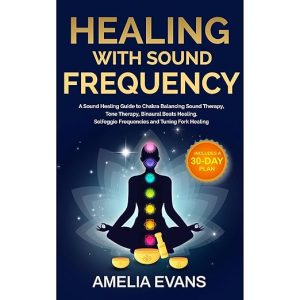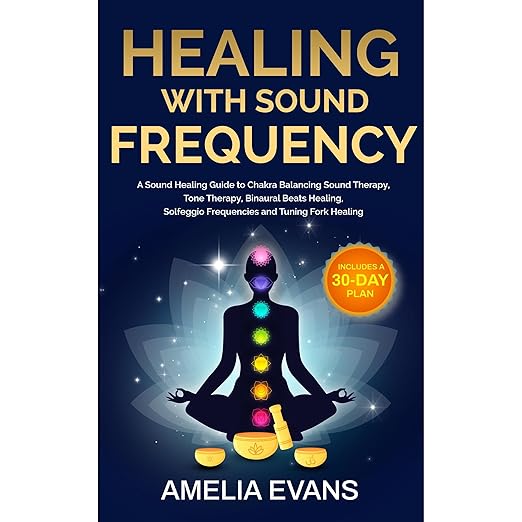
Sound healing has accumulated a meaningful body of dedicated practitioners and curious newcomers who share a common frustration with the available literature: most texts are either clinically dry or so metaphysically abstract that practical application becomes elusive. Healing with Sound Frequency, by Amelia Evans, positions this audiobook as a bridge between those two registers. It combines what it describes as scientific grounding with accessible instruction in specific tools and techniques, organized around a 30-day practice plan. At 4 hours and 18 minutes, the runtime is appropriate for the scope. The book covers Solfeggio frequencies, binaural beats, chakra-balancing tuning forks, sound bowls, and the integration of sound practice with meditation and yoga.
Every Atom Is Vibrating, Evans Writes
The book's structure is its clearest asset. Evans moves from foundational principles to specific applications without the circularity that can make wellness guides feel like they are restating the same concept in slightly different registers. The opening chapters establish the premise that everything vibrates and that targeted frequencies can influence the body's energy systems. Evans frames this as both scientifically and energetically grounded, and listeners should understand that the scientific framing draws on quantum physics and bioacoustics in ways that exceed the current clinical evidence base for sound therapy as a medical treatment. This is holistic wellness content written from within that tradition honestly, not evidence-based medicine making clinical claims.
A reviewer opens with a direct quote from Evans: "Everything, every atom is vibrating, oscillating all the time. Sound is a powerful force of nature that shapes our physical reality at the most fundamental level." For readers who find this framework intuitive and resonant, the book delivers on its promise as a practical guide. For listeners who require peer-reviewed clinical validation before engaging with a wellness framework, the book will require a different kind of tolerance for its foundational premises.
Virtual Voice Reads This Without Human Warmth
The 30-day sound healing plan is the audiobook's most immediately practical element. Evans organizes the guided exercises with enough specificity that listeners can actually implement them rather than being left to translate vague principles independently. The sections on specific frequencies and their targeted applications, including applications for sleep quality, anxiety management, and stress reduction, are where the book delivers most concretely for beginners. Multiple reviewers who have tried the exercises describe finding them accessible and producing the intended effects, which is the most meaningful test for practical wellness content.
The audio format suits this content better than one might initially assume. Sound healing is, by its nature, an auditory subject, and listening to a guide about the transformative potential of sound creates a mild alignment between form and content that the print version cannot replicate. The Virtual Voice narration is synthetic rather than performed by a human reader, which is worth knowing before choosing the audio format. The absence of human warmth in the delivery does create a slight distance from the meditative register Evans is working toward. The prose itself is clear enough that comprehension is not significantly affected, but listeners who find synthesized narration actively distracting in wellness contexts should factor that into their format decision.
Ancient Wisdom Meets Cutting-Edge Research Framing
The book blends what it calls "ancient sound wisdom" with "cutting-edge research." Listeners familiar with the broader wellness and integrative health landscape will recognize this as a common framing convention in the genre, one that compresses a meaningful distance between traditional practice and clinical scientific evidence. Evans is writing from within an established holistic healing tradition that values experiential and energetic evidence alongside empirical measurement. This is an important distinction for listeners who bring a strict evidence-based standard to wellness content. The claims around chakra alignment and biofield activation in particular extend beyond what current peer-reviewed literature supports as established medical treatment.
It is also worth noting that sound healing as a practice exists on a spectrum from deeply spiritual and devotional at one end to more clinically adjacent wellness practice at the other. Evans positions this book closer to the spiritual and energetic end while acknowledging the middle ground. Listeners who are primarily interested in the clinical adjacent side, in documented effects on heart rate variability, sleep quality, or measurable stress biomarkers, will find some useful material in the frequency-specific sections but may feel the overall framework reaches further than the evidence supports. This is not a criticism of the book. It is a description of what it is and is not, made in the spirit of helping the right listener find it.
The book is explicitly designed for beginners to sound healing. Reviewers consistently describe it as a helpful and accessible introduction for those who are curious but have no existing practice. Practitioners already working with sound therapy tools will likely find the material foundational rather than advancing their knowledge significantly. Evans notes the book is appropriate for anyone new to healing books or exploring entry-level energy healing tools, and that description is accurate. The 30-day plan accommodates listeners who own no equipment initially, with more specialized tools becoming relevant in the later stages of the program.
Meditation and Yoga Practitioners Gain the Most
Listeners who are curious about sound healing, Solfeggio frequencies, and tuning forks and who want a structured, beginner-accessible introduction will find this audiobook a solid and organized starting point. People who already practice meditation or yoga and are looking to add a sound dimension to their existing wellness routines will find the integration sections specifically applicable. Readers who come to wellness content with strict clinical evidence standards should understand upfront that this book operates from a holistic and energetic framework rather than a medical one. The Virtual Voice narration is functional but lacks the warmth that human performance adds to meditative and wellness material, which is worth weighing when choosing between audio and print formats for this specific title.
Does the Virtual Voice narration affect the listening experience for a wellness audiobook like this one?
It creates a mild limitation worth knowing about in advance. Sound healing content aims for a meditative register, and synthesized narration lacks the warmth and natural variation of a human reader. The prose is clear enough that comprehension is unaffected, but listeners who find the absence of human performance actively distracting in wellness contexts may find the print version a better fit for this particular book.
What physical tools or equipment would I need to follow the practices described in this audiobook?
Many introductory practices in the book use only listening exercises or breath-and-tone techniques requiring no equipment. The 30-day plan is structured so that early sessions are accessible without tools, with sound bowls, tuning forks, and chakra balancing forks becoming more relevant in the later stages. Beginners can start the program without an existing collection of sound healing instruments.