Quick Take
- Narration: Virtual Voice AI narration, functional but without the warmth or interpretive nuance a human narrator would bring to channeled spiritual content.
- Themes: Pleiadian channeling, unconditional love, personal ascension
- Mood: Expansive and earnest, with a New Age spiritual register throughout
- Verdict: Listeners already drawn to channeled material and extraterrestrial spirituality will find this thorough; skeptics of that framework will struggle with the foundational premises.
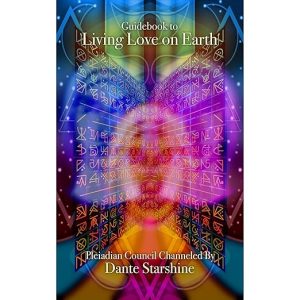
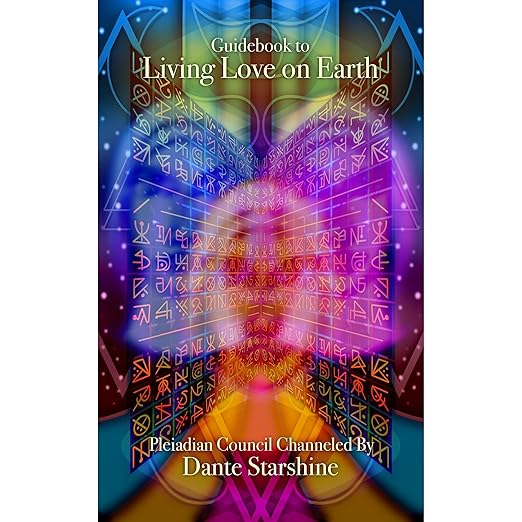
I came to Guidebook to Living Love on Earth midway through a rainy afternoon when I had been reading about the recent resurgence in New Age spirituality, a topic I find genuinely interesting even when individual entries leave me uncertain. Dante Starshine’s book, the first in a series of channeled messages attributed to the Pleiadian Council, is a substantial piece of work: nearly twenty hours of material covering personal ascension, extraterrestrial contact, fear transmutation, and what the author frames as the mechanics of collective awakening. That ambition is worth acknowledging before anything else.
The book’s core argument is that Earth is currently undergoing a frequency shift, and that individuals who move from fear-based to love-based living can both benefit personally and contribute to collective transformation. That structure, personal change as planetary change, is a familiar one in this genre, but Starshine works it with unusual thoroughness, addressing everything from psychic development to past and parallel lifetimes to the deconstruction of what the author calls outdated spiritual beliefs in established religions.
Our Take on Guidebook to Living Love on Earth
What readers respond to most in reviews is clarity. One reviewer calls it incredibly clear, practical, and insightful and notes that the question-and-answer format makes information accessible in a way that similar books in the genre do not always achieve. Another describes it as a genuine guidebook for living in a new spiritual age, someone they return to repeatedly by opening to a random page and finding it relevant. That kind of testimonial describes a book that functions more like a reference or daily companion than a linear read, which may be exactly what Starshine intended. The Pleiadian Council framing, Starshine presents the content as channeled from extraterrestrial beings, will be the central point of engagement or disengagement for any listener. One reviewer, writing from Italy, connects the material to questions about reincarnation across time, framing Starshine as a psychic channeling from future incarnations. That reading is as interesting as anything in the book itself.
Why Listen to Guidebook to Living Love on Earth
For listeners already conversant with channeled material, the Abraham-Hicks tradition, the Ra Material, or similar bodies of work, this book offers a comprehensive single-volume treatment of familiar themes. The practical orientation is genuine: sections on releasing fear, developing intuition, and connecting with higher self are not purely philosophical but include specific guidance. The nearly twenty-hour runtime reflects real depth. Starshine doesn’t skip the difficult questions; the book includes historical material on Earth and extraterrestrial contact, detailed treatment of collective belief systems, and an extended section on personal sovereignty in a chaotic world. That breadth is the book’s strongest feature.
What to Watch For in Guidebook to Living Love on Earth
The Virtual Voice AI narration is the most significant limitation for this particular title. Channeled spiritual content often depends on tone, pacing, and warmth to convey the sense of presence its authors intend. A synthesized voice, however technically competent, flattens that register in ways that matter here more than they might for a business book or thriller. Listeners sensitive to AI narration will likely find this distracting. The book’s length also requires commitment: twenty hours of material covering cosmology, personal practice, and eschatology demands that a listener be genuinely aligned with the foundational premises before they invest. This is not a book that will convert skeptics of channeled material, it assumes the listener is already open to the Pleiadian Council framework and builds from there.
Who Should Listen to Guidebook to Living Love on Earth
Listeners who engage seriously with New Age and channeled spirituality, particularly those interested in extraterrestrial contact narratives and ascension frameworks, will find this one of the more comprehensive treatments available in audio format. Those new to the genre may want to start with shorter, more accessible works before committing twenty hours to material that assumes significant openness. Anyone requiring a human narrator for this kind of content should note the Virtual Voice limitation before purchasing. This is a dedicated-audience book, and it serves that audience with genuine thoroughness.
Frequently Asked Questions
Is this audiobook narrated by a human or AI voice?
The narration uses Amazon’s Virtual Voice AI system, not a human narrator. Listeners who find AI narration distracting, particularly for spiritual or contemplative content, should factor that in before purchasing.
What is the Pleiadian Council framework and do you need prior familiarity with it?
The Pleiadian Council refers to a group of extraterrestrial beings whose communications Starshine channels. The book assumes openness to channeled material and extraterrestrial spirituality, it does not explain or argue for the framework itself, it proceeds from it.
How does this book compare to other channeled works like Abraham-Hicks or the Ra Material?
Starshine’s work shares structural similarities with those traditions, question-and-answer format, focus on love and fear polarity, and collective ascension, but is generally considered more accessible and less philosophically dense than the Ra Material. The practical orientation is closer to Abraham-Hicks.
Can this be used as a daily practice guide rather than listened to cover to cover?
Several readers describe using it exactly that way, opening to a random section and finding the material relevant to current circumstances. The format supports that kind of non-linear engagement, and the twenty-hour length makes cover-to-cover listening optional rather than required.