Quick Take
- Narration: Virtual Voice narration is a limitation here, Kali’s mythological weight and the text’s spiritual complexity deserve a human reader who can modulate tone across terror and tenderness.
- Themes: divine paradox, Tantric origins, goddess transformation across Hindu tradition
- Mood: Dense and devotional, occasionally academic
- Verdict: A serviceable survey of Kali’s history and iconography, but the AI narration and some sourcing concerns make it a supplementary listen rather than a definitive one.
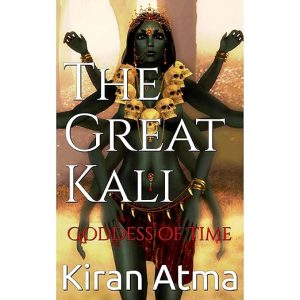
I first became seriously curious about Kali after finishing Wendy Doniger’s work on Hindu mythology a few years ago. Something about the goddess’s refusal to be tidied into a single coherent symbol kept pulling at me. So when I came across Kiran Atma’s The Great Kali, the first entry in the Unraveling the Hindu Pantheon series, I set aside a quiet weekday afternoon to work through it. What I found was an earnest overview that covers real ground, though one that requires patience with its delivery.
The narrator here is Virtual Voice, and I want to be straightforward about what that means: this is an AI-generated reading. For a subject as textured and emotionally layered as goddess worship, that creates a gap between content and form that never fully closes. Kali as Chamunda, gruesome and monstrous. Kali as Dakshina-Kali, gentle and beloved in family shrines. These contrasts deserve vocal range. What you get instead is flat, consistent pacing that can make the devotional passages feel like product documentation.
Our Take on The Great Kali
Atma’s core project is worthwhile: tracing Kali from her Tantric origins through to her mainstream place in Hindu religious life, covering the evolving rituals, rites, and iconographic transformations along the way. The book does this methodically, and listeners who want a single organized source on Kali’s scriptural background and the range of her worship practices will find useful material here. The treatment of her naked form, her associations with blood and dissolution, and how those terrifying images coexist with the gentler Kali venerated in household shrines is handled with more care than the sensationalist framing of the marketing copy might suggest.
There is, however, a concern worth naming. One reviewer from Italy noted that portions of the text appear to borrow heavily from Sally Kempton’s Awakening to Kali: The Goddess of Radical Transformation, describing the sourcing as mild rephrasing rather than original synthesis. I cannot verify this claim independently, but if you have read Kempton’s book, it is worth approaching Atma’s text with that caveat in mind.
Why Listen to The Great Kali
The strongest case for this audiobook is accessibility. The synopsis promises an examination of Kali’s origins in scripture and lore, the transformation of Tantric practice into mainstream veneration, and the range of her iconography from Chamunda to Dakshina-Kali. For a listener who has never engaged with Kali scholarship and wants an organized entry point, this delivers a functional map. The 4.0 rating across eleven reviews, with at least one enthusiastic listener buying the hardcopy after finishing the audio, suggests genuine value for the right audience. One five-star review praises it as an excellent resource and overview, and that framing is probably accurate. As an overview, it works. As a deep scholarly engagement, it falls short.
What to Watch For in The Great Kali
The book’s ambition occasionally outruns its execution. The description of Kali’s symbolism as representing the destructive forces of creation and the cyclical nature of time is true enough, but these ideas are introduced rather than explored with sustained rigor. Listeners expecting the kind of analytical depth found in academic treatments of goddess studies will find the synthesis thinner than advertised. The series framing, positioning this as part of an essential guide to gods, goddesses, myths, and Vedic texts, suggests a pedagogical goal that is mostly met, with the caveat that the narration flattens whatever emotional resonance the material might otherwise carry.
Who Should Listen to The Great Kali
This works well for listeners new to Hindu goddess traditions who want an organized introduction to Kali’s history and iconography without committing to dense academic texts. Devotees of the goddess who already know Kempton, David Kinsley, or Lina Gupta’s scholarship will likely find it redundant and should approach with measured expectations. The Virtual Voice narration is a meaningful drawback for anyone who finds AI-generated audio distracting, and for a subject this spiritually rich, that distraction is harder to set aside than usual.
Frequently Asked Questions
Does The Great Kali require prior knowledge of Hinduism to follow?
No. The book is designed as an accessible overview and assumes no prior background. Atma introduces key terms and concepts as they arise, making it usable as a genuine entry point into Kali scholarship.
Is the Virtual Voice narration a serious problem for this kind of material?
It is a real limitation. Kali’s mythology involves profound tonal contrasts between terror and tenderness, and the AI narration does not modulate across those registers. Listeners sensitive to synthetic voices will notice it throughout.
Should I be concerned about the originality issue one reviewer raised?
It is worth knowing about. One reviewer specifically noted that portions appear closely borrowed from Sally Kempton’s Awakening to Kali. If you have already read Kempton’s book, the overlap may be noticeable. If you have not, Kempton’s work is generally considered the more authoritative and original treatment.
Is this part of a series and does reading order matter?
Yes, it is the first entry in the Unraveling the Hindu Pantheon series. It functions as a standalone listen on Kali specifically, so you do not need to have read other entries in the series to follow it.