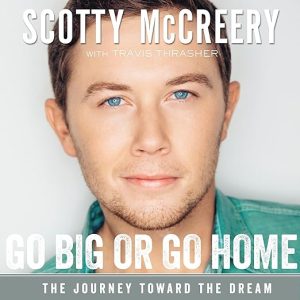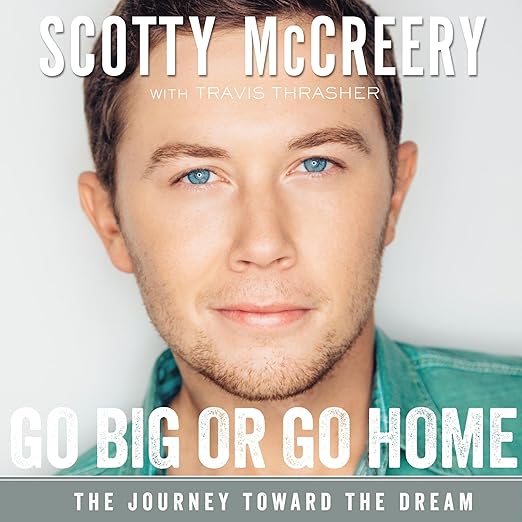
Garner, North Carolina rarely comes up when people talk about how country stars get made, but that is exactly where Scotty McCreery's audiobook memoir Go Big or Go Home starts, with a sixteen-year-old auditioning for American Idol because it sounded like it might be fun. That casualness is the whole point. McCreery never claims he walked into Season 10 with a master plan, and the honesty of that admission sets the tone for a coming-of-age story about faith, family, and an unlikely path to platinum records, told with more humility than the genre usually allows. I came to this one already knowing the broad strokes, the Idol win, the country chart run, the platinum singles, but the audiobook fills in the parts a highlight reel always skips, and it does so in McCreery's own unhurried voice.
McCreery Narrates in His Own Unhurried Voice
McCreery narrates his own book, and that choice matters more than usual here, since so much of its appeal rests on hearing the actual cadence of someone reviewers keep calling an old soul in a young man's body. His pacing has the unhurried, conversational quality of a singer who already knows how to hold a room without pushing for it. He is not a trained voice actor, and several stretches of the delivery lean closer to storytelling around a kitchen table than polished narration, but that rawness works in the book's favor rather than against it. This is not a slickly ghostwritten product performed by a stranger reading someone else's life story cold; it is McCreery's own account, in his own voice, of doors that opened at sixteen and never quite stopped opening, narrated by the one person who actually lived through each hallway.
Co-written with Travis Thrasher, credited by name in more than one listener review even where the catalog copy leaves him out, the book moves chronologically from Garner through the Milwaukee audition line, the season itself, and the disorientation of instant fame landing on a teenager who still had homework due that week. McCreery keeps circling back to three anchors, faith, family, and hometown friends, and the throughline holds because he treats all three as active forces shaping his choices rather than nostalgic set dressing dropped in for warmth. One longtime fan's review calls the book five years in the making, and that patience shows in how unrushed the narrative feels next to the usual quickly assembled celebrity memoir.
The specific refrain McCreery keeps returning to, a humble guy who keeps asking why me, does real work as a framing device across the book rather than reading as false modesty repeated for effect. It reframes the entire memoir as an ongoing negotiation with unearned luck rather than a triumphant victory lap, which is a more interesting narrative choice than the genre usually attempts. That question, asked and never fully answered, gives the book an emotional throughline distinct from the chronological plot of audition, win, and career launch.
Embraced by the Nation, and Then Overseas
The obvious audience is anyone who voted for McCreery back in 2011, and the audiobook rewards that audience directly, with behind-the-curtain detail about the show's mechanics and the strange experience of going from a normal high schooler to a national name inside a matter of weeks. But the memoir also functions as a genuinely useful case study in how a fast, very public rise gets survived without the usual industry wreckage that swallows so many young performers whole. Where plenty of Idol alumni memoirs lean into old scores or scandal to keep pages turning, McCreery's version leans into gratitude instead, and the audiobook format lets that gratitude land as sincerity rather than spin, because a listener can actually hear it in his voice rather than read it flatly off a page.
Josh Turner's blurb, reproduced in the synopsis, describes McCreery as someone who stands for something, and the structure backs that up: chapters organized loosely around uncompromising faith, dreaming big, and embracing a God-given talent are not abstract headers, they are lived through specific, textured scenes, from the audition line in Milwaukee to the pressure of following a hit debut with an actual sustainable career. A fan who has followed him since that original Milwaukee audition calls the book an excellent read for all ages, not just longtime followers, which tracks with how little insider jargon the narration assumes a listener already knows.
The synopsis notes McCreery found himself embraced by the nation and even overseas, a detail worth pausing on given how specifically American the Idol phenomenon can seem from the outside. That international reach, combined with the platinum sales the opening bio line references, complicates any read of this as a purely regional country music story; it is also, quietly, an account of an unlikely global audience finding something to connect with in one small-town North Carolina kid's very specific story.
A Launch Story, Not a Full Career Arc
The faith content is not light seasoning here, it is structural, and listeners hoping for a secular music-industry memoir should know that going in before pressing play. McCreery is explicit and unapologetic about Christian belief as the organizing force behind nearly every decision he narrates, which will feel affirming to listeners who share that framework and possibly heavy-handed to those who do not. The book also offers relatively little industry friction; this is a grateful, faith-forward account rather than a tell-all, so anyone hoping for backstage tension or label drama will come away with a gentler book than the American Idol machine might suggest. As narration, McCreery's amateur polish means a handful of sentences land flatter than a professional voice actor would deliver them.
The other thing worth flagging is scope. This is the story of a launch, not a full career retrospective, so listeners expecting a comprehensive account of everything since Season 10 will find the book stops well short of the present. It covers the audition, the win, and the early scramble to build a real music career out of a television moment, and it does that specific job well without trying to be the definitive McCreery biography. That focus is a strength for anyone wanting the origin story done right, and a limitation for anyone wanting the full arc.
Parents and Faith-Forward Listeners Are the Audience
American Idol loyalists and country radio fans are the built-in audience, but the audiobook also works for anyone who enjoys coming-of-age stories about talent meeting circumstance at exactly the right moment. Faith-forward listeners will find the devotional throughline genuinely moving rather than performative, since reviewers who have followed McCreery's career for well over a decade describe the book as consistent with the person they watched grow up in public, right down to the old-soul steadiness that keeps showing up in every chapter. Parents looking for a clean, values-forward audiobook to share with a teenager who dreams big will also find plenty to work with here.
Listeners hunting for an unvarnished music-industry expose, or anyone who bristles at extended Christian testimony woven through a career narrative, should skip this one, since neither is what McCreery is offering.
In Brief
- Performance: Scotty McCreery narrates his own story, trading professional polish for real authenticity, and the tradeoff favors sincerity every time.
- What it covers: American Idol origin story, faith and family, small-town roots meeting sudden fame
- Feel: Warm, grateful, unhurried
- Our call: A heartfelt, faith-forward memoir best suited to fans and faith-forward listeners rather than industry-gossip seekers.
Good to Know
Does Scotty McCreery narrate the Go Big or Go Home audiobook himself?
Yes. McCreery reads his own memoir, and his unpolished, conversational delivery gives the story a sincerity a professional narrator reading someone else's words could not fully replicate.
Does this audiobook cover Scotty McCreery's entire music career?
No. It focuses on his path from Garner, North Carolina through the American Idol Season 10 win and the early scramble to build a lasting music career, not a full career retrospective up to the present.