The Short Version
- Performance: Derek Monaghan narrates with no prior track record on file; the tightly scoped, fact-driven chapters suit a measured delivery.
- What it covers: Gothic architecture and construction history, sacred relics and pilgrimage, literature's role in historic preservation
- Feel: Curious and detail-rich
- Our call: A well-structured single-building deep dive, best paired with reference images given the visual subject matter.
Why do some of Notre Dame's carved monsters spit rainwater while others just crouch in silence, watching the city below? That's one of ten specific questions this audiobook sets out to answer about the Paris cathedral, and architectural historian Caspar Dene structures the entire three-hour-plus format around exactly that kind of concrete, answerable curiosity rather than a broad chronological survey. Gargoyles, Glass, and Glory covers Notre Dame from its 1163 foundation stone through the 2019 fire and reopening, with each chapter built around one specific fact or mystery rather than a general timeline.
Waterspouts, Holy Relics, and a Thirteen-Ton Bourdon
The ten-facts structure the synopsis lays out is unusually specific for a history title this short, and it holds up as a genuinely well-designed format rather than a marketing gimmick. The gargoyles-versus-grotesques chapter alone is a good example: rather than treating the cathedral's carved creatures as one decorative category, Dene distinguishes the ones that function as waterspouts from the purely symbolic ones, and traces how a nineteenth-century restorer reshaped the public's sense of what a Notre Dame monster even looks like. That's the kind of specific, checkable claim that makes for good audio nonfiction, concrete enough to picture, focused enough to actually explain in a single chapter.
The relic chapter (covering the Crown of Thorns, a fragment of the True Cross, and a holy nail) and the bell chapter (centered on Emmanuel, the thirteen-ton bourdon that has rung for coronations and funerals alike) both work the same way: one tightly scoped subject per chapter, with enough surrounding historical context to make each fact land with real weight rather than reading as trivia. The French Revolution's near-destruction of the cathedral and centuries of continuous pilgrimage both get folded into that same context-building approach.
Centuries of Masons With No Single Architect
The construction-history chapter alone covers nearly two centuries of continuous building work, moving through Early Gothic, High Gothic, and Rayonnant styles as the cathedral's design evolved across generations of masons, carpenters, and artisans who never saw the finished structure themselves. Framing the building as a living textbook of medieval ambition captures something real about Gothic cathedral-building generally: these were multi-generational projects with no single architect or patron overseeing the whole thing start to finish, a genuinely different way of thinking about authorship than almost any other art form covered in popular history audio.
Caspar Dene's credit as an architectural historian matters for a book like this specifically, since the genre is full of enthusiast-written popular history where enthusiasm outruns actual expertise. A trained historian bringing real research discipline to a ten-fact structure built for a general audience suggests the simplification is a deliberate accessibility choice rather than a gap in the author's own command of the material.
A Novel That Helped Save the Cathedral
The Victor Hugo chapter is arguably the book's best structural choice: rather than treating The Hunchback of Notre-Dame as a footnote, the synopsis frames it as a direct cause of the cathedral's physical survival, crediting the novel with shifting public opinion enough to spark the Gothic revival that eventually funded real restoration work. That's a genuinely underappreciated piece of architectural history, a novel functioning as a preservation campaign, and it's the kind of connective, cross-disciplinary detail that separates a well-researched popular history from a straightforward facts list.
Twenty Minutes per Fact, Bookended by Fire
At three hours and twenty-two minutes, the pacing works out to a little over twenty minutes per fact on average, generous enough for real narrative development within each chapter without letting any single topic overstay its welcome. For a listener who wants real depth on ten specific things rather than shallow coverage of fifty, that's a well-calibrated runtime, and it fits naturally into a single commute-length or evening listen without demanding a multi-day commitment.
Structuring the book around the 2019 fire and reopening as bookends, opening with resilience across more than 850 years and closing with the most recent test of that resilience, gives the whole ten-chapter format a satisfying shape without forcing a strict chronological march through eight centuries. A listener who remembers the 2019 fire coverage will find that shared reference point makes the older historical chapters land with more immediacy than a purely academic architectural history might.
A 5.0 Rating With Not One Review
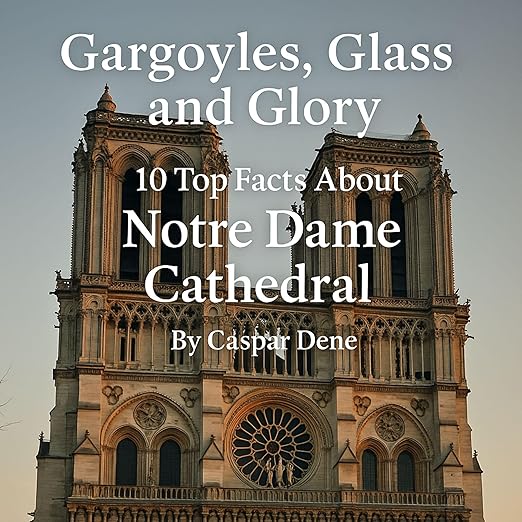
Architecture and Gothic building history are inherently visual subjects, and gargoyle carving styles, decorative tracery, and the specific stone construction techniques described across two centuries of building work all lose something without an image to anchor them. Dene's approach is described as pairing vivid storytelling with meticulous detail, which suggests real effort to compensate verbally for what a listener can't see, but anyone who wants to follow along with actual photos of the buttresses, windows, or gargoyle carvings being discussed should have a reference image or two open alongside listening.
No reviews are attached to this listing yet, despite a strong 5.0 rating across 98 ratings, so specific listener feedback on pacing, narration quality, or how well the ten-chapter structure holds together in practice isn't available to weigh here. The rating count itself suggests a real, engaged audience, just one that hasn't left detailed written feedback.
The runtime also means certain promised details get relatively brief treatment; ten facts in just over three hours leaves less room for extended digression into, say, the full biography of the nineteenth-century restorer reshaping the gargoyles, or a complete history of the Crown of Thorns before it arrived at Notre Dame. Listeners wanting that level of tangential depth on any single fact should treat this as a well-organized starting point rather than the final word.
The relics chapter also raises a question the synopsis doesn't fully resolve on its own: verifying the provenance of centuries-old sacred objects is inherently a matter of documented custody and tradition rather than modern forensic proof, and a careful listener should expect the book to present them as objects of genuine historical pilgrimage and belief rather than as scientifically authenticated artifacts.
A Deep Dive Into Just One Building
Anyone planning a Paris trip, or already fascinated by Notre Dame specifically rather than French history broadly, will find this an efficient, well-organized way to arrive with real context. Architecture enthusiasts who want Gothic building history delivered through one specific, deeply documented case study rather than a continent-wide survey are equally well served, and the ten-fact structure makes it easy to revisit a single chapter later rather than needing to reabsorb the whole thing.
A broader architectural history of Gothic cathedrals across Europe, rather than a single-building deep dive, is not what's on offer here; this one stays deliberately focused on Notre Dame throughout, and anyone wanting the wider survey will need a different title. Given that this sits within the Marvels in Stone: Amazing Buildings Around the World series, that broader survey may exist elsewhere in the same catalog for listeners who finish this one wanting more.