Quick Take
- Narration: Self-narrated by Mick Conefrey, whose deep familiarity with the subject lends the account quiet authority, though his delivery is measured rather than theatrical.
- Themes: Exploration and national pride, the politics of mountaineering, myth versus reality on the world’s highest peak
- Mood: Rigorous and reverent, with the deliberate pace of a scholar who has spent years in the archive
- Verdict: For listeners who want the full story behind the 1953 Everest summit rather than the simplified legend, Conefrey’s account is the most thoroughly documented available.
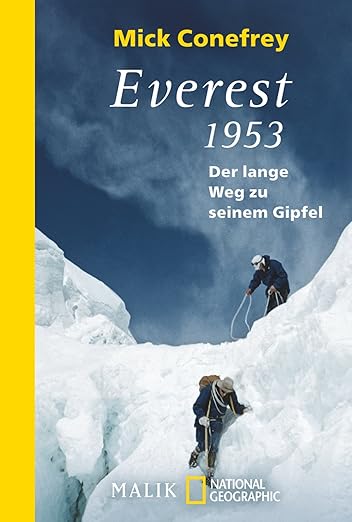
I came to this one expecting a familiar tale, the flags, the photographs, the breathless dispatches from the mountain. What Mick Conefrey delivers instead is something more careful and more lasting. I was on a long train journey when I started listening, and there is something appropriate about that kind of slow transit for a book concerned with months of grueling preparation, false starts, and geopolitical maneuvering that preceded the actual summit on May 29, 1953.
Conefrey is both a documentary filmmaker and a historian of exploration, and that dual background shows. He is not interested in the clean, commemorative version of the Everest story. He wants to know how Edmund Hillary and Tenzing Norgay arrived at that particular moment, what forces shaped the 1953 British expedition, and what happened to the individuals involved after the world decided they were heroes. The result draws on previously unpublished diaries, archival material, and interviews with surviving expedition members and their families.
Our Take on Everest 1953
What separates this from the many Everest books that line the adventure section is Conefrey’s insistence on the team behind the summit. He examines John Hunt’s leadership, the logistical machinery that made the climb possible, and the roles of climbers whose names have largely faded from popular memory. The mystification of the summit, who stepped onto the top first, Hillary or Tenzing, and why it still matters, is handled with more nuance than most accounts manage. Conefrey does not pretend the question is simple, nor does he treat it as gossip. It is a story about national ownership of achievement, about colonial-era assumptions, and about how a single event can be claimed by multiple histories simultaneously.
Why Listen to Everest 1953
The audiobook format works in the narrator’s favor here. Conefrey reads his own work, and his voice carries the measured confidence of someone who spent years researching every sentence. He does not dramatize unnecessarily. When the prose becomes genuinely tense, during the final push to the summit, or during the moments of political friction within the expedition, the restraint in his delivery makes those passages feel more real, not less. This is not an audiobook designed to accelerate your pulse through performance. It earns its emotional weight through accumulated detail.
What to Watch For in Everest 1953
Listeners should be aware that Conefrey approaches the Everest story from a historian’s angle rather than a climber’s. Those hoping for sustained technical descriptions of the ascent itself may find the early sections, covering pre-expedition planning, earlier failed attempts, and the complicated relationship between the Royal Geographical Society and the alpine community, demanding in their thoroughness. The book is also notably fair-minded in its treatment of Tenzing Norgay, acknowledging perspectives that earlier British accounts of the climb tended to subordinate. For listeners familiar with Wade Davis’s Into the Silence or Peter Gillman’s work on the 1924 expeditions, Conefrey fits naturally into that tradition of rigorous, archive-grounded mountaineering history.
Who Should Listen to Everest 1953
It is also worth noting that the audiobook covers a story with genuine global resonance. The 1953 summit arrived at a moment when questions of national identity and postwar purpose were acutely felt in Britain, and Conefrey does not ignore that context. The political pressure on the expedition to succeed, the timing relative to the Queen’s coronation, the carefully managed announcement, all of it is woven into the human story of the climbers themselves. That combination of individual experience and historical moment is what elevates this beyond a straightforward adventure narrative.
This audiobook rewards listeners with genuine curiosity about the political and human machinery behind one of the twentieth century’s most iconic moments. If you have read the standard accounts and want something that pushes behind the myth, Conefrey is essential. Those new to Everest history may want to start somewhere more narrative-driven before returning to this one. At just under ten hours, it is efficient without feeling truncated, a serious work from a serious researcher.
Frequently Asked Questions
Is this audiobook based on new research or does it cover the same ground as other Everest histories?
Conefrey drew on previously unpublished diaries and new archival material along with interviews with surviving expedition members and relatives, making it meaningfully distinct from earlier accounts.
Does Mick Conefrey take a position on who stepped onto the summit first, Hillary or Tenzing?
He examines the question carefully and with historical context rather than attempting a definitive ruling, treating it as a story about national ownership of achievement and the complexity of memory.
How does this compare to Wade Davis’s Into the Silence in terms of scope and approach?
Davis focuses on the 1924 expedition and Mallory, while Conefrey is specifically concerned with the 1953 summit. Both are archive-grounded, but Conefrey’s book is shorter and tighter in its focus.
Is the narration accessible for listeners who are not already familiar with mountaineering history?
Conefrey writes in accessible prose and avoids dense technical jargon, though his historiographical thoroughness means newcomers may find the early sections slower going than those with prior interest in the subject.