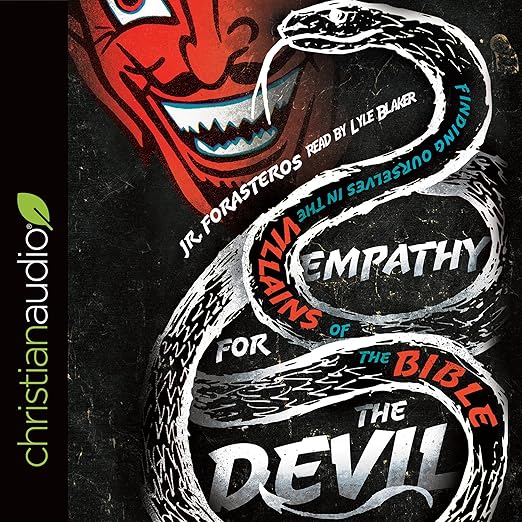
Quick Take
- Narration: Lyle Blaker delivers a measured, pastoral tone that suits the material without dramatizing it into something it isn’t, the fictionalized passages benefit from his restraint.
- Themes: moral self-examination, biblical villainy as cautionary mirror, sin and temptation
- Mood: Thoughtful and quietly convicting, with moments of genuine narrative tension in the fictionalized sections
- Verdict: Forasteros’ willingness to humanize Cain, Jezebel, and Judas without excusing them makes this an unusually honest piece of biblical study.
I put this one on late one weeknight when I was too tired to follow a novel but still wanted something that would make me think. JR. Forasteros’ concept is strange enough on paper that I almost passed it over: fictionalized first-person accounts of biblical villains, followed by expository commentary. It sounded like it might tip into gimmickry. It doesn’t.
The structure is genuinely smart. By letting you inhabit Cain’s perspective before pulling back to analyze what went wrong and why, Forasteros closes the distance we normally keep between ourselves and the people we’ve been taught to treat as moral warnings. The result, as one reviewer put it, is conviction rather than comfort. You stop seeing Jezebel as a symbol and start recognizing something uncomfortably familiar.
Our Take on Empathy for the Devil
This is not a book that softens the edges of scripture to make it more palatable. Forasteros takes figures like Herod the Great and Herodias, and rather than flattening them into pantomime evil, reconstructs their motivations in ways that are historically grounded and theologically serious. The fictionalized sections are vivid without being sensational, and the biblical and cultural commentary that follows each one earns its place. The title is intentionally provocative, and it delivers on that provocation.
What surprised me most was how well the book handles Satan, the most theologically loaded villain on its roster. Forasteros doesn’t reduce the figure to a cartoonish adversary or rehabilitate him into something sympathetic. Instead, the chapter illuminates how certain patterns of thought, pride, refusal to yield, self-justification, are the very patterns that scripture warns against. The application to contemporary life never feels forced.
Why Listen to Empathy for the Devil
The audiobook format works well here because Lyle Blaker’s narration keeps the fictionalized passages grounded. There is no melodrama, no vocal theatrics for the villains. He reads Cain’s perspective with the same measured tone he brings to the exposition, which is the right call. It prevents the narrative from feeling like performance and keeps the listener’s attention on the moral weight of what is being said. At just under seven hours, the pacing is brisk enough that you never feel the chapters dragging.
For listeners who grew up in churches where these figures were presented as flat symbols of wickedness, the book offers a genuine recalibration. One reviewer described the first few chapters as opening their eyes to how their own sins compare to the villains of the Bible, which is exactly the effect Forasteros is aiming for. This is pastoral writing in the best sense: it uses biblical study not to lecture but to illuminate.
What to Watch For in Empathy for the Devil
The fictionalized framing will not land for everyone. Readers who prefer strict nonfiction biblical commentary may find the narrative interpolations distracting or presumptuous. There is always a risk with fictionalized scripture that invention outpaces the source material, and while Forasteros is careful to anchor his narratives in historical and cultural context, listeners should know going in that these are imaginative reconstructions, not transcribed accounts.
One reviewer also noted wishing the book had included Pharaoh from Exodus and Pontius Pilate. That absence is real. The selection of villains, while strong, covers Cain, Delilah, Jezebel, Herod, Herodias, Judas, and Satan, which means some of the most culturally resonant figures in the broader canon are left out. Whether that reads as a limitation or an invitation to a follow-up volume depends on your expectations going in.
Who Should Listen to Empathy for the Devil
This works best for listeners who are already comfortable with the biblical source material and want a fresh angle on it. It functions well for book clubs in faith community settings, where the reflective questions embedded in each chapter can anchor group discussion. Listeners who want strictly academic biblical scholarship may find the fictionalized framing a distraction. Those looking for a book that challenges them morally rather than reassures them spiritually will find it well worth the six and a half hours.
Frequently Asked Questions
Does Forasteros try to redeem or excuse the biblical villains he portrays?
No. The empathy the title invokes is about understanding motivation rather than removing culpability. Each chapter closes with commentary that is theologically clear about where the character went wrong and why it matters for how we live.
Is this suitable for listeners who are not Christian or who don’t have a strong biblical background?
It helps significantly to have some familiarity with the biblical narratives. The book assumes you know who Jezebel and Herod are. Without that context, the fictionalized sections lose some of their impact and the commentary becomes harder to follow.
How does the fictionalized narrative blend with the expository commentary?
Each chapter follows the same pattern: a vivid narrative section told from the villain’s point of view, then a shift to Forasteros’ own voice analyzing the theological and cultural context. The two modes are clearly distinguished and do not bleed into each other.
Does Lyle Blaker differentiate between the narrative and commentary sections in his narration?
Blaker maintains a consistent, grounded tone throughout rather than adopting character voices for the fictionalized sections. This is a deliberate choice that keeps the book from feeling theatrical and works in its favor, though listeners expecting dramatic vocal differentiation may need to adjust their expectations.