Quick Take
- Performance: John-Roger Parkes is credited as the only reader, working from text that was plainly written for the page, bullet lists and retail call to action included.
- What it covers: Camera maintenance and shoot safety, flash technique, travel and documentary work
- Feel: Brisk and list-driven, closer to a checklist than a course
- Our call: Useful for the verbal half of photography if you already own the gear, but the 2.6 average deserves your attention before your money.
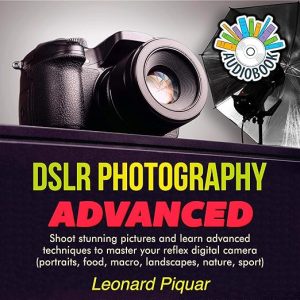
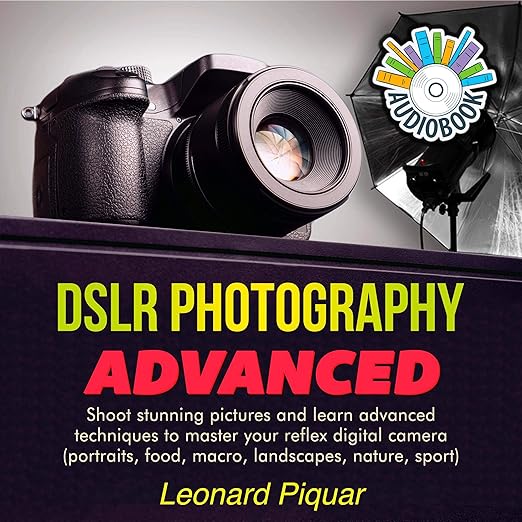
Ten ratings, an average of 2.6, and not one written review: that is the entire public record attached to this photography audiobook, and it makes for a strange silence around a self-published instructional title that has been on sale since February 2020. Leonard Piquar wrote it, the publisher line carries that same name, John-Roger Parkes reads it, and the description promises to move an intermediate photographer up to professional-quality results. The score suggests some listeners disagreed. Nobody left a sentence explaining why.
The List Stops Being Specific at 'Tons More'
Promises made here are unusually specific for something this short. The description lists the history and evolution of the digital camera, ten precautions for maintaining a camera and preventing damage, five safety tips for keeping photographer and subject secure during shoots, methods matched to different scenarios and environments, tricks for mastering flash, a crash guide to travel and documentary work, and step-by-step setup instructions. Then it adds "and tons more!", which is the point where the specificity stops and the marketing takes over.
Photography is taught visually nearly everywhere else, and that single fact governs how this recording lands. Concepts survive the move into audio perfectly well: why you would choose one approach for a dim interior and another for open ground, how to handle equipment so it lasts, what to settle with a subject before a shoot begins. Comparisons do not survive it. No sample frame, no before-and-after pair, no diagram of a lighting setup reaches you through a speaker.
Three hours and forty-four minutes is the whole course, and doing that arithmetic before you commit is worth the minute it takes. Divide the time across camera history, maintenance, safety, method selection, flash, travel, documentary work and setup, and each subject gets a short talk rather than a chapter. Treated as a structured overview that tells you what to go and practice, that is defensible. Treated as the advanced manual the title advertises, it is thin.
Advanced in the Title, Intermediate in the Text
Some parts of photography genuinely are verbal, and those are the parts this format serves. Habits, precautions and pre-shoot decisions can all be absorbed while your hands are busy, and hearing a list of ten maintenance precautions read out on the way to a location beats reading the same list at home a week earlier. The safety material belongs in your ear rather than in a manual you left in the car, and that argument holds up. Five tips for keeping a photographer and a subject secure during a shoot are the sort of thing nobody rereads voluntarily and everybody should hear twice.
Ambiguity about the intended listener runs through the copy. The title says Advanced. The opening addresses an intermediate photographer who "mastered the basics of DSLR photography" and wants to upgrade a portfolio. The closing widens again to "intermediate and professional photographers". Those are three different people with three different needs, and a working professional is not going to learn much from a history of the digital camera. Take the middle description as the honest one and calibrate accordingly.
Self-publishing explains some of the rough edges and none of the ratings. With the author's own name printed as publisher, no house editor shaped the running order and no production team asked whether this material needed a visual companion. Independent instructional audio can be very good, and niche titles like this one exist at all because that route exists, but it does concentrate every quality decision in one person plus whoever was hired to voice the result.
Ten People Rated It, None Explained Why
That 2.6 average is the number to reckon with, and it is the honest reason to hesitate. Ten people rated the recording and their collective verdict lands closer to two stars than four, which on a catalog full of four-point-somethings is a loud signal. What nobody can tell you is what went wrong, because not one of those ten wrote a line about it. The dissatisfaction is documented. The diagnosis is not, and guessing at it would be dishonest.
Marketing copy from a text storefront survived into the description intact. It closes by instructing you to scroll to the top of the page and click the buy now button, which is written for a layout of thumbnails and side panels rather than for an audio catalog entry. Small thing by itself, but it hints at how the file came together: a manuscript prepared for the page, ported across without an editorial pass asking what a listener would actually need.
Step-by-step camera setup is where the format fights the material hardest. A sequence of menu selections is simple to demonstrate and awkward to dictate, and following one by ear means pausing, rewinding, and holding four instructions in your head while looking down at a mode dial. No accompanying document is named anywhere on the listing, so plan on taking your own notes. If you wanted a reference to keep beside the camera bag, this will not become one, and the flash section carries the same problem in a sharper form, since a lighting choice you cannot see described is a lighting choice you will end up testing yourself.
Parkes Narrates a Gap in Instructional Audio
Listen if you already own a DSLR, shoot with it regularly, and want the conceptual half of the craft delivered while your eyes are occupied elsewhere. It suits anyone heading toward travel or documentary work, since the description frames those sections as practical crash guides rather than theory. And it suits the listener who wants a short survey pointing toward things to go and practice, as opposed to a manual they expect to consult mid-shoot with a camera in hand.
Give this one a pass if you are honestly still a beginner, whatever the title implies, since the copy assumes the basics are behind you. It is also the wrong choice for anyone who learns technique by studying images, which covers most photographers I know. A 2.6 rating carrying no explanation is a fair reason to hesitate on its own, particularly when the same ground is covered in illustrated form almost everywhere else you might look.
What this listing really documents is a gap in instructional audio. Photography books read aloud are rare because the medium resists them, and the few that exist are either rethought for the ear or ported straight across from print. This one carries the marks of the second approach, which does not make it useless: the maintenance and safety chapters lose nothing whatsoever in translation. It does mean the advanced techniques promised in the title are the parts least likely to survive the trip.
A Few Questions About DSLR Photography Advanced
Can an audiobook teach DSLR technique with no images at all?
Partly. Maintenance routines, safety practice, and decisions about which method fits which environment all work by ear. Anything comparative does not: exposure results, framing choices and lighting setups are normally taught by showing two versions side by side, and none of that reaches you through a speaker.
Does this audiobook come with a PDF or any visual companion?
The listing names no accompanying document, no diagrams and no sample gallery. Some instructional recordings ship with a supporting file and say so in the description; this description says nothing of the kind, so assume audio only and keep a notebook within reach while you work through it.