Why Brinton Narrates Her Own Coaching Voice
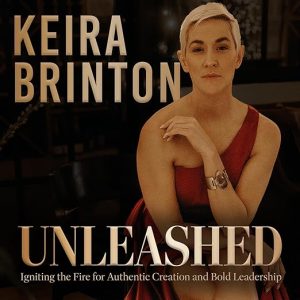
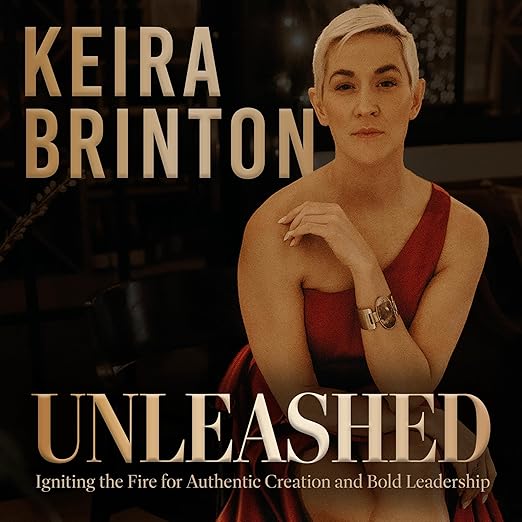
Keira Brinton's Unleashed is positioned as a manifesto for creative and visionary leaders at a specific historical moment: one where AI threatens to homogenize human expression at scale, and where the leaders most at risk are precisely the originalists and rebels whose work resists standardization. That framing is not new in the genre of creative leadership literature, but Brinton brings it a particular urgency because she is not writing from the outside. She is a writing coach and publisher, and the audiobook she narrates here is built from the same raw material she uses in her one-on-one coaching sessions. The result is a 5-hour and 8-minute audiobook that functions less like a self-help guide and more like an extended conversation with someone who has genuinely thought hard about what it costs to stay original.
The self-narration is central to why this audiobook works. Michael V Puhala, a client of Brinton's who reviews the book, notes that the audiobook gives instant access to her voice and perspective in the same way a direct coaching session does. That is exactly right. Brinton does not perform her conviction; she enacts it, and there is a meaningful difference between those two things in audio. Reviewer Connie T describes how the book resonated as both an entrepreneur and a leader navigating the full range of life's difficulties, and the breadth of that resonance is attributable at least partly to how the narration strips the text of distance between author and listener.
The Extraordinary Gifts Machines Cannot Replicate
The audiobook's central argument is that creative leaders do not need to become more like AI to survive the AI era; they need to become more deeply themselves. Brinton builds this case through an examination of what she calls extraordinary gifts: the specific qualities of original thinking, emotional intelligence, and transformative vision that machines cannot authentically replicate. She is not naive about AI's capabilities; the book is too current for that. But she situates those capabilities as a pressure that either flattens or clarifies, depending on whether the creative leader in question has done the interior work of knowing what they actually stand for and why it matters.
The audiobook honors rebels, visionaries, and trailblazers, as its synopsis states, but it does not do this with the uncritical cheerleading that afflicts so much leadership content. Brinton's coaching background shows in how directly she addresses resistance and self-doubt. Reviewer Daniel Brown describes how the book helped him access parts of himself that had been blocked, including the spiritual and unconscious dimensions of creative work, and that language is consistent with what the book actually attempts. Unleashed goes places that more surface-level leadership audiobooks avoid: into the fear behind perfectionism, the roots of creative paralysis, and the specific vulnerability of people whose work depends on their distinctiveness remaining intact when everything around them incentivizes conformity.
Paced Like a Coaching Engagement, Not a Lecture
At just over five hours, the audiobook has the pacing of a sustained coaching engagement rather than a lecture series. Brinton builds ideas across chapters rather than making each chapter stand alone, which means the audiobook rewards sequential listening more than it rewards dipping in and out. The emotional arc is cumulative and builds toward a different relationship to creative work than most listeners will start with.
Experiential Coaching Over Data-Driven Frameworks
Listeners who engage best with data-driven, empirically structured leadership content will find Unleashed less in their register than a McKinsey-derived leadership framework guide. Brinton's approach is experiential and narrative rather than statistical. She draws on her coaching history and her own creative journey rather than citing organizational research, and the authority the book claims is earned through direct experience rather than external validation. That is a specific kind of credibility, and it will resonate differently depending on what the listener comes in needing and what they are willing to receive.
The AI-era framing, the argument that what machines do cheaply to creative work is precisely what makes the irreducibly human premium more valuable, is an argument being made in several forms across the creative economy right now. Brinton's version of it is grounded in the specific experience of writers, coaches, and creative professionals rather than the broader digital economy, and that specificity makes it more useful for that audience while limiting it for those whose creative work happens in other contexts, say, engineering or scientific research, where different forms of originality operate under different pressures.
The 4.0 rating across 10 reviews reflects a genuinely satisfied core audience with possibly some resistance from listeners who came expecting a more conventionally structured leadership guide. The category, arts and entertainment with an art tag, is perhaps narrower than the actual content. Unleashed has applicability to anyone whose professional value lies in originality rather than in repeatable process, and that audience extends well beyond the typical arts sector.
Built for Writers Protecting a Distinctive Voice
Writers, coaches, creative entrepreneurs, and professionals whose work depends on developing and maintaining a distinctive personal voice will find this audiobook most directly useful. Those in the early stages of creative career who are struggling with resistance, self-doubt, or the pressure to conform to successful templates will find Brinton's perspective both clarifying and energizing. Listeners who prefer evidence-based, framework-driven leadership content over narrative coaching will find the register less congenial, though the substance is serious and the coaching experience behind it is real. Anyone in the creative economy who is trying to understand what it means to remain genuinely original in a period when artificial intelligence makes the production of competent but undistinctive content effectively free should find something of lasting value here.