Key Details
- Narration: Patti Smith is credited as her own reader, with no director, studio or supporting voice named beside that credit.
- Themes: Friendship before fame, art made without money, New York in the late sixties and seventies.
- Mood: Plainspoken, nostalgic, quietly sad.
- Verdict: Worth the time for the friendship and the period reporting, provided you accept a memoir that assumes rather than explains.
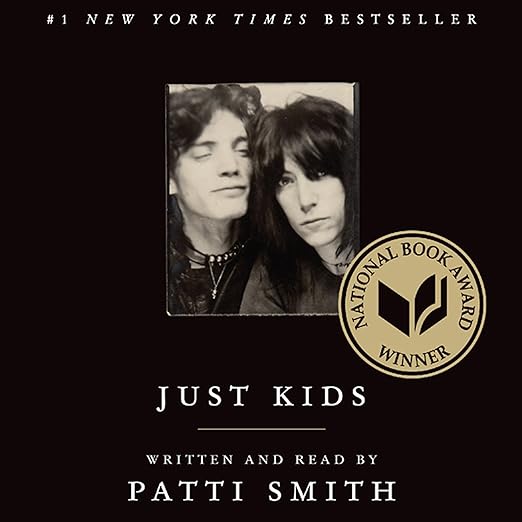
Patti Smith reads her own memoir here, which is the first useful thing this listing tells you and very nearly the last. Nine hours and fifty minutes, an Ecco credit, a July 2011 date: that is all the audiobook record amounts to for a book about two young artists sharing a room in New York and working out, separately and together, what they intended to become. Everything else a buyer might want has to come from the reviews, and the reviews turn out to be doing something strange.
Mapplethorpe and a Vivid Portrait of New York
Robert Mapplethorpe is the other half of the book, and the description names him without ceremony: a never-before-seen glimpse of a remarkable relationship in the era of the Chelsea Hotel. What the copy undersells is the period reporting. Tom Rubens, writing in September 2022, calls the result as vivid a portrait of late sixties and mid-seventies New York as any film or piece of music could manage, and that judgment is the one I would put on the cover if the publisher asked me.
Smith Reads Her Own Sentences, Ghostwriter Doubts Answered
Reading her own sentences changes the arithmetic of a memoir. Author line and reader credit carry the same name, so the pauses, the emphasis and the decisions about what to hurry past belong to the woman who lived through it rather than to a hired professional. That makes this a different object from most memoirs on sale, and it is the one production fact worth weighing before you buy. It also removes the usual question of whether a performance suits the material.
Smith's prose runs plain and faintly formal, which is what a response filed from Spain in June 2018 is reaching for when it observes that she does not tell the stories in detail and keeps her privacy in mind, and reads that reticence as proof that whatever does get said is genuine. The same account wonders aloud whether a ghost writer was involved and concludes not. On a recording made by the author, that particular worry answers itself.
You Don't Need to Know Her Music First
Nothing here requires you to have heard the records. A five-star account filed from Australia in September 2017 says outright that its writer has never listened to Patti Smith's music and loved the book regardless, which is the most useful recommendation anywhere on the page. Susie Kim adds that the cameos from famous figures passing through the same rooms are part of the pleasure. This is a portrait of two people before either was widely known, and the discography is not the subject.
Scale is what makes it work in the ear. At this length the book has room to sit inside a decade without ever losing sight of the friendship at its middle, and what you get is chronology rather than analysis. It moves through years the way a person remembers them, not the way a biographer would organize them, so the shape reaching your ears is the shape it was written in. That suits a reading by the writer better than a scholarly memoir would.
City writing is the other reason to spend the time. Cheap rooms, odd jobs, and the people who came through them: the period covered here has been mythologized so heavily since that a first-hand account filed by somebody who was broke while it was happening carries real documentary weight. Smith is not writing a scene history from the outside. She is writing what two people ate, wore, made and tried to sell, which turns out to amount to the same thing.
A Book Group Calls the Style Repetitive
Repetition is the one reservation on the page, and it arrives inside the most detailed response there. Writing in May 2017 about a book group that met at the LGBT Center in New York, H. Williams reports that everyone present either liked the book or loved it, then adds that a few readers found the style simple and repetitive at times. In print you skim past a sentence pattern without noticing. In a recording you sit inside it for the duration.
Two of the five entries on this listing are not about a recording at all. A five-star notice filed in Mexico in January 2026 consists of a complaint that the copy arrived badly trimmed, which is a binding fault and cannot happen to audio. The Spanish notice quoted earlier spends much of its own length on the seller and on when the parcel finally turned up. Two more came from the United States and one from Australia: five responses, four countries, one aggregate score built out of all of them.
Eleven ratings is a strikingly thin counter for a memoir of this standing, and five of those eleven left text behind. A sample that small swings on a single vote, so the 4.5 carries almost no information about the recording or about anything else. The number measures a text, and part of what it measures is a printed one. Read the responses and the description instead, and treat the average as decoration rather than as evidence.
Smith's Hesitations Over a Professional's Polish
Anyone who has tried to make something with no money and no permission is the core audience here, and the friendship rather than the punk history is the draw. Readers of artist biographies get an unusually undefended one, written from inside the years it describes. People who like New York books get a version composed in a cheap room rather than assembled later in a research library, which is a rarer thing than the genre suggests.
Anyone shopping for a scene history with dates and context supplied should look elsewhere, because the memoir assumes you will take its people as they arrive and explains nobody. Equally wrong for somebody who wants the music accounted for, since the records are not the subject and the copy never once pretends they are. Anyone who needs a reference to dip into and out of will find the shape of this one working steadily against them.
My own test for a self-read memoir is whether I would rather have the writer's hesitations than a professional's polish, and on this material the answer took about a minute. Smith wrote the book and Smith reads it, and everything the listing fails to say about the recording matters less than that one fact. Nine hours and fifty minutes with the person who was actually in the room is the offer. Judge the aggregate as a text score, not a production score, and the decision gets simple.
Does Patti Smith narrate the Just Kids audiobook herself?
Yes. This listing names the same person as author and as reader, so the memoir reaches you in the voice of the woman who lived it. Nobody else appears on the production side at all, which means the recording's one guaranteed quality is that its hesitations belong to the writer.
Do I need to know Patti Smith's music to follow this audiobook?
No. The description positions the book as a friendship story set around the Chelsea Hotel, and it mentions her records only as context for who she later became. The years covered are the ones before any of that fame arrived, so the discography sits outside the frame rather than inside it.
Why do only eleven ratings sit behind this listing?
The counter is unusually thin for a memoir this well known, and five of the eleven left written text. An average built on eleven votes swings on any one of them, so it carries little information either way. The written responses and the publisher's description are the more useful evidence here.
How long is the Just Kids audiobook, and does it work in short sittings?
It runs nine hours and fifty minutes, and it forgives short sittings, because the friendship rather than a plot is what carries you from one stretch to the next. You can stop and come back without losing anything at all. What it will not hand you is a scaffold of dates to hang the story on.