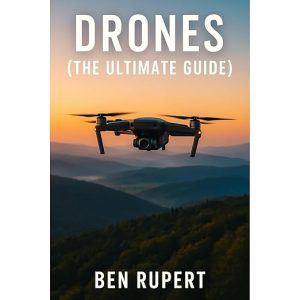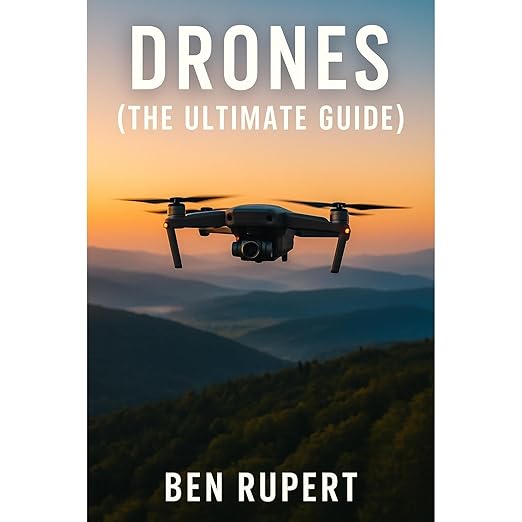
Drone technology has proliferated far faster than the literature around it, which means most of the guides available to beginners are either outdated, too narrowly focused on a single use case, or so superficial that they leave new pilots with questions they cannot locate answers to without additional research. Drones (The Ultimate Guide) by Ben Rupert takes the breadth-first approach - two hours of dense, structured coverage of how drones work, how to fly them, how to photograph from them, how to build them, and what the legal framework around operating them looks like in a general US context. For a reader who genuinely knows nothing about UAVs and wants a comprehensive orientation before committing to a purchase or a course, this audiobook delivers what the title promises more reliably than many comparable guides.
The narrator is Virtual Voice - Audible's AI-generated audio. This is worth addressing directly because the listening experience is meaningfully different from a human performance. Virtual Voice handles the descriptive and procedural prose in this guide with acceptable clarity: the explanations of flight mechanics, parts, and onboard systems are delivered at a pace that allows comprehension, and the list-format sections that make up much of the beginner instruction work reasonably well in this format. The enthusiasm that a skilled human narrator would bring to the sections on drone racing and aerial cinematography is absent, but the informational content is not compromised by the synthetic delivery for a listener primarily seeking instruction rather than inspiration.
A Human Voice's Missing Enthusiasm for Racing
The coverage architecture is the book's strongest feature. Rupert moves systematically from what drones are and how they have evolved, through flight mechanics and hardware components, to purchase guidance, piloting instruction, photography technique, custom build options, racing introduction, and regulatory compliance. This is a genuinely comprehensive sequence for a two-hour guide, and the organization means a reader who comes with a specific gap - wanting to understand racing gear, or needing to know about FAA registration requirements, or trying to decide between buying and building - can navigate to the relevant section efficiently. The reviewer who praised the well-organized coverage of current drone technology for hobbyists and commercial use is responding to this structural discipline.
The aerial photography chapter is the longest and most developed in the guide. Rupert covers shot composition, camera settings, the differences between photography and videography optimization, and the post-processing workflow for aerial content with enough depth to give a beginner a real framework rather than vague encouragement. The reviewer who found this section particularly helpful for their prime interest in photography is noting that it receives the most detailed treatment of any single application, which suggests where Rupert's own expertise and enthusiasm are concentrated. For photographers looking to add an aerial dimension to their work, this chapter alone may justify the runtime.
'Not Enough to Be a How-To Book,' Reviewer Notes
The agricultural, search-and-rescue, and STEM education sections provide useful context for the broader significance of drone technology beyond the hobbyist and content creation applications that dominate beginner guides. These are brief rather than comprehensive, but they give a listener a sense of the technology's trajectory in a way that pure hobbyist guides do not. The reviewer who noted the book covers "current drone technology" for both hobbyist and commercial use is pointing to this breadth - the guide does not treat commercial or professional applications as an afterthought.
At two hours and ten minutes, the audiobook functions best as a pre-purchase orientation and broad educational survey rather than a step-by-step training course. The reviewer who precisely described it as "not enough to be a 'how to' book" is accurate - the depth at any given topic is introductory rather than comprehensive, and a new pilot who finishes this guide will understand the landscape of drone operation without having developed actual flying skill. That is appropriate for the format and the stated scope. Learning to fly well requires practice, not listening, and Rupert is providing the conceptual framework that makes that practice more productive from the beginning.
Diagrams Mentioned in Text, Missing From Audio
The revision claim - "completely revised for 2025" - should be taken with some caution. The reviewer who noted that the content varies from dated to current and reads like a partially updated web page raises a legitimate concern. Some sections reflect technology and regulation current to 2024-2025, while others appear to be drawing on frameworks and specific examples that are several product generations behind the current market. The references to drawings, diagrams, and links mentioned in the text but absent in the audio version are the most practically frustrating issue: a guide to drone technology and aerial photography is built around visual understanding, and the references to visual materials that listeners cannot access reduce the utility of the more technical hardware and photography sections.
The FAA regulation section covers the general framework of US drone law - registration requirements, airspace classifications, remote pilot certification for commercial operations - but regulations evolve continuously and the specific limits described should be verified against current FAA guidance before flying. Drone law in the US has been updated multiple times in recent years, and any printed or recorded guide will lag behind the most current requirements. For listeners outside the US, the regulatory content is primarily illustrative rather than applicable.
For Buyers Deciding Whether to Purchase at All
This audiobook is most valuable for prospective drone buyers who want a structured overview of the technology before committing to a purchase, and for new pilots who want conceptual grounding in flight mechanics and photography principles before their first flight. The comprehensive-but-shallow approach that the guide takes across its full topic range is a genuine strength for complete beginners who do not yet know which aspects of drone operation they will care most about. More experienced hobbyists, professional aerial photographers, or anyone with specific technical questions about a particular drone model or regulatory situation will quickly outgrow what the guide can offer. Skip it if you need current regulatory compliance information - always verify current FAA requirements directly for any operational use.
Frequently Asked Questions
Is Drones (The Ultimate Guide) audiobook narrated by a human or AI voice?
The audiobook uses Virtual Voice, Audible's AI-generated narration. The synthetic delivery handles the instructional and descriptive content clearly enough for a beginner guide, but listeners who prefer human performance should be aware that the characteristic warmth and enthusiasm of a skilled narrator is absent.
Does the audiobook cover drone racing and FPV flying, or only aerial photography?
Both topics are covered. The aerial photography section receives the most detailed treatment, but Rupert includes an introduction to drone racing that covers gear, FPV setup, and flying tips for race-oriented pilots. The racing section is introductory rather than comprehensive, but it provides enough orientation to help a beginner decide whether racing or photography is their primary interest.