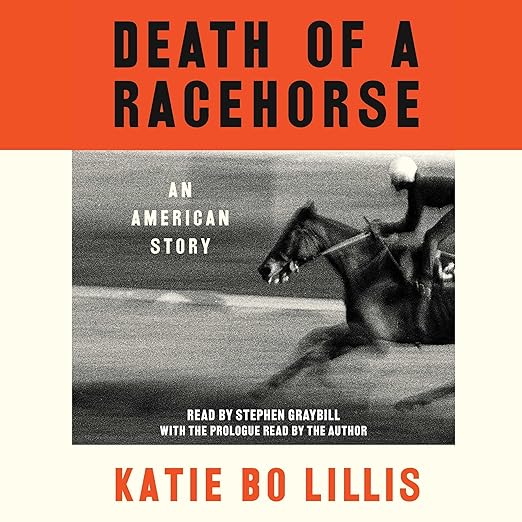
Horseracing gets investigated here as an economy rather than a sport, and that decision shapes every hour of this audiobook. Katie Bo Lillis opens with the number that should embarrass the industry, hundreds of horses dead on the track every year, and then refuses the easy answer that most people already carry around. Rampant drug use forcing animals past their natural ability, resulting in heart attacks and broken legs, is described in the copy as the mainstream perception and explicitly rejected as the full picture. What replaces it is money: breeding, scheduling, betting, and the people who profit from all three across fourteen hours and nine minutes of reporting.
What We Made of It
Money is the argument, and it is a better one than the doping scandal that gets it onto shelves. The description lays out the machinery plainly: a breeding industry that prioritizes millions over producing a sound, durable animal, and a disjointed race schedule built by track operators trying to maximize betting opportunities, which together make it impossible to manage a horse's career safely. That is a systems argument, not a villain story, and it is what separates this from the outrage journalism the subject usually attracts. The cruelty here is structural, distributed across an entire industry, and nobody in it has to be a monster for the outcome to be monstrous.
A May 2025 five-star, filed within weeks of release, understood the assignment better than most. It praises the book for treating individual trainers as more than their charges, using their personal histories as a backdrop for what they did, and it singles out one specific insight as the reason it now understands the sport differently: the pervasive use of drugs, many of them entirely legal, and the genuinely complicated job that creates. That response calls this the first book that showed how easily a basically honest trainer ends up in trouble, and how a crooked one gets carried away. Sympathy and indictment sitting in the same paragraph is a hard trick, and the reporting evidently pulls it off.
Why Listen to Death of a Racehorse
Two prosecutions anchor the reporting, and the copy names them without euphemism: the industry-rocking indictments of top trainers Jason Servis and Jorge Navarro, set against the story of Bob Baffert, described as the most successful and recognizable trainer in modern racing. The Baffert material carries the allegations that followed a string of mysterious horse deaths and the disqualification of a Kentucky Derby winner after a failed drug test. Anyone who followed those headlines in real time got fragments; this is the version with the depositions, the lab work and the trainers themselves in the room.
Class is the second thread, and it is the more original one. The description frames the whole conflict as an upstairs-downstairs drama between blue-blooded families trying to restore a version of the sport that never really existed and an ambitious new guard treated as outsiders no matter how much they win. Lillis reports from inside both camps, with access to dozens of trainers, owners, breeders, veterinarians and lab specialists, which is the kind of sourcing that lets a writer show a suspicion rather than assert it. The suspicion, as the copy puts it, is that the privileged few cannot quite believe the newcomers are succeeding honestly.
What Might Not Land
Humans get more room than horses, and two of the five written responses say so independently. The three-star is blunt about it: the author knows the subject cold, but the editing let the reporting get too deep into the weeds, and the book spends more time on trainers, vets and owners than on the horses or the jockeys. The four-star arrives at the same complaint from the opposite direction, objecting that the good people in the sport never get their story told. Between them they define the book's real limitation better than any summary could: this is a business investigation wearing the title of an elegy.
The emotional cost is real and unlabeled. That same three-star finishes by reporting a sad feeling about the horses and how they are drugged, which is a fair description of what fourteen hours of this material does to a listener who loves the sport. Nothing on the record warns you: no content guidance, no note about the descriptions of animal injury and death, and no chapter list that would let a listener skip the worst of it. For a book whose title promises a death, that omission is not trivial.
Sourcing is the last thing to weigh, and it cuts both ways. A reporter with intimate access to dozens of insiders gets material nobody else has, and also inherits the frames those insiders use. The copy closes by promising a hopeful path forward for the sport, which is a gentler landing than the preceding argument earns, and buyers who want an abolitionist case against racing will not find one here. Lillis is writing for people who want the sport fixed rather than ended, and the last section is where that shows.
Should You Listen to Death of a Racehorse?
Racing fans who can tolerate bad news about something they love are the primary audience, and the longest five-star on the page makes the case for them: it describes being moved by the stories and the message, credits the research behind each portrait, and reads the whole thing as a tribute rather than an attack. A single-sentence five-star filed in December 2025 puts the same verdict more briskly, calling it an incisive study of the sport, its drug culture and the effort to save it. Both are reactions from inside the tent, which is the audience that matters here.
People who follow financial crime, regulatory failure or sports governance will get the most unexpected value, since the horses are ultimately the collateral in an argument about money and status. Anyone hoping for a horse book, in the older sense of great animals and the people who rode them, should adjust expectations sharply downward before pressing play. And anyone who cannot listen to detailed accounts of animal death should take the title literally and choose something else, because no field on this page will warn them off.