- Narration: De Golia doesn't appear to have narrated anything else I could locate; the steady, storytelling register suits this period baseball narrative well on a first listen.
- Themes: dysfunction turned triumph, dead ball era baseball culture, myth versus documented history.
- Mood: Energetic and character driven, funny in places despite the serious research behind it.
- Verdict: A strong pick for baseball history fans specifically, elevated by real archival rigor from an academic press production.
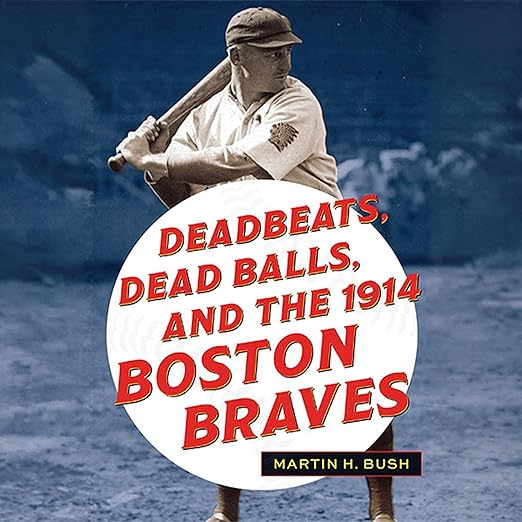
George Stallings managed the 1914 Boston Braves like a superstitious tyrant, and somehow that dysfunction produced one of the great turnarounds in World Series history. Jack de Golia narrates nearly fourteen hours of this audiobook account of the so called Miracle Braves, and author Martin H. Bush treats the team's chaos as seriously as its eventual triumph rather than smoothing either one over for a tidier story.
The Verdict, Briefly
The Braves sat in last place as late as mid July of 1914, a rough, hard drinking club led by bullying, superstitious manager George Stallings and captained by Johnny Evers, a nasty, egotistical presence despised by opponents and umpires alike. From that low point, the team mounted a meteoric rise through the rest of the season and then an audacious World Series run against the heavily favored Philadelphia Athletics. Hall of Fame umpire Bill Klem, a fixture in the game for more than seventy years, is quoted here calling them the most spirited team he ever saw.
Bush builds this account on extensive archival and primary source research, situating the Braves' improbable season within the wider controversies of dead ball era baseball: greedy team owners, sensationalized coverage from the era's yellow press, and blatant cheating tactics used across the league to gain any edge available. Cameo appearances from Ty Cobb, Hans Wagner, and Cy Young round out the period texture, and per the book's own framing, Bush strips away the myths surrounding this season without stripping away the genuine romance of the story.
For listeners unfamiliar with the term, the dead ball era gets its name from a very literal practice: a single ball was often kept in play for an entire game regardless of how scuffed, discolored, or misshapen it became, which suppressed home runs and put a premium on the scrappy, situational baseball, bunts, stolen bases, hit and run plays, that defined the Braves' style of winning. That context helps explain why a team this chaotic could still out execute a heavily favored opponent in a short series.
Why Deadbeats, Dead Balls, and the 1914 Boston Braves Works as an Audiobook
This book carries real academic weight behind it: it is published by Kent State University Press, with the audiobook itself produced by University Press Audiobooks, a smaller specialist operation rather than a major trade audio publisher. That pedigree signals a level of archival rigor distinct from the quicker, more anecdotal sports history titles that dominate mainstream audiobook catalogs.
One reviewer, who reports working through a dozen baseball books over a single summer, calls this arguably the best of the bunch, praising how it reads more like a novel than a typical nonfiction account thanks to the detailed setup of the season's major players and characters before the action itself takes over. That narrative momentum translates well to audio specifically, where a strong sense of character and stakes matters more than a dry recitation of scores.
Johnny Evers arrived in Boston already famous, part of the Chicago Cubs double play combination immortalized in the era's most quoted baseball poem, Tinker to Evers to Chance, and his reputation for prickly, demanding leadership followed him directly into the Braves clubhouse. Watching, or hearing, a player already established as a Hall of Fame caliber talent clash with an equally combative manager adds a layer of real personality conflict that elevates this well beyond a simple underdog sports story.
The Philadelphia Athletics entering that World Series were not just favored, they were widely considered one of the most dominant teams assembled to that point in baseball history, managed by the legendary Connie Mack and stacked with future Hall of Famers. That context is what makes the Braves' four game sweep, once the World Series actually started, land as such a genuine shock rather than a modest upset, and Bush's research lets listeners feel the scale of that mismatch on paper before the games themselves overturn it entirely.
Points to Consider
Jack de Golia's name doesn't turn up in any earlier audiobook credit I could find, so this assessment rests on genre fit rather than a confirmed pattern. The role demands differentiating a real historical ensemble, players, an owner, sportswriters, umpires, across nearly fourteen hours without inventing performed drama that is not on the page, and period baseball narrative history generally rewards a steady, storytelling register over a flashier one.
This is deep baseball history built around dead ball era specifics, low scoring strategy, period rules, contemporary sportswriting culture, and it assumes some baseline interest in early twentieth century baseball going in. Casual sports listeners without that background may find the proper noun density, players, owners, sportswriters all introduced at pace, heavy going in the early chapters before the season's narrative momentum takes over.
The five star average here comes from only four ratings, a genuinely enthusiastic but statistically thin sample worth naming honestly. The two written reviews available are detailed and specific rather than generic praise, which counts in the book's favor, but the overall volume of feedback remains small enough that broader consensus has not really been tested yet.
The Right Listener for Deadbeats, Dead Balls, and the 1914 Boston Braves
Recommend this to baseball history enthusiasts, dead ball era specialists, followers of the Braves franchise across its Boston, Milwaukee, and Atlanta history, and readers who enjoy character driven narrative sports history that treats its subjects as flawed people rather than simple legends. Anyone who wants baseball nonfiction that reads with real narrative propulsion rather than a dry statistical record will find that here.
Skip it if you are looking for modern era baseball content, or if you generally prefer concise, highlight reel style sports books over deep, archivally sourced history covering a single specific season in real depth.
Who narrates the Deadbeats, Dead Balls, and the 1914 Boston Braves audiobook?
Jack de Golia, across nearly fourteen hours; I found no earlier audiobook credits for him to compare this performance against.
Is this audiobook about the modern Atlanta Braves?
No. It covers the franchise's earlier identity as the 1914 Boston Braves and their historic worst-to-first World Series championship season.
How long is the Deadbeats, Dead Balls, and the 1914 Boston Braves audiobook?
Thirteen hours and fifty three minutes, published through University Press Audiobooks.