Key Details
- Narrator: Feodor Chin, not Copperfield himself, brings clear, steady pacing to four centuries of magicians and never lets the historical sweep get muddled.
- Subjects: Magic history, outsider artists, performance as escape from convention
- Tone: Reverent and a little wonder-struck
- Bottom line: A rich audio history of magic's outsiders, best paired with the print or ebook edition for the photography this content was actually built around.
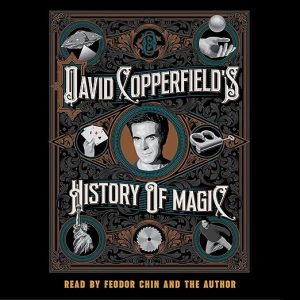
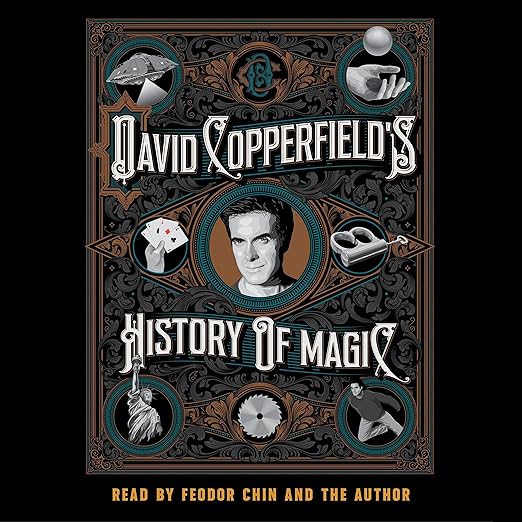
David Copperfield keeps a secret museum most of us will never set foot in, a warehouse of artifacts collected from centuries of magicians who risked reputation, sanity, and sometimes their own safety for a few seconds of impossible spectacle. His audiobook, David Copperfield's History of Magic, opens that museum's doors as far as sound alone can carry them, profiling everyone from a sixteenth-century magistrate who wrote one of the earliest books ever published on conjuring to the woman who levitated, vanished, and caught bullets in her bare hands. How do you convey the visual astonishment of an escape or a levitation through narration alone? That question sits at the center of this listen, and it's worth understanding before you press play.
Handing the Spotlight to Magic's Forgotten Figures
Copperfield has spent decades as the world's most commercially successful magician, and this audiobook functions less like a memoir and more like a personal tour of his private obsession. The synopsis calls the artifacts inside his collection 'audacious and inventive,' and Copperfield clearly agrees with his own framing, since he lingers on the outsiders and eccentrics who built this art form rather than his own career highlights. That choice pays off. A performer this famous could easily have made a four-hour victory lap; instead he spends the runtime handing the spotlight to a magistrate, a card man from the Roaring Twenties, and a woman brave or reckless enough to catch bullets barehanded.
Reviewer Chuck frames the whole project accurately, noting it is 'based on the artifacts in his collection' rather than built around trick explanation, and Steve Colarusso's own review title makes the same point even more directly: this isn't a how-to book. The photography itself, credited to Homer Liwag and singled out by name in more than one review as coming from 'a magical artist in his own right,' is clearly central to what print readers respond to most. Listeners should know upfront that Copperfield is telling magic's story here, not teaching it, and the book is stronger for staying disciplined about that distinction.
The 4.7 rating across 568 ratings is a genuinely strong signal for a niche nonfiction title in this category, and it lines up with what the reviews actually praise: not narrative daring or surprising revelation, but a rich, well-curated tour through material few outside the profession ever get to see this closely. That combination, high specialist trust plus broad accessibility, is harder to pull off than it sounds for a book this focused on one performer's private collection.
Chin's Steady Narration Echoes a Magician's Patter
The strongest case for this audiobook is Copperfield's own authority. He isn't a historian borrowing someone else's collection for a book deal; he is the collector, and every artifact discussed comes from a museum he personally assembled over a lifetime in the profession. That gives the historical material a texture secondhand accounts rarely achieve, a sense that the sixteenth-century magistrate's early writing on conjuring and the woman who fooled audiences with a bullet catch matter to the narrator personally, not just academically. Reginald Scot, the magistrate the synopsis gestures toward, published one of the first English-language exposes of stage conjuring back in 1584, and hearing that lineage traced by a modern magician who owns pieces of it gives the whole history real continuity.
Feodor Chin narrates rather than Copperfield himself, a choice that shifts the listening experience from personal memoir toward guided history. That has real advantages for a four-and-a-half-hour runtime built around dozens of distinct performers across four centuries. A single narrator holding steady pacing and clear enunciation across that many names, eras, and countries matters more here than personality or showmanship, since the content itself is already dramatic enough. Listeners expecting Copperfield's own stage voice should adjust that expectation early, but the tradeoff buys consistency across a genuinely wide historical sweep, from the era of Houdini through the golden age of vaudeville magic and into more recent innovation.
A nice symmetry is worth noting here: magic as a performance art has always depended on patter, the magician's own spoken narration guiding an audience's attention while the trick itself happens elsewhere. An audiobook about magic history, delivered through narration alone, echoes that technique on a structural level, using steady vocal guidance to direct listener attention through centuries of material the way a conjuror's own voice would direct a live room.
Tagged as Photography, a Format Without Photos
The single biggest caveat here is format. Dean Carnegie's review praises the collection's 'breathtaking photos' specifically, and that entire visual dimension is simply unavailable in the audio edition. Artifacts housed in a secret museum are, definitionally, things meant to be seen, and a listener gets Copperfield's description of them rather than the objects themselves. Anyone drawn to this title primarily for the photography, which based on the reviews seems to be a major draw, should strongly consider pairing the audiobook with the print or ebook edition rather than choosing audio alone.
At four hours and thirty-one minutes, this runs shorter than most sweeping histories promise to be, and that brevity is worth naming plainly. Covering four centuries of magicians in that window means individual profiles move quickly rather than lingering, more a tasting menu of the art form's outsiders than a deep biography of any single one. Listeners wanting exhaustive detail on any particular figure, the bullet-catch performer or the man who fooled Houdini during the Roaring Twenties, will likely want supplementary reading afterward rather than treating this as the final word on any one story.
Genre tagging on this listing files it under Photography, which fits the source material honestly but underlines the same audio-versus-print tension already noted. A 4.7 rating from 568 ratings is a strong signal that the content itself lands well regardless of format, so the concern here isn't quality, it's matching the edition to what a given listener actually wants from the experience.
Skip It if the Appeal Was the Photography
Listeners who love performance history generally, not just magic specifically, will find plenty here. The throughline linking a sixteenth-century magistrate to a Jazz Age card man to a woman catching bullets is really a story about outsiders using an unlikely art form to escape convention and rewrite their own social position, a theme that resonates well beyond magic fandom into broader cultural and performance history listening. Fans of Copperfield's stage career specifically get a rare glimpse into what he actually collects and cares about away from the spotlight, which reviewer Chuck frames as evidence of the book's importance to the field itself.
Skip this one if the appeal was always the photography rather than the storytelling. A coffee-table history built around a private museum's contents really does lose something essential when the pictures themselves aren't part of the experience, and listeners in that camp will get more value from the print or ebook edition than from audio alone.
Does this audiobook teach any actual magic tricks or sleight of hand?
No. Steve Colarusso's review title puts it plainly: this isn't a how-to book. Copperfield profiles the historical figures behind the art form rather than explaining specific illusions.
Am I missing much by listening instead of reading the illustrated print edition?
Yes, and it's worth knowing upfront. Every attached review singles out the collection's photography, taken by Homer Liwag, as a highlight, and none of those images make it into the audio edition.
Why does Feodor Chin narrate this audiobook instead of David Copperfield reading it himself?
The listing credits Feodor Chin rather than Copperfield, a common choice for illustrated nonfiction where steady, clear narration across many names and eras matters more than a recognizable celebrity voice.
Is four and a half hours enough to cover four centuries of magic history?
It covers real ground but moves briskly rather than lingering. Treat this audiobook as a wide-angle introduction to magic's outsiders rather than an exhaustive biography of any single performer.