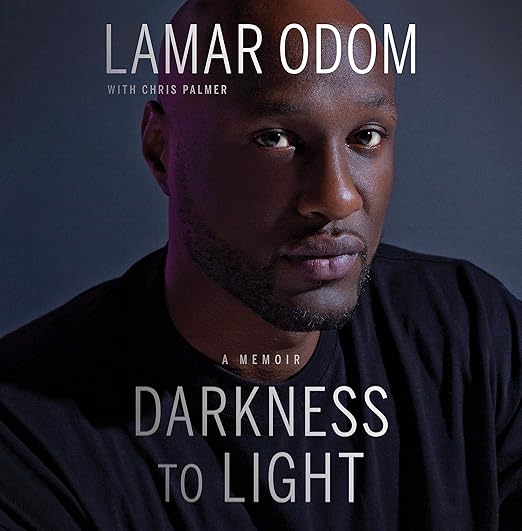
Nine one-word sentences open the sales copy for Darkness to Light: fame, sex, pain, drugs, death, booze, money, addiction, redemption. Two more follow, dizzying heights and rock-bottom depths, before the list concedes that both can arrive in the same hour. It is a shouted table of contents, and it says nothing about the audiobook itself, which runs 7 hours and 17 minutes and is read not by Lamar Odom but by Chris Palmer. The distance between the name on the cover and the voice in your ears is the first thing to settle here.
What We Made of It
Two public lives run through this memoir, and the sales copy leads with both: a two-time champion with the Los Angeles Lakers, and a member of what the same paragraph calls the ubiquitous Kardashian empire. The question it then poses, who is Lamar really, is the standard promise of the celebrity memoir. What follows is less standard. The marriage to Khloé Kardashian coming apart, the vices used to cope, the near-death experience that forced a reckoning, and, further back, a childhood the reviewers spend far more time on than they spend on basketball. The pitch lands one genuinely good line before it retreats into abstraction: that his most candid moments have stayed behind closed doors, sometimes face-down on the floor.
A four-star response headed Gripping Memoir gives the clearest inventory of the early chapters: a father with post-traumatic stress disorder and a drug habit, physical abuse of his mother, and his mother's death from cancer when he was twelve. Pamela Parker reaches for the word commodity to describe how the boy was handled by the adults around him. None of that appears in the sales copy, which prefers heights and depths to particulars, and it is what every reviewer here remembers best.
The Best Parts of Darkness to Light
By credit this is Chris Palmer's recording, not Lamar Odom's, and the distinction weighs more in memoir than in any other form. Every sentence of the sales text speaks in the first person of its subject, telling you that Lamar gives listeners an intimate look into his life and that Lamar invites you to walk with him through the good times and bad. The appeal of the genre is proximity to one voice. What arrives instead is a professional reader delivering those sentences, so every pause, every slack stretch and every line a man might rush past is an interpretive decision taken by someone else.
That word, listeners, is the only nod to the format in the whole pitch, and it sits a few lines above the promise that this is Lamar as you have never before seen him. Seen. The slip is harmless in itself, and it also describes the whole page: material written for a book, dressed for audio afterward, then handed to a column of people who clearly held paper. The recording is the shortest route into the story on offer, and the only one nobody here discusses.
When reviewers explain why it worked for them, the sport is barely present. LD, who states plainly to having no interest in sports at all, picked it up after a Beverly Hills doctor described Lamar as the most humble and kind famous person he had ever met, and finished the book in tears. samesgurl posted a five-star review while still partway through, moved by a wish to understand an addiction from the inside. Both are responding to a recovery story that happens to be filed under Basketball. LD, who reads nothing but biography and memoir, ranks this one among the best of them and calls it simple yet capturing, a fair description of a book whose force comes from plain sentences and an unguarded voice.
What Might Not Land
Every memoir of this kind is built with help, and one reviewer lets that slip. Matt, whose three stars are the lowest grade on the page, writes that if Lamar is not at peace then the writer's did a horrible job of conveying that to the reader. The plural is the interesting part. One name carries the byline here, no collaborator is credited anywhere on the record, and yet a reader came away certain that more than one hand shaped the sentences.
This is also where the column stops matching the product. Matt sums the whole experience up as a good 100 pages, a unit of measurement that does not exist in a recording. Pages are what the others reach for too: an easy read, one of the best ones I have read, conveying that to the reader. Nobody assesses the delivery, and on a confession this raw the delivery is most of the experience, which leaves the single most important question about this edition unanswered by the people who bought it.
Where the record files the book produces its own small comedy. The shelf is sports and outdoors, the tag is Basketball, and the game itself occupies a fraction of what the reviewers describe: the sales text singles out one stretch that brings fans into the action during the Lakers championship years. The rest is addiction, bereavement, a marriage dismantled in public, and a near-death experience. Browse that shelf for a game story and you will be handed something much heavier, while the listener who most needs this story is not browsing there at all.
Should You Listen to Darkness to Light?
Both audiences are real, and this book does not serve them equally. Arrive from the championship years or the tabloids and the promised highs and lows are both delivered. Arrive wanting a recovery memoir and the childhood chapters are the strongest material in the book, and they come early. Bernadette Crawford's five stars read less like a review than like a letter addressed to the subject, thanking him for opening up, which tells you exactly what kind of response this story invites. It sets grace and mercy against the idea that any of us gets the final say, promises prayers, and never once mentions a book. It is addressed to a man, and it is the warmest thing on the page.
One caution before you start. Matt's three stars rest on a real objection: that the second half hands responsibility to everyone but the man telling it, and that the pattern is a familiar one. Whether you hear evasion or the honest shape of a life still in progress will decide how the closing hours sit with you. Anyone who needs a memoir to arrive at its lesson cleanly should pass; anyone willing to sit with a story stuck in the middle of itself has 7 hours and 17 minutes of it here.
- Narrator: The subject does not read his own memoir; Chris Palmer delivers the first person on his behalf.
- Subjects: Addiction and recovery, a childhood marked by loss and violence, fame as pressure, a marriage under tabloid light.
- Tone: Confessional, uneven, considerably heavier than the basketball shelf suggests.
- Bottom line: Take it for the childhood chapters and the candor, and expect a second half that keeps assigning blame outward.