At a Glance
- Voice: Charles Band narrates his own chaotic career with the comic timing of a man who has told these stories at parties for decades.
- Big ideas: B-movie filmmaking, Hollywood's fringes, reinvention and reckless ambition
- Atmosphere: Rowdy, funny, and unapologetically trashy
- Worth it?: A blast for genre-film fans and anyone who loves a good backstage Hollywood story, self-narrated with real relish and no false modesty.
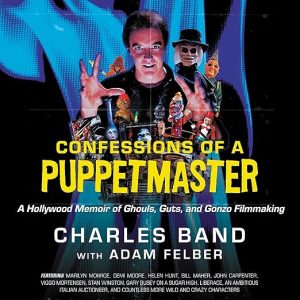
Bill Maher makes a cameo blurb on the cover of this audiobook, joking that Charles Band once compared him to Harrison Ford, which tells you exactly what tone Confessions of a Puppetmaster is going for before you've even pressed play. Band narrates his own memoir here, and it covers four decades running Full Moon Entertainment and its predecessor companies, the low-budget, high-concept factory responsible for Ghoulies, Trancers, and the pandemic-era Corona Zombies, among a genuinely staggering catalog of B-movies most mainstream critics never touched. Born into a family of artists and raised partly in Rome, where his father worked in the Italian film industry, Band fell into moviemaking as a young man and never really left, eventually buying both a real Italian film studio once owned by Dino De Laurentiis and, improbably, a medieval castle to go with it.
A Tarantino Film Written by Hunter S. Thompson
The blurbs stacked on this book's cover set a high bar for tone, and the audiobook clears it. Peter Sagal called it a blast that made him want to stay up all night watching terrible movies, and Booklist compared the prose to a Tarantino film written by Hunter S. Thompson. Having listened straight through, that's not marketing hyperbole. Band writes, and narrates, with the pacing of someone who has told these stories at dinner parties for thirty years and knows exactly which details land and which need trimming.
Larry Karaszewski called this one of the most entertaining film bios ever written, and that specific praise, from someone who has built a career writing about outsider filmmakers and Hollywood's stranger corners, carries real weight once you're a few chapters in. Band's story sits comfortably alongside the kind of gloriously disreputable filmmaking history that draws that sort of insider admiration, real obsession colliding with real financial recklessness, told without the self-seriousness that sinks a lot of showbiz memoirs before they even get going. It's the kind of praise that lands harder coming from a peer inside the industry than from a general-audience blurb writer.
Circumventing the State Department in Romania
What elevates this past a simple victory-lap memoir is how honestly Band covers the failures alongside the wins. He made, and then lost, a genuine moviemaking fortune. He talks about circumventing the U.S. State Department to shoot films in post-Communist Romania, chasing cheap production costs in Dracula's actual homeland, and about being an early, underappreciated pioneer of direct-to-video and streaming distribution long before major studios caught up to the model. Reviewer Ultimo Lantern called the book full of behind-the-scenes drama that kept them intrigued chapter after chapter, and that's a fair description of how the pacing actually works.
Band Sounds Like Exactly What It Is
Band gave early starring roles to Demi Moore, Helen Hunt, and yes, Bill Maher, before any of them were household names, and the audiobook is full of origin-story details about people who went on to bigger things while Band himself stayed committed to the genre he loved. Reviewer John Lewis compared the listening experience to learning family history from a distant uncle you never quite got to know, refreshing and funny in a way that produced actual laughing out loud, and even some booing, during the more outrageous chapters of Band's career.
Self-narration is the right call here in a way it isn't for every memoir. Band isn't a trained voice actor, but he's spent his career pitching outrageous concepts to investors and cast members, and that same persuasive, unbothered energy carries the audiobook from start to finish. A professional narrator reading Band's words about his own castle purchase or his own bankruptcy would likely sound like performance; hearing Band tell it himself sounds like exactly what it is, a guy who lived it and still seems a little amazed by his own story.
Expect Chaos, Not a Tidy Redemption Arc
This isn't a polished, prestige Hollywood memoir in the mold of Robert Evans or Shirley MacLaine, and it doesn't try to be. Band's films crossed from vampire flicks to sci-fi to, in his own description, erotic musical adaptations of fairy tales, and the book doesn't sanitize any of that for a more respectable audience. Reviewer Matthew, who came to the book through a personal connection to Band, called it enlightening about just how chaotic the actual filmmaking process can be, which is a nicer way of saying: expect chaos, not a tidy three-act redemption arc.
Listeners unfamiliar with the Full Moon catalog specifically may lose a little texture from the name-dropping of specific titles and collaborators throughout, though Band generally provides enough context that you don't need to have seen Puppet Master or Trancers to follow the story of how he made them. The bigger prerequisite is simply an appetite for schlock cinema history told without apology or irony at its own expense, which not every listener drawn in by the celebrity blurbs will necessarily share.
From Rome to Romania to an Italian Castle
That instinct never really faded, even decades into his career; Corona Zombies, shot and released during the early days of the pandemic, is exactly the kind of fast, opportunistic, zeitgeist-chasing production Band built his entire reputation on, proof that the impulse behind Ghoulies and Trancers in the 1980s never actually left him. The audiobook treats this recent chapter with the same unbothered humor as the decades-old stories, which says something about how consistently Band has approached his own career: not as a rise-and-fall arc, but as one long improvisation that's still going.
The medieval castle detail is not a throwaway line; Band genuinely purchased one in Italy alongside the former De Laurentiis studio, and large stretches of the memoir's back half deal with the logistics, absurd and otherwise, of running a genre film operation out of European locations most Hollywood executives would never have seriously considered. That geographic sprawl, Rome as a child, Romania after the fall of communism, Italy again as a returning adult, gives the memoir a genuinely unusual shape compared to most American filmmaker autobiographies, which tend to stay rooted in Los Angeles from start to finish.
Wears Its Grindhouse Roots Proudly
Genre film fans, especially anyone with fond memories of late-night cable in the 1980s and '90s, are the obvious audience, and Full Moon devotees specifically will get the most mileage from the specific production stories scattered throughout. Beyond that built-in fan base, this also works for listeners generally curious about the scrappier, less-covered margins of the film industry, the direct-to-video and grindhouse economy that operated on entirely different rules than the major studio system.
Anyone expecting a prestige Hollywood memoir with careful literary polish should look elsewhere, since this one wears its grindhouse roots proudly and never once apologizes for the movies that made Band's career, which is exactly why longtime fans of his catalog will likely love it most of all.
Common Questions
Does Charles Band narrating his own audiobook improve the experience?
Yes. Band isn't a trained voice actor, but his self-narration brings the same persuasive, unbothered energy he apparently used to pitch investors for decades, which suits stories about his own castle purchase and eventual bankruptcy better than a professional narrator reading secondhand.
Do I need to know Full Moon Entertainment's movies to enjoy this audiobook?
No, though fans of titles like Ghoulies and Trancers will catch extra texture in the name-dropping. Band generally provides enough context for listeners unfamiliar with his specific catalog to follow the larger career story.
Is Confessions of a Puppetmaster more gossip or genuine film history?
It leans toward personal memoir with real behind-the-scenes detail rather than formal film criticism, mixing celebrity blurbs and specific production anecdotes with honest accounts of both Band's successes and his financial failures.
How does this memoir compare to other Hollywood tell-alls?
It sits closer to the grindhouse and direct-to-video margins than a typical studio-system memoir, with blurbs from Bill Maher and Peter Sagal signaling its comic, unpretentious tone rather than prestige literary ambition.