In Brief
- Narrator: Tiffany Morgan, new to this site's coverage, handles a book that shifts constantly between scholarship, anecdote, and performance description.
- Subjects: Ballet history and technique, dance criticism, making an unfamiliar art form legible to newcomers.
- Tone: Warm, curious, and genuinely enthusiastic rather than academic.
- Bottom line: An accessible, well-loved introduction to ballet, best paired with the illustrated print edition for the technical passages.
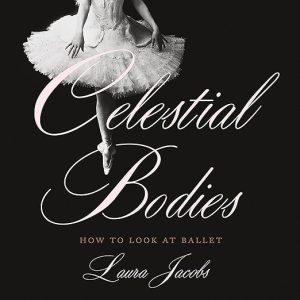
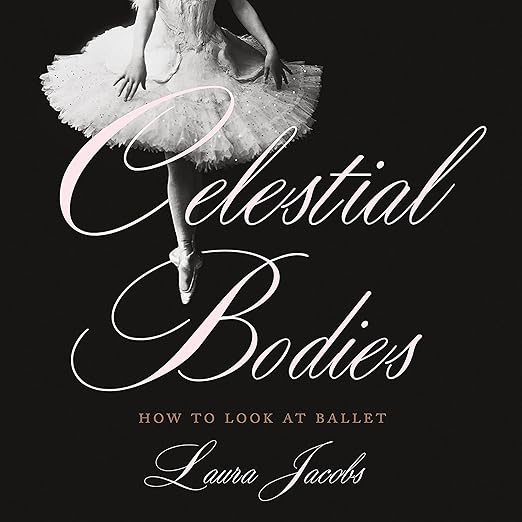
Ballet has always struck me as a language you either grew up fluent in or never quite learn to read, and this six-and-a-half-hour audiobook is built specifically for listeners in the second camp. Dance critic Laura Jacobs sets out to make an art form most of us only encounter through Swan Lake or The Nutcracker feel genuinely legible, and narrator Tiffany Morgan carries that translation work across the full runtime.
History, Interviews, and Technical Definitions Together
What makes Celestial Bodies work as an introduction rather than an academic survey is Jacobs's mix of registers. History, interviews with working dancers, technical definitions, descriptions of actual performances, and personal anecdotes all sit side by side, so a listener never has to sit through a long stretch of dry terminology without a human story to anchor it. The book's stated goal, per its own description, is to be “essential reading for all lovers of this magnificent art form,” and the structure backs that up by treating newcomers and devoted balletomanes as the same audience.
Jacobs's own credentials as a longtime dance critic show up in how confidently the book moves between registers. A writer without genuine critical experience might lean too hard on either dry technical explanation or pure enthusiasm; Jacobs instead treats both as necessary, using technical grounding to earn the emotional response rather than asking listeners to simply take her word for ballet's power.
A Five-Star Reviewer Who Isn't Impartial
Jacobs's prose style draws specific praise across every review quoted here, and it holds up under that attention: even the driest technical passages carry enough rhythm and specificity to read as genuine enthusiasm rather than reference-book neutrality. A listener finishing this audiobook is meant to watch differently afterward, not just know more facts, and that experiential goal shapes how the book is structured throughout, prioritizing the feeling of watching over pure information delivery.
Reviewer Matthew Gurewitsch brings an unusually candid disclosure to his five-star review, admitting upfront that “Laura Jacobs and I have been talking dance” for decades, and that readers should not “expect me to be impartial, not when I'm quoted, listed in her index, and most handsomely singled out in the acknowledgments.” It is a rare piece of transparency in a review, and it is worth knowing going in that some of the loudest praise for this book comes from someone genuinely close to its author, even as he insists he still has an honest opinion to offer.
We Secretly Misunderstand Ballerinas
Other listeners without that personal connection land in the same enthusiastic place. Jessica R., who says she had been to the ballet exactly once, calls the book “the perfect introduction to the world of ballet,” adding that it “gives the novice an inside look at its history, definitions, and the dancers who bring the story to the stage.” Reviewer L Reads Books frames the book's core achievement even more specifically, writing that “while we distantly respect and admire ballerinas, we secretly misunderstand them,” and crediting Jacobs with changing that through years of accumulated knowledge delivered alongside anecdotes and interviews.
The specific choice to build chapters around named works like Swan Lake and The Nutcracker gives newcomers a familiar anchor before venturing into less mainstream territory, including the Russian, Italian, and French traditions the synopsis specifically identifies as ballet's historical homelands. That structure, starting from what a general audience already half-knows and expanding outward, is a smart pedagogical choice for an introductory work covering this much historical ground.
Morgan Shifts Registers With No Track Record
One real caveat belongs to the audio format itself rather than the writing. The print edition is described as elegantly illustrated with original drawings, and any visual material like that simply does not translate to a listening experience. Technical descriptions of choreography, footwork, and staging that a diagram or photograph would clarify instantly have to be carried by narration and imagination alone here, which asks more of both Morgan's delivery and the listener's patience during the most technique-heavy passages.
Tiffany Morgan has no prior narration credits on file with this site, so her performance here is judged strictly on fit rather than track record. A book moving constantly between scholarly definition, warm personal anecdote, and vivid performance description needs a narrator who can shift registers without jarring the listener, and that range matters more for a hybrid work like this than for a book that stays in one lane the whole way through.
Reviewers Keep Reaching for Outside Video
Given the source material's illustrated original drawings, listeners who want the fullest possible experience might consider keeping a tablet or phone handy to pull up reference images or video clips of the specific ballets and steps discussed, effectively building their own visual companion to the audio in real time. Jessica R.'s review mentions doing exactly this, turning to outside video repeatedly while listening, which suggests the audiobook works well even as one component of a broader, self-assembled multimedia experience rather than requiring a single complete format.
Jacobs never fully abandons a critic's skepticism even while writing with obvious affection, which keeps the book from tipping into pure hagiography of an art form she clearly loves. That balance, genuine enthusiasm paired with a working critic's honest eye, is part of what separates a lively introduction like this one from either a dry academic survey on one end or an uncritical fan letter on the other.
A 4.3 average across fifty-eight ratings is a strong showing for a specialized arts title, and it lines up with the consistent theme running through every review quoted above: this book converts curiosity into genuine engagement rather than just supplying facts. More than one reviewer specifically mentions turning to outside video after finishing sections, using the audiobook as a starting point rather than a closed, self-contained experience.
Locked Out of Ballet, Finally Let In
Interviews with working dancers give the book a layer that pure history or pure criticism could not provide on its own, since firsthand accounts of what a specific step or performance actually feels like from inside the body carry a different kind of authority than external description alone. That material likely translates well to audio specifically, since a dancer's own voice and cadence describing their craft has an immediacy that print interview transcripts sometimes lose.
Listeners who have always felt a little locked out of ballet, the ones who enjoy the spectacle of Swan Lake without understanding what they are actually watching technically, are precisely who Jacobs is writing for, and existing dance enthusiasts will likely appreciate the interview material and personal stories even if the historical grounding covers familiar territory for them.
Visual reference material for following choreography and staging description is simply not part of the audio-only format, since the original illustrations do not carry over, so keeping the print edition within reach as a companion is worth planning for. Anyone hoping for a strictly technical dance-theory text rather than a warm, narrative-driven introduction should also look for a more specialized academic title instead.