- Narrator: Virtual Voice AI narration delivers clear, functional access to dense practical information, without the interpretive warmth a human narrator would bring.
- Subjects: Camino de Santiago route planning, pilgrimage logistics, first-timer preparation.
- Tone: Practical and dense, undercut slightly by an overheated marketing tone in the framing.
- Bottom line: A genuinely useful short planning companion for first-time pilgrims, best approached as a reference checklist rather than travel narrative.
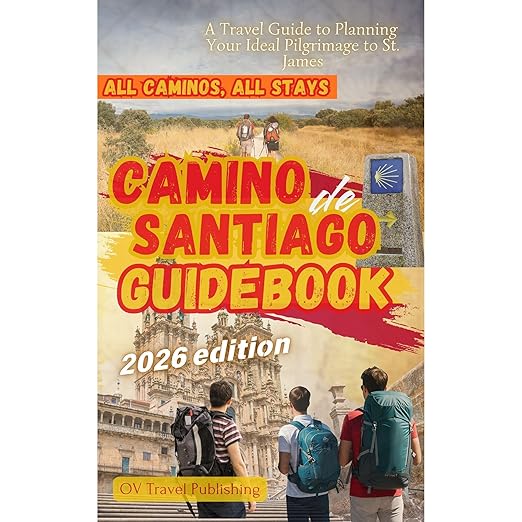
Just over half a million pilgrims reportedly walked to Santiago de Compostela in 2025, or so this guide's own pitch claims, and it wants to help a first-timer become one of the next wave. At under two hours, this is a Virtual Voice audiobook built entirely as a practical companion rather than a narrative listen, covering nine named Camino routes, the Frances, the Portugues in its Central, Litoral, and Espiritual variants, the Ingles, del Norte, Primitivo, Via de la Plata, and the Finisterre-Muxia extension, alongside daily stage breakdowns and accommodation listings.
The synopsis itself leans hard into the language of an internet sales page, exclamation points, checkmarked bullet lists, a countdown urgency around buying now, and that promotional style is worth setting aside mentally before evaluating what the actual content offers, since the substance underneath the pitch is a genuinely dense, practically organized reference guide rather than empty hype.
A Quick-Reference Companion, Not a Travelogue
Because this runs under two hours and uses AI narration rather than a human performer, it should be judged on exactly the terms its format suggests: a quick-reference companion for planning, not an immersive travel narrative meant to be savored the way a Bill Bryson-style walking memoir would be. Judged on that basis, the content itself holds up reasonably well, covering packing, physical preparation, blister prevention, and the logistics of reaching starting towns like Saint-Jean-Pied-de-Port or Porto, all real, practical friction points first-time pilgrims commonly hit.
One reviewer, C. Bruce Nisker, summed it up plainly and accurately: 'This is a nice, short book that gives you the basics of hiking the Camino de Santiago.' That is close to the ideal blurb for this specific product, honest about scope rather than oversold, and it matches a second reviewer's note about the maps and packing lists being 'very helpful in planning' before setting out.
The physical-preparation material goes beyond a generic packing list into specifics worth naming: training the body and mind ahead of multi-week walking, recognizing and treating blisters before they become trip-ending injuries, and choosing gear like a correctly sized backpack rather than simply the most popular option online. These are the unglamorous logistics that actually determine whether a first attempt succeeds, and the guide treats them with appropriate weight rather than rushing past them toward the more romantic route descriptions.
The Camino Frances gets treated appropriately as the default starting point for most first-timers, the route with the most infrastructure, the most fellow pilgrims, and the most existing English-language resources built around it, while the guide's coverage of quieter alternatives, the Via de la Plata or the Primitivo among them, gives more experienced or adventure-seeking walkers a genuine second option rather than treating the Frances as the only real choice.
Connective, in-between-destinations travel gets real attention too, exactly the kind of unglamorous detail that trips up first-time planners: how to actually piece together flights, trains, and buses to reach a chosen starting point at all, rather than assuming a pilgrim will simply materialize at the trailhead. That kind of logistics is easy to overlook until the week before departure, and having it consolidated here removes one more source of last-minute stress.
Made to Be Revisited During Actual Planning
The route-by-route structure translates reasonably cleanly to audio for a planning-stage listen, hearing distances, difficulty, and cultural highlights for each stage described aloud while doing something else, commuting, walking, packing a bag, suits exactly the kind of pre-trip research this guide is built for. It is not meant to be absorbed once and remembered perfectly; it is meant to be revisited in short bursts while actual planning decisions get made.
A Bonus Ebook Covers the Kumano Kodo
The accommodation listings and gear guidance address genuinely common first-timer anxieties directly, what to pack, what to leave behind, how to avoid the blisters that derail so many first attempts, which matters more than route trivia for someone who has never attempted a multi-week walk before. A second bonus ebook, covering the Finisterre-Muxia extension and a path to the Dual Pilgrim title via Japan's Kumano Kodo, extends the guide's usefulness slightly beyond the core routes for anyone already thinking ahead to a second pilgrimage.
The pitch to skip expensive travel agencies, pulled directly from the guide's own framing, is fair to take seriously: for a walk with this much established infrastructure already in place, albergues, marked trails, a well-worn logistical path other pilgrims have already solved, a paid planning service is a genuinely avoidable expense for anyone willing to do the homework a guide like this one consolidates in advance.
Not the Tears-at-the-Cathedral Experience It Sells
Trade the checklist urgency of the marketing copy for a calmer expectation, because what is actually inside runs closer to a condensed reference than the transformative, tears-at-the-cathedral experience the sales pitch keeps promising. Anyone allergic to that style of promotional writing should expect a brief mental adjustment going in, even though the practical content itself does not oversell in the same way.
AI Narration Skips the Training You Still Need
Virtual Voice narration means no human interpretive warmth shapes the delivery here, which matters less for a reference guide than it would for narrative travel writing, but is still worth naming directly: this is functional, clear delivery of dense practical information, not a performance meant to be enjoyed for its own sake. Listeners hoping for a rich audio travelogue about the Camino itself, rather than a planning checklist, should look toward a different, narrative-driven title instead.
None of the practical content here substitutes for the physical training itself, and a listener who absorbs every packing tip and stage breakdown without actually building walking fitness beforehand will still struggle on the trail regardless of how prepared they feel on paper. The guide is honest about pointing toward that training rather than promising the information alone is sufficient.
Pair the Audio With the Visual Tables
First-time Camino planners who want route options, accommodation basics, and packing guidance consolidated into one short, revisitable listen are exactly who this was built for, and under two hours is a reasonable investment for that kind of pre-trip homework before committing to weeks of actual walking.
Because so much of the genuinely useful content here, maps, stage-by-stage tables, accommodation lists, is inherently visual reference material, pairing the audio listen with the guide's own companion materials will serve most planners better than treating this as a single, sufficient resource on its own.
Two hours will not turn anyone into a Camino expert, and travelers wanting rich narrative color, personal pilgrimage stories, or genuine literary travel writing about the walk itself should look elsewhere entirely, since that is simply not what this format was built to deliver. For the narrower, practical job it sets out to do, planning logistics before a real pilgrimage, it earns its purpose honestly once the sales-page tone is set aside.
Questions Listeners Ask
Is this audiobook a narrative travelogue about walking the Camino, or a planning guide?
It is a practical planning guide, covering routes, accommodation, and packing, not a personal narrative or literary travel account of the walk itself.
Does this audiobook use a human narrator or AI narration?
It uses Virtual Voice AI narration, which delivers the practical content clearly but without the interpretive warmth a human narrator brings to travel writing.
How many Camino routes does this audiobook actually cover?
Nine named routes, including the Frances, three Portugues variants, the Ingles, del Norte, Primitivo, Via de la Plata, and the Finisterre-Muxia extension.
Is under two hours enough runtime for a useful Camino planning audiobook?
For consolidating route options, packing guidance, and accommodation basics into one revisitable listen, reviewers describe it as a genuinely helpful short reference rather than too thin to be useful.