- Read by: Daniel Perez delivers the instructional material in a clear, approachable register that suits the beginner-focused content; nothing about his delivery elevates the production, but nothing detracts from it either.
- At its heart: Bodyweight training, accessible fitness, habit building
- Vibe: Practical and encouraging without being preachy
- Short version: A serviceable audio introduction to calisthenics basics that works best for complete beginners; listeners with any prior bodyweight training experience will find the depth insufficient.
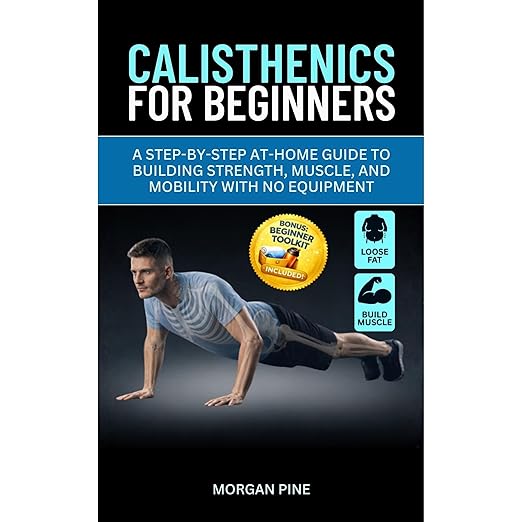
Brandon Medrano's Calisthenics for Beginners, narrated by Daniel Perez, shows its craft decisions early: this audiobook is structured as a progression guide rather than a reference encyclopedia, which means it reads in order and rewards listening from start to finish rather than dipping in and out. At 4 hours and 17 minutes, it fits the scope of its promise without overstaying its welcome. The question the production has to answer is whether audio format is the right delivery mechanism for bodyweight exercise instruction, and the honest answer is: sometimes.
How Calisthenics for Beginners Holds Up
The conceptual framing here is clean. Medrano positions calisthenics not as a niche subculture but as a logical, cost-free alternative to gym membership, drawing on the etymology - the Greek "kálos" for beauty and "sthénos" for strength - to argue that the practice is both ancient and principled. That framing works well in audio because it gives Perez something to deliver with conviction rather than just rattling off exercise names. The claim that this is "the world's most effective training system" is marketing language the author never quite substantiates, but it is the sort of hyperbole that sits harmlessly in a motivational register.
Where the content genuinely delivers is in the organizational logic. The program sequences exercises into a progression from foundational movements - squats, push-ups, planks - toward more demanding variations, which is the right structure for a beginner audience. One reviewer confirmed that "the exercises are clearly explained and truly beginner-friendly," and that the build feels gradual rather than overwhelming. A parent writing in mentioned recommending it specifically to a teen athlete for off-season home training, which points accurately at the real audience: people who want to start something physical with zero equipment and zero prior context.
The 2.7 average rating on the product page suggests a mixed reception that the five-star reviews in this sample don't fully capture. The likely source of dissatisfaction is the same limitation that affects most audio fitness guides: exercises described verbally are genuinely harder to execute correctly without visual demonstration. Perez reads the movement descriptions with clarity, but clarity of description is not the same as clarity of form instruction, and for exercises like pull-ups or dips where grip angle and body positioning are consequential, audio-only guidance has a ceiling.
Why Calisthenics for Beginners Works as an Audiobook
The strongest use case for this audiobook is motivational rather than technical. As a way to internalize the philosophy of bodyweight training - the argument that your own body is a sufficient fitness tool, that you can work at any fitness level, that consistency matters more than equipment - audio delivery actually works quite well. Perez's pacing gives the content time to settle between concepts, and the runtime of just over four hours means you can absorb the whole framework across a few sessions without having to pause and rewind repeatedly for technical detail.
Listeners who are genuinely starting from zero and need conceptual orientation before they try any exercises will get real value here. The section addressing how bodyweight calisthenics train "natural body functions" rather than isolated muscle groups is a useful corrective for anyone who has been conditioned by gym culture to think in terms of machine-specific movements. For a teenager or young adult who wants to understand what they are doing and why before they start, this audio delivers the foundation. The note about adapting exercises for almost any fitness level is one of the more practically useful points in the recording, and Perez delivers it with enough specificity that it reads as actionable rather than generic encouragement.
Weak Spots in Calisthenics for Beginners
Pay attention to the sections covering the distinction between muscle endurance and muscle strength within calisthenics programming. Medrano makes the reasonable point that most calisthenics work develops endurance first, with strength gains requiring specific progressions to higher-difficulty variations. That distinction is often collapsed in beginner fitness content, and getting it right early saves weeks of confusion about why you are not getting stronger despite training consistently.
Also worth noting: the chapter on adapting exercises for different fitness levels addresses the key concern that beginners tend to have about whether a program is actually achievable for them. Medrano handles this by showing how the same movement can be modified rather than replaced - push-up variations from wall push-ups through incline to standard to decline - which gives the listener a clear mental map of their progression pathway. The immune-system and endurance claims in the synopsis are not the strongest part of the argument; focus instead on the structural programming advice, which is where the book earns its credibility.
The Right Listener for Calisthenics for Beginners
Complete beginners to fitness who want a framework before they start, and who have no access to visual demonstrations through video platforms, will get the most from this audiobook. Parents looking for a resource to share with a young athlete during off-season training will find the content age-appropriate and the tone non-intimidating. Listeners who already have six months or more of any form of structured training should skip it; the content will be review at best. Anyone expecting detailed periodization programming, nutrition guidance, or injury rehabilitation protocols will also be disappointed - this covers the entry-level conceptual layer, not the intermediate coaching layer. The rating on the product page suggests checking whether this edition has been updated; early reviews of similar audiobooks in this category often reflect content that hasn't been revised since initial publication.