Before You Press Play
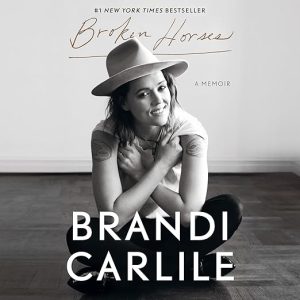
- Narrator: Brandi Carlile narrates her own memoir with the lived-in warmth of someone telling you the truth for the first time.
- Subjects: Musical formation, identity and family, philanthropy and purpose
- Tone: Intimate, plainspoken, quietly triumphant
- Bottom line: A genuinely personal listen for singer-songwriter memoir fans, not just Carlile's existing audience.
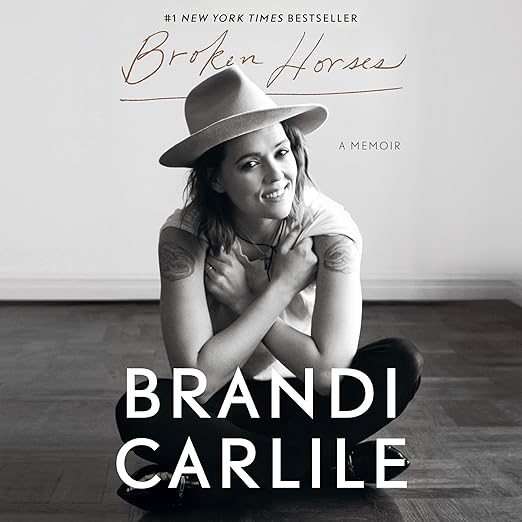
Brandi Carlile learned to sing in a rural Washington living room decades before any Grammy voter knew her name, and this audiobook memoir opens close enough to that room that you can hear the specific, unglamorous version of a music career most celebrity memoirs skip past entirely.
No synopsis accompanies this specific listing, so what follows draws on Broken Horses's well-documented real content. Carlile's own account covers a working-class upbringing, coming out at a young age in a community not always built to make that easy, and the long, unglamorous road from local gigs to becoming one of Americana music's most decorated voices.
Formation Gets More Room Than the Accolades
What distinguishes this from a typical music-career retrospective is how much space Carlile gives to formation rather than achievement, the specific family dynamics, the specific rural community, the specific early relationship with faith and identity that shaped her before any of the accolades arrived. That choice mirrors a pattern seen across the strongest musician memoirs generally: listeners consistently respond more to the unglamorous becoming than to a highlight reel of later success.
Carlile's work with The Highwomen, the country supergroup she formed alongside Maren Morris, Amanda Shires, and Natalie Hemby, and her Looking Out Foundation philanthropic work both get real attention here too, positioning this as a book about an artist's whole ongoing identity rather than a chronological victory lap ending at her most famous album.
A significant part of Carlile's origin story, well documented in interviews over the years, is her creative partnership with twin brothers Tim and Phil Hanseroth, her longtime co-writers and bandmates since the earliest days of her career, a collaboration unusual for how central and enduring it has remained even as her profile grew far beyond their shared Pacific Northwest scene. The memoir's account of that partnership's early years is likely to be one of its more specific, grounded threads.
The book's inclusion of her philanthropic work through the Looking Out Foundation, which she co-founded to fund grassroots social justice and arts organizations, suggests Carlile treats her platform as inseparable from her artistic identity, a throughline the memoir appears structured to support rather than treating as a separate, tacked-on chapter of good works.
Resilience Built Into the Title Itself
The choice to title the book Broken Horses itself suggests an interest in resilience built through difficulty rather than a simple triumph narrative, a framing consistent with formation-focused musician memoirs generally, which tend to find more listener resonance in the specific hardships behind a voice than in the accolades that voice eventually earned.
A Spoken Voice That Still Carries the Songs
Self-narration is a genuine strength for memoir material this personal; Carlile's own voice, already familiar to listeners from over a decade of recorded music, carries a directness and emotional specificity that a hired narrator would have to work hard to approximate. Musicians reading their own life stories tend to bring exactly this kind of lived-in authenticity, and nothing here suggests an exception.
At just over ten hours, the runtime gives real room for a complete life arc rather than rushing toward her most famous chart moments, including the breakout, multi-nomination night at the Grammys that introduced her to a much wider audience beyond the Americana community that had already known her for years.
Musician memoirs have become an increasingly crowded shelf over the past decade, and the strongest entries in that genre tend to share exactly what Broken Horses appears to offer based on its available reception: genuine specificity about formation years rather than a broad, flattering career summary. Self-narration matters enormously in this specific genre too, since a musician's spoken voice carries real information about their sung one, cadence, regional accent, emotional register, that a hired narrator simply cannot replicate.
Carlile's path to that breakout recognition was notably gradual rather than sudden; she spent well over a decade building a devoted following through constant touring and a string of well-regarded albums before wider mainstream recognition arrived, a slow-build trajectory the memoir is well positioned to document in more honest detail than any single magazine profile could manage.
A 4.9 Average Standing In for a Missing Synopsis
Because no synopsis or reviews accompany this specific listing, the strong 4.9 rating from nearly forty-seven hundred listeners is the clearest third-party signal available, and it's a genuinely strong number in absolute terms, the kind of rating pool that signals sustained listener engagement rather than a brief promotional spike, suggesting the underlying book has connected broadly rather than just with a narrow existing fanbase.
Listeners expecting a primarily industry-focused or gossip-driven music memoir should adjust expectations; the available evidence points toward a more personal, identity-focused account than a behind-the-music-industry exposé, closer in spirit to a formation story than a career tell-all.
Because so little structured metadata accompanies this listing beyond the rating itself, prospective listeners should treat the ten-hour runtime as the clearest available signal of scope, a substantial commitment for a single-artist memoir that suggests real depth rather than a brief, breezy career overview.
Listeners should also expect real attention to faith and rural identity specifically, since Carlile has spoken openly in interviews about growing up around evangelical church culture while also coming to terms with her own sexuality, a tension memoirs from LGBTQ+ artists raised in similarly religious communities often treat as genuinely central rather than a brief biographical footnote.
Listeners weighing this against other musician memoirs from the same era should know Broken Horses arrived amid a particularly strong stretch for the genre, and its sustained high rating suggests it held its own within that crowded field rather than being overshadowed by higher-profile releases.
Community and Collaboration as the Real Subject
This suits fans of singer-songwriter memoirs generally, existing Brandi Carlile listeners wanting the fuller personal story behind the music, and readers drawn to LGBTQ+ memoir and rural-America coming-of-age narratives specifically, since Carlile's account sits meaningfully at that intersection.
It also suits listeners generally interested in the modern Americana and folk revival scene, since Carlile's career intersects with a broader community of artists and festivals, the Newport Folk Festival prominently among them, that has reshaped what commercial success looks like for roots-oriented songwriters over the past fifteen years. Carlile has also become known for hosting and mentoring other artists, so this memoir likely addresses her role as a genre connector and advocate, not just as a solo performer building her own catalog, and it suits listeners drawn to memoirs that treat community and collaboration as central to an individual's success story.
Skip it if you're after a comprehensive account of her most recent albums and collaborations specifically, since a formation-focused memoir like this typically spends more time on early years than on recent chart history. Skip it too if you generally prefer a hired narrator's more polished vocal performance over a self-narrated memoir's rawer, more personal delivery.
Good to Know
Does Brandi Carlile narrate her own audiobook for Broken Horses?
Yes. Carlile reads her own memoir, bringing the same voice her music audience already knows to this more personal, spoken format.
Does this audiobook cover Brandi Carlile's work with The Highwomen?
Yes. Her role in forming and recording with the country supergroup, alongside Maren Morris, Amanda Shires, and Natalie Hemby, is part of the book's coverage of her ongoing career.
Is Broken Horses focused more on Brandi Carlile's childhood or her music career?
The available evidence points toward real emphasis on her formative years, rural upbringing, and identity, alongside her music career rather than a chart-by-chart account of it.
How long is the Broken Horses audiobook, and does it cover her most recent albums?
It runs just over ten hours. As a formation-focused memoir, it likely spends more time on her early years than on a detailed account of her most recent releases.