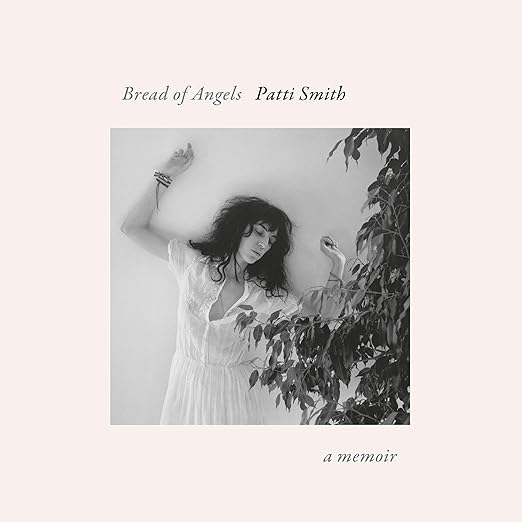
- Narration: Patti Smith narrates her own memoir with the unhurried, image-driven cadence of the poet and performer she's always been.
- Themes: Artistic formation, grief and devotion, memory and myth-making
- Mood: Intimate and lyrical
- Verdict: One of her most personal books, best suited to longtime readers rather than listeners chasing her famous touring years.
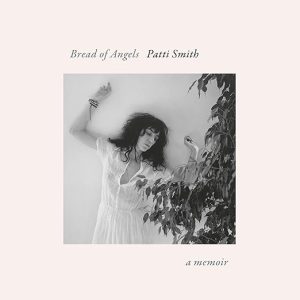
A king of tortoises, sacred silver pennies, a loyal sibling army: can any memoir make a postwar childhood feel this mythic without exaggerating a word of it? Patti Smith pulls that off early in Bread of Angels, her new audiobook memoir, narrated in her own unmistakable voice across eight hours and forty-two minutes. The book opens in a condemned housing complex in the years right after World War II, where young Patti casts herself as captain of her siblings, vanquishing bullies and searching for buried treasure with the seriousness only a child brings to invented mythology. It's the most intimate of Smith's memoirs to date, and TIME, NPR, and The New Yorker all named it a best book of the year before most readers had even finished it.
Measuring Herself Against Rimbaud and Dylan
The book's real momentum begins in Smith's teenage years, when art and romance arrive at roughly the same time. Arthur Rimbaud and Bob Dylan emerge as her creative role models here, not as distant influences but as figures she measures her own ambition against, first through poetry, then through song lyrics, eventually merging both into the material that became Horses, Wave, and Easter. Watching that specific transformation, poet to lyricist to recording artist, told from inside her own memory rather than through a critic's retrospective, is the book's central achievement, and it grounds three decades of eventual fame in a set of very specific, very early creative decisions.
The book's second half moves into her marriage to Fred Sonic Smith, and the texture in that section is wonderfully specific: nights spent studying nautical maps aboard their Chris-Craft boat on a canal in St. Clair Shores, Michigan, a low table and a Persian cup and an inkwell arranged into a writing room of her own, entered at dawn. That domestic, unglamorous devotion sits deliberately close to a series of profound losses that follow, and Smith braids grief and gratitude together rather than treating them as opposites, consistent with how she's always written about mourning across her published work.
Narrating a Line Like 'God Whispers Through a Crease'
Smith narrating her own material is not a neutral choice; it's close to the entire point. She's spent a performing career built on spoken word as much as song, and that background shows in how she reads her own image-heavy prose, unhurried, attentive to rhythm, willing to let a striking phrase like 'God whispers through a crease in the wallpaper' sit in the air rather than rushing to the next sentence. Reviewer Poppytart makes the strongest possible case for this connection, describing a fandom that started in 1976 hearing Horses as a college student and calling that record life-changing; hearing the same voice, decades later, narrate the formation of that very record is a genuinely rare kind of continuity an audiobook can offer.
Reviewer JennB describes spending Patti Smith's own birthday reading the book start to finish, all day and into the evening, which says something real about how absorbing the material is once it gets going. Reviewer Andrew D. Oram, a longtime reader of Smith's other books, calls this one grounded in memoir in a way that recaptures the unique magic of her earlier writing, evidence that longtime fans specifically, not just new listeners, are finding fresh value here rather than a repeat of ground already covered in Just Kids.
Overlapping Ground With Just Kids, Told Differently
Here's the honest caveat, and Andrew D. Oram's review points toward it directly: this book leans heavily toward formation rather than fame. The years of Smith's biggest global recognition and touring life get comparatively less space than her childhood and the early Fred Smith years, which may surprise listeners expecting a full career retrospective covering her most famous performing decades in depth. That's not a flaw so much as a choice consistent with calling this her most intimate memoir, but it's worth knowing before you start if you're specifically hoping for extended material about her years of peak fame rather than the quieter periods that shaped her.
The other thing worth flagging: this is not a sequel to Just Kids in any structural sense, even though the two books cover some overlapping early biography. Bread of Angels stands on its own, revisiting some of the same territory from a different emotional distance decades later, with grief and loss given far more room here than in the earlier book. Listeners who haven't read Just Kids won't be lost, but those who have will notice Smith returning to some of the same images with a different, more settled kind of clarity.
The Title Echoes the Eucharist's Own Hymn
The title itself is worth sitting with for a moment. Bread of Angels echoes a phrase long associated with the Eucharist, most familiar from the hymn Panis Angelicus, and Smith, who has spent decades folding religious and mystical imagery into secular rock music, is almost certainly reaching for that resonance deliberately. It reframes the memoir slightly: this becomes a book about sustenance in the most literal, spiritual sense, art and devotion and family as the bread that actually keeps a person alive through loss, rather than a straightforward chronological account of a famous life.
Kin to Mary Karr and Maggie Nelson
This is essential listening for longtime Patti Smith fans, especially anyone who's read Just Kids and wants the fuller, more emotionally settled version of her early life. It also suits listeners drawn to poetic, image-driven memoir generally, readers of Mary Karr or Maggie Nelson looking for a musician's version of that same literary register. Poppytart's decades-long fandom and JennB's all-day listening session both point to the same thing: this rewards patience and attention rather than background listening.
The critical reception backs up that recommendation with real specificity: a bestseller designation from the New York Times, plus best-of-year honors from three outlets with very different audiences and editorial standards, all landing on the same book in the same year, is a genuinely rare consensus. That range of critical agreement, cultural commentary, literary criticism, and broadcast journalism all independently arriving at the same verdict, suggests this is landing with readers well beyond Smith's existing fan base, not simply pleasing an audience already inclined to love anything she publishes.
Skip this one, at least for now, if you're hoping for a detailed account of Smith's famous touring and recording years at the height of her fame; that material gets comparatively little space here. Listeners wanting a chronological music-career retrospective should look toward interviews or documentary coverage of that specific period instead. This audiobook works best for listeners genuinely interested in formation, the quiet years before and around the famous ones, rather than the famous years themselves.
Do I need to have read Just Kids before starting this audiobook?
No. Bread of Angels stands on its own even though it covers some overlapping early biography, and it revisits that period from a more settled emotional distance rather than functioning as a direct sequel.
Does this audiobook cover Patti Smith's famous touring and recording years in detail?
Not extensively. The material leans toward formation, her childhood and the years around her marriage to Fred Sonic Smith, rather than the height of her fame, which may surprise listeners expecting a full career retrospective.
Why does Patti Smith narrating her own audiobook matter here?
Her performing career has always been built on spoken word as much as music, and that background shows directly in how she paces her own image-heavy prose, giving weight to phrases another narrator might rush past.
Is Bread of Angels a sequel to Just Kids?
Not structurally. It's a distinct, later memoir that revisits some of the same early years from a different, more grief-aware vantage point rather than continuing where the earlier book left off.