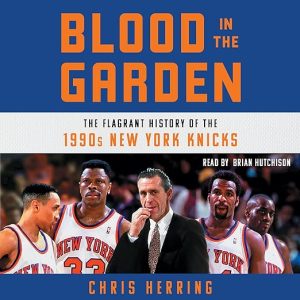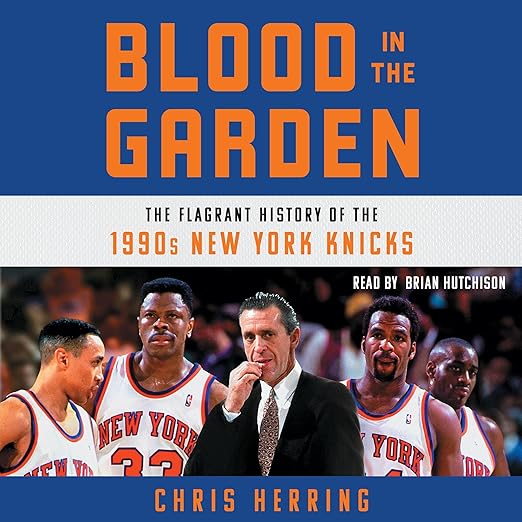
Seven days after this audiobook came out, somebody wrote in about it, and most of what they wrote concerns the Yankees, the Rangers, the Giants and the Jets. Kerry O. Burns moved to the city in 1991, left in 2000, and spends the space inventorying the ticker tape parades of that decade before reaching a favorite team that never won a title. The grade is a five. The book is barely present. That response, the earliest anyone filed, sets the pattern for a column considerably more interested in the 1990s themselves than in Chris Herring's account of them.
Herring built this from original reporting and interviews with more than two hundred people, and that figure explains why the book takes the shape it does. He goes into the locker room, into executive boardrooms, and onto the court for the moments that lifted the club and the ones that nearly took it apart. Two hundred sources is oral history discipline applied to a team most people remember as a highlight reel of fistfights. What comes out, on the evidence of the description, is a portrait assembled from people who were actually in those rooms, carrying details the copy says have never been shared anywhere.
Brian Hutchison has to render all two hundred of those voices in one. That is the standing difficulty with reported nonfiction in audio: a page attributes a quotation with a name and a line break, while a recording has to signal the same shift through pitch, pace, or nothing whatsoever. Eleven hours and three minutes means the technique either holds or turns wearing early. Nobody has said which. A single name sits in the credit against a book whose entire method is polyphony, which leaves a genuine question a buyer has to take on trust.
What Chris Herring Gets Right
Pat Riley, Patrick Ewing, John Starks, Charles Oakley and Anthony Mason are the names the description leads with, and the thesis is that they resurrected an iconic franchise through oppressive physicality and unmatched grit. The Knicks fought opposing players. They fought each other. The copy says they occasionally fought their own coaches. Within two years the league moved to alter several rules for the express purpose of stopping New York from turning basketball games into what the description calls bloody mudwrestling. That is a real claim about one team bending the sport, and it organizes the material better than nostalgia usually manages.
Two things make the era worth eleven hours where a documentary hour would do. The first is that the Knicks of that decade were loved for something other than winning, which is rare and difficult to explain, and the copy names it: a colorful cast of characters and a hardworking mentality that millions of fans recognized. The second is access. Boardrooms and locker rooms are where the decisions that ended this era were taken, and a book with two hundred interviewees can enter both. The promise attached to it is that no punches will be pulled, which for this subject reads as a structural requirement.
Since 2001, by the description's own accounting, the franchise has spent more money, lost more games and won fewer playoff series than any other team in the league. That sentence performs a quiet trick: it converts a period piece into an explanation. The book is not merely about who those Knicks were, it is about what their era cost and why nothing since has replaced it. For a listener with no stake in New York basketball, that is the hook, because a story about a winning identity curdling into a twenty-year hangover travels a long way past its own city.
Where Chris Herring Loses Some Ground
Counting is where this listing comes apart. The badge reads 4.7 and the counter beside it says one vote. A single whole-star grade cannot produce 4.7 under any rounding convention in use, and underneath that counter sit five written responses carrying grades of their own. Whatever went wrong in the plumbing, the number at the head of the page is not a summary of the column below it. Treat the 4.7 as ornament and read the five responses directly, which takes about two minutes and yields considerably more.
Good Read, Sad Story is the heading on the only reservation anyone filed: a four-star response calling this an interesting read with good behind-the-scenes insight, while registering relief that the league has moved past that style of play. It is also the one entry that treats the book's subjects as people, and it is unsparing about one of them. Two of the other four run out mid-word, stopping partway through a sentence about the Finals in one case and about playing defense in the other, so the two most developed arguments available are the two nobody gets to finish.
Raymond Farrar filed a five while still in the middle of the thing, opening with the words reading this book now, which is honest and also a reminder of what a star rating actually measures. The column stretches across four years, from a week after release to February 2026, and the later entries are shorter and warmer: a note about Patrick Ewing as one of the best centers of that era, a line calling the book informative and no holds barred. A 2022 title still gathering responses in 2026 has legs, whatever the counter at the top claims.
Who Should Pick Up Blood in the Garden
Basketball listeners old enough to remember the era are the obvious audience, along with anybody who likes a reported book where the reporting is the point. It works for people who follow the modern league and want to know where its rulebook came from, and for anyone who enjoys a franchise history told without the franchise's permission. Fans after a clean redemption arc will not find it here, and neither will listeners hoping for on-court action called play by play, because the material lives in the interviews and in the aftermath.
Nothing about the state of this page reflects on the book itself. A bestseller sticker, a summer reading list mention and two hundred interviews are what the publisher puts forward, and the five respondents are confirming, in their own scattered fashion, that the era still matters to them. What the recording makes of all that remains the one thing nobody on this listing has tested.