Key Details
- Read by: Jim Meskimen brings natural warmth and storytelling ease to Kuskey's insider account, making the 9.5-hour listen feel like a conversation with someone who was actually in the room.
- At its heart: Faith and commerce in collision, artistic ambition versus financial empire, the fragility of self-mythologizing
- Vibe: Compulsively watchable, like a documentary you cannot look away from
- Short version: A sharply observed insider account of how Thomas Kinkade's art empire rose and collapsed that works as business narrative and moral case study in equal measure.
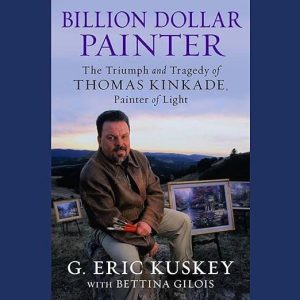
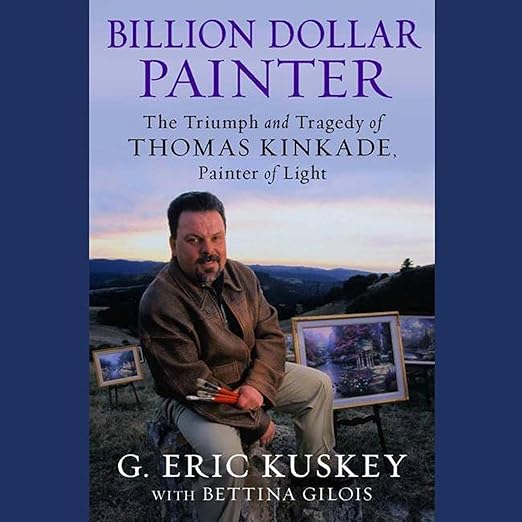
Thomas Kinkade's name still appears on framed prints in American living rooms, churches, and thrift stores, one out of every 20 homes in the country owned one of his prints at the height of his reach in the 1990s, and yet the full story of how a man who painted babbling brooks and glowing cottages built and destroyed a billion-dollar empire has never been told by someone who was actually there. This audiobook, Billion Dollar Painter, narrated by Jim Meskimen across 9 hours and 29 minutes, is G. Eric Kuskey's account of his time as a colleague and close friend of Kinkade, and what emerges is genuinely stranger and more affecting than the punchline version of the story.
Kuskey's position as insider with enough distance to see clearly is the book's central asset. He knew Kinkade personally, understood the business from the inside, and was close enough to the end of the artist's life in 2012 to have watched the collapse at proximity. That combination of access and honesty is rare in books about figures who have become cultural shorthand, and Kuskey largely earns the trust it demands.
Capitalism, Faith, and Human Weakness in Collision
What this audiobook understands that most treatments of Kinkade miss is that his story is not reducible to hypocrisy or fraud. The business that collapsed amid fraud accusations in 2006 was built by three people who started with nothing, Kinkade himself, a former vacuum-cleaner salesman, and an ambitious junior accountant, and it reached the scale it did partly because the art genuinely connected with people. One might argue about the aesthetic merits of Kinkade's rural churches and idyllic cottages, and critics did, loudly. But Kuskey is honest about the fact that the connection was real. One reviewer frames the book as an account of capitalism, faith, and human weakness in collision, and that framing is accurate: Kuskey does not champion any of those forces or condemn them wholesale, which is what gives the narrative moral texture.
The faith dimension is load-bearing and treated seriously. Kinkade believed, sincerely, according to Kuskey, that his artwork was a spiritual force capable of comforting the afflicted and healing the sick. This was not branding language; it was a genuine theology of aesthetics, however strained. The tragedy of the collapse is not simply that the business failed. It is that the man who believed most fervently in the work was ultimately destroyed by the machine built around it. Addiction and grief are the mechanisms, but they operate inside a framework Kinkade himself constructed.
Meskimen Finds Warmth Without Softening Hard Parts
Jim Meskimen is a skilled narrator who excels at conversational prose, and Kuskey's book has the rhythm of a long personal account rather than an indictment. Meskimen finds the warmth in the material without softening the hard parts. The sections covering Kinkade's physical and psychological deterioration are handled with appropriate gravity, and the business story sequences, the NYSE listing, the gallery franchising model, the licensing explosion, move with enough clarity that listeners without financial backgrounds will not get lost.
The book's 9 hours and 29 minutes is close to ideal for this kind of narrative. It is long enough to build a real portrait of all three principals, Kinkade, the salesman, the accountant, without padding the story into repetition. The Carmel, California, sidewalk art beginning and the five-house Monte Sereno compound are useful bookends, and Kuskey navigates between them without losing the human dimension in the business history or vice versa.
Structural Incentives Toward Fraud, Even Unintended
Watch how Kuskey handles the distinction between what Kinkade said publicly and what he did privately. The book does not dwell prurient on personal failures, but it is honest about the gap between the Christian artist persona and the man's actual behavior, including well-documented incidents at gallery events reported publicly at the time. Kuskey is not seeking to destroy the subject's legacy; he is trying to understand how such a gap could exist in someone who appears to have been, on some level, sincere. That inquiry is the most interesting thread running through the book, and it pays off in the final chapters.
The business mechanics of the gallery franchise model are worth following carefully. Kuskey explains how galleries purchased the right to sell Kinkade prints and why that model created structural incentives toward fraud even when the people running it were not originally intending it. It is a genuinely instructive case study in how financial ambition and sincere belief can compound each other into something neither party would have chosen if they had seen it clearly.
Mourning and Accountability in the Final Chapters
It is also worth noting that Kuskey has not written this book from a safe temporal distance. He is processing real grief alongside the historical analysis, and that combination of mourning and accountability gives the final chapters an emotional weight that straight business biographies rarely achieve. The Kinkade who emerges from the last pages is neither the con artist of the harshest critical accounts nor the holy innocent of his most devoted collectors, but something harder to categorize and more interesting than either.
Neither Hero, Villain, Nor Easy Category
Listeners interested in art world economics and the commodification of culture will find substantial material here that goes beyond the Kinkade-specific story. Business readers drawn to case studies of charismatic founders and the companies they build and break will recognize familiar patterns in new form. Fans of narrative nonfiction about figures who occupy the American cultural imagination in ways that resist easy categorization, neither hero nor villain but something more complicated, will find this audiobook genuinely satisfying. Those looking purely for an art-critical takedown should look elsewhere; Kuskey is not interested in that project, and the book is stronger for it.
Do I need any interest in Thomas Kinkade's art to enjoy this audiobook?
No. The book uses Kinkade's art career as scaffolding for a much larger story about faith, commerce, and personal collapse. Knowledge of or strong feelings about his paintings are not required.
Is this audiobook balanced in how it treats Kinkade, or does it read as a takedown?
Kuskey was a friend and colleague of Kinkade, and that relationship shapes the book's tone. He is honest about failures and fraud, but he is genuinely trying to understand rather than prosecute. Most listeners describe it as fair and candid.
Is this audiobook appropriate for listeners interested primarily in the business side of art, or is it mostly about Kinkade's personal life?
Both strands are developed substantively. The NYSE listing, gallery franchise model, and licensing business get real attention alongside Kinkade's faith, addiction, and personal relationships. It is a genuine dual biography of the man and the company.