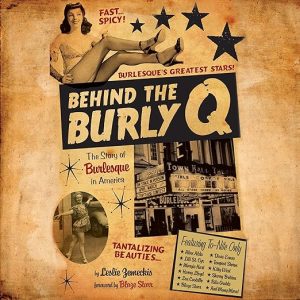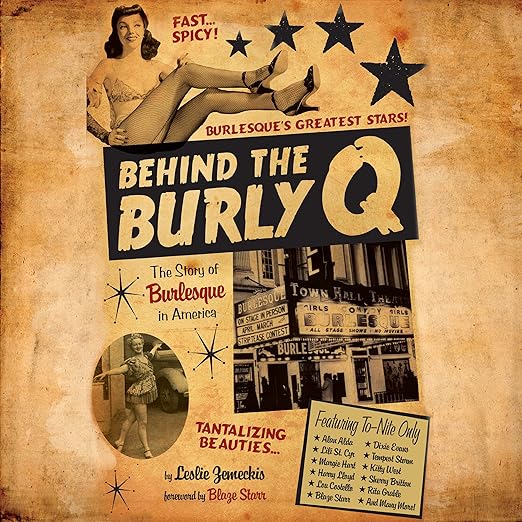
Jack Ruby, Robert Kennedy, and Abbott and Costello share space in the same sentence of this audiobook's synopsis, and that strange juxtaposition is the whole argument for why Behind the Burly Q matters as cultural history rather than nostalgia. Leslie Zemeckis built this oral history out of the same interviews that fueled her documentary of the same name, tracking down former musicians, strippers, novelty acts, club owners, and historians willing to talk about American burlesque's golden age, many for the first time and, as it turned out, the last. Twelve hours of firsthand testimony from an entertainment form the history books mostly skipped is a genuinely unusual archive, and the audiobook format matters here: these are recorded voices remembering a performance art, read aloud rather than printed as a flat transcript.
Their Last, and Often Only, Interview
The urgency behind this project is real and worth sitting with. The synopsis notes plainly that 'many of the performers have since passed away, making this their last, and often only interview,' which turns Behind the Burly Q from an entertaining survey into something closer to a rescue operation: voices that would otherwise have vanished entirely from the historical record, preserved because Zemeckis got to them in time. That stakes-raising context changes how a listener sits with even the lighter, funnier anecdotes scattered through the book.
Burlesque gets treated here as genuinely load-bearing American cultural history rather than a footnote to vaudeville, and the synopsis's own framing backs that up: 'one of America's most popular forms of live entertainment in the first half of the 20th century,' entertaining 'thousands of paying customers every night of the week' at its peak. The book's mission, correcting a legacy 'often vilified and misunderstood, left out of the history books,' gives the individual performer stories a larger argument to serve.
Giving the Comedians Their Due Too
The synopsis takes care to note the performers include 'the women (and men!) who lived it,' a small parenthetical correction to the assumption that burlesque history is purely a story about women being looked at. Male comedians, novelty acts, and club owners get equal weight in the interview archive, and Tony's review specifically credits the book for giving the comedians their due, the kind of correction an oral history is uniquely positioned to make simply by letting a fuller range of voices speak for themselves.
Burlesque's mainstream reach at its peak, confirmed directly in the synopsis's own account of nightly ticket sales, makes its near-total absence from mainstream American entertainment histories genuinely strange, and this book's corrective ambition, restoring a wildly popular art form to its rightful place in the record, gives even its lighter anecdotes a real sense of purpose.
Farhat Differentiates Dozens of Distinct Voices
Julia Farhat narrates a genuinely demanding assignment: an oral history built from dozens of distinct interview subjects, each with their own speech pattern and personality, requires real differentiation to keep a twelve-hour listen from blurring into a single narrative voice. Tony's review praises the book for having 'extensive interviews with the top stars of this legendary age' and for making sure to give 'the comedians their due' alongside the more famous dancers, range that a narrator has to carry convincingly across many distinct testimonies.
Sam Eckhart's review adds a firsthand dimension few entertainment histories get to include: attending real burlesque shows at Dayton, Ohio's Mayfair Burlesk Theater as a high schooler in the early 1960s, and knowing even then, in the reviewer's words, that 'I was seeing something special.' Red Ryder's review recalls a similar personal brush with the era, sneaking into the Florida State Fair's Royal American girly show at twelve. These aren't just reviews of a book; they're a second layer of oral history happening in the review section itself.
The Jack Ruby connection named in the synopsis isn't a random flourish: Ruby, later infamous for killing Lee Harvey Oswald, ran nightclubs in Dallas before that, part of the same seedy, semi-legitimate entertainment economy burlesque occupied nationally. That kind of unexpected historical thread, a form of entertainment brushing up against major twentieth-century American history from an unglamorous angle, is exactly what makes an oral history like this valuable beyond nostalgia, and it's the sort of connection a single-subject biography would likely never make room for.
Beyond the specific named theaters and stars, the assembled testimonies capture a wider geography than a single-city history could: touring fair circuits, small-town stops, and regional theaters alongside the big venues that usually dominate entertainment histories, giving the book a genuinely national scope rather than a coastal-cities-only account.
Police Harassment Alongside the Glamorous Life
Tony's review notes the book covers 'the pressures of police and political harassment' alongside 'the glamorous life' performers led, and that pairing is worth knowing going in: this isn't a glamorized nostalgia piece. Burlesque's real legal and social conflicts, obscenity crackdowns, moral panics, and the precarious economics of touring shows, get real attention alongside the spectacle, which gives the book more substance than a simple photo-book history would, but also means it doesn't shy from the form's harder edges.
The oral-history structure itself is worth setting expectations around: this is a mosaic of individual testimonies assembled around a theme rather than a single chronological narrative marching cleanly from origin to decline. Listeners used to traditional biography's tidy through-line should recalibrate; the book's power comes from accumulation, dozens of voices circling the same golden age from different angles, not from a single unbroken storyline.
Zemeckis approaches this material as a working documentarian first, and that background shows in the structure: this reads like a film's worth of raw interview footage transcribed and organized by theme rather than filtered through a historian's more distant analytical voice. That gives the book real immediacy, listeners are hearing performers' own words and cadences rather than a scholar's paraphrase of them, though it also means the book asks listeners to do slightly more of their own synthesizing than a traditional narrative history would.
A 4.3 Rating Beyond Burlesque Completists
Entertainment history buffs, documentary fans who appreciate primary-source storytelling, and anyone curious about the vaudeville-adjacent Americana that shaped twentieth-century popular culture are all well served here. The 4.3 rating across 215 reviews suggests the book has built real credibility beyond burlesque completists specifically, reaching listeners drawn in by the oral-history format itself.
The mosaic structure won't suit every listener equally; those wanting a tidy, chronological march through burlesque's rise and fall, rather than dozens of individual voices circling the same era from different vantage points, may find the assembled-testimony format less satisfying than a traditional single-author narrative history would be.
Frequently Asked Questions
Does this audiobook connect to Leslie Zemeckis's documentary of the same name?
Yes. The book grew directly out of the interviews she conducted for her documentary, expanding on that same archive of firsthand performer testimony in longer form.
How does the narrator handle the many different interview subjects in this audiobook?
Julia Farhat narrates the full oral history, which requires real differentiation across dozens of distinct interview voices spanning musicians, dancers, club owners, and historians.