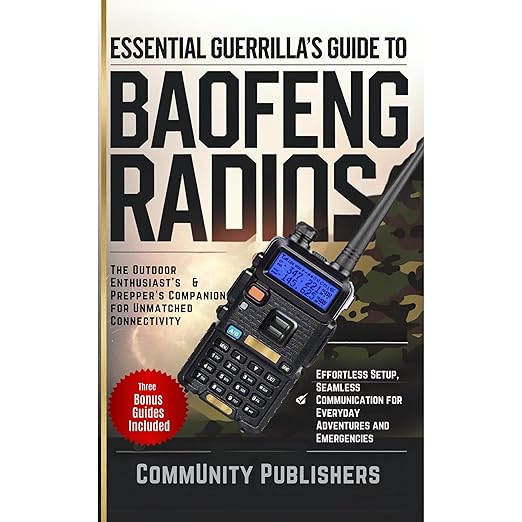
Mastering a Baofeng radio is, for most people who own one, a project that starts with enthusiasm and stalls somewhere around the programming menu. The gap between owning the device and actually knowing how to use it in the field is exactly the territory that this audiobook from CommUnity Publishers aims to cover. The narrator here is Virtual Voice, an AI-generated voice, which is worth noting upfront: the delivery is clear and functional but lacks the conversational warmth that a human narrator brings to practical guides. For reference listening, it works. For background listening while you are actually handling the device, it works even better. It is an audiobook format best treated as an audio reference manual rather than an immersive listening experience.
The Baofeng UV-5R and its variants have developed a significant following among outdoor enthusiasts, preppers, amateur radio operators, and anyone who needs reliable off-grid communication. The appeal is real: these devices offer substantial range and capability at a price point that makes professional radio equipment look absurd by comparison. The barrier is their complexity. Programming a Baofeng manually, without software assistance, is a process that defeats a significant number of users. This guide exists to address that barrier directly.
Virtual Voice narration handles the technical content of this audiobook with consistency and reasonable pacing. The guide's structure moves from unboxing through programming, antenna optimization, FCC regulations, troubleshooting, battery management, and emergency communication protocols. Each section is self-contained enough that listeners can pause and return without losing the thread. For a technical guide, that modular structure is well-suited to the audio format. One reviewer described it as 'head and shoulders above the rest' among Baofeng guides, and the specificity is noticeable: the book covers cross-band repeating, duplex modes, and emergency protocols at a level of detail that more introductory guides skip.
The Strengths
The practical value here is specific and real. Reviewers have noted chapters covering step-by-step setup from box to operational, antenna selection and optimization for maximum range, FCC licensing requirements and legal operation guidelines, common troubleshooting scenarios, battery conservation strategies for extended field use, and emergency communication protocols. For preppers and outdoor enthusiasts who have been operating their Baofeng radios below full capability because the manual is impenetrable, the audiobook format offers a significant advantage: you can listen while you work through the setup procedures, pausing and rewinding at natural stopping points.
One reviewer who came to the guide with no Baofeng knowledge described it as 'a very good introduction' that covered licensing, programming, antenna options, and different device models. That breadth is appropriate for the guide's stated audience, which ranges from complete novices to users who want to optimize radios they are already operating.
Before You Commit to Baofeng Radio Essential Guerrilla's Guide
The audiobook format has natural limitations for technical content that requires visual reference. Programming steps that are easy to follow in print with a diagram become harder to track in audio when you are not actively doing them alongside the guide. The book is strongest as a conceptual orientation and weakest when it gets into step-by-step programming sequences where screen menus are described rather than shown. Listeners who plan to use this guide for active programming will get the most value from pausing and consulting the device at each step, rather than listening straight through.
The AI narration, while functional, does not modulate emphasis in the way a human narrator would, which occasionally makes it difficult to distinguish key technical points from transitional content. This is a known limitation of Virtual Voice production and is not specific to this title.
The guide's coverage of emergency communication protocols is one of its most useful sections and one that distinguishes it from more casual operator guides. Zaichkowsky writes for scenarios where conventional communications infrastructure has failed, where knowing how to use your Baofeng for emergency mesh networking or coordinating with local emergency management becomes genuinely important. That section treats emergency preparedness not as paranoia but as responsible civic engagement, and it covers specific protocols and frequencies that the casual user manual does not address. For preppers and outdoor enthusiasts who see communication reliability as a safety fundamental rather than a hobby, this section alone justifies the audiobook's runtime.
Listeners who have used other Baofeng guides before picking up this one will find that the coverage of antenna selection and optimization goes substantially deeper than most competing titles. The guide covers specific antenna types and their trade-offs for different scenarios: high-gain directional antennas for fixed-location use, compact whip antennas for field portability, and the practical differences in performance that different antenna choices produce. For outdoor enthusiasts who have been operating with the stock antenna because no one has explained clearly why upgrading matters, this section provides the conceptual foundation for a meaningful equipment decision.
Recommended For
The ideal listener is someone who owns or plans to own a Baofeng radio and wants a practical orientation to its capabilities before diving into the device manual. Preppers who need reliable emergency communication will find the emergency protocol sections directly useful. Outdoor enthusiasts who have struggled with the programming interface will get genuine value from the troubleshooting and setup content. Amateur radio operators who already have their licenses and know the regulatory landscape may find some sections overly introductory, but the antenna and technical optimization chapters are substantive enough to offer value beyond the basics. Complete beginners should supplement this audiobook with visual resources for the programming-specific content.
Questions Listeners Ask
How well does the audiobook format work for technical radio programming content?
It works best for conceptual orientation and less well for step-by-step programming sequences where you need to follow screen menus. Listeners doing active programming will get the most value by pausing the audiobook and working through each step with the device in hand.
Is Virtual Voice narration a significant drawback for this audiobook's content?
For reference listening, no. The narration is clear and consistent, and the modular chapter structure allows easy pausing and rewinding. The limitation is that AI narration does not modulate emphasis the way a human narrator would, which can make it harder to distinguish key points from transitional content in technically dense sections.