
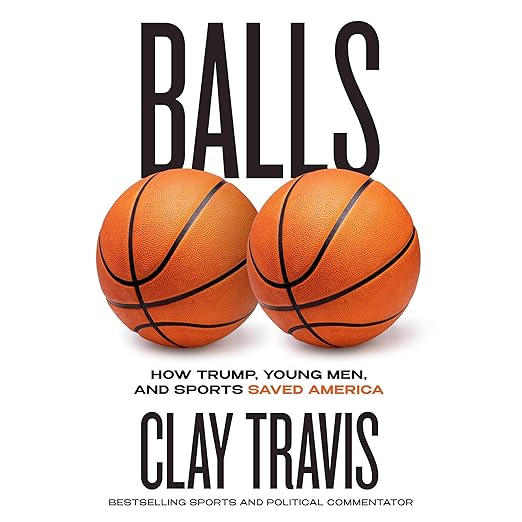
Clay Travis wrote Balls as a partisan argument, and the audiobook format, with Travis narrating himself, amplifies that quality considerably. Travis founded Outkick, co-hosts a major sports and politics radio program, and has conducted more than ten interviews with Donald Trump, including one on Air Force One. He is not a neutral analyst of the intersection between sports and politics. He is a participant in the conflict he is describing, and he narrates this audiobook with the candor and energy of someone who has been making this case for years on air. Understanding the craft of how this book works requires understanding who wrote and narrated it.
The central argument is straightforward: Trump won the 2024 election and prior elections in part through sports-adjacent culture war battles that the Democratic Party failed to understand or counter effectively. The Lia Thomas controversy in collegiate swimming, Bud Light's transgender marketing campaign and its commercial aftermath, ESPN's perceived ideological shift: Travis reads these as not separate incidents but as a pattern, and his argument is that Trump recognized the political valence of each moment and exploited it deliberately while Democratic leadership missed what was happening. The book covers Trump's 2024 red wave as the culmination of this strategy.
What We Made of It
The book's strength is in Travis's insider access to the sports-media-politics intersection he is describing. His sourcing on the Outkick and sports-radio side of the argument is genuine. He was present for many of the moments he describes, and his account of how specific controversies played within the sports media ecosystem is specific rather than speculative. The Trump interview material, including access on Air Force One, provides quotes and moments that are not available elsewhere in this form and that give the book a primary-source quality that distinguishes it from pundit commentary on the same events.
Travis's argument about male voters and the Democratic Party's relationship with masculinity is the book's most analytically substantive claim. The demographic data on young men and 2024 voting patterns is real, whatever one thinks of the cultural explanations Travis offers. His reading of those explanations is consistent with an Outkick editorial perspective: a conservative reading delivered without concession to counterarguments. Listeners looking for a measured academic treatment of male disaffection from the Democratic coalition will not find it here. Travis is making a case, not conducting a survey, and the distinction is audible throughout his self-narration.
At 8 hours and 4 minutes, the audiobook moves quickly. Travis is a broadcaster, and his prose has broadcast rhythm: declarative, propulsive, built for listening rather than reading. The self-narration turns the book into something closer to an extended podcast episode than a conventional nonfiction text, which is either exactly what the listener wants or a format mismatch depending on their tolerance for confident one-sidedness in audio form. Reviewers who are already within Travis's audience describe the book as informative and entertaining, providing context for a series of cultural moments they lived through but did not fully connect into a single argument.
The sports material is more specifically grounded than the political analysis. Travis's accounts of the Lia Thomas controversy, the specific economic dynamics of the Bud Light boycott, and ESPN's audience erosion are based on industry knowledge rather than pure ideology. Listeners with a background in sports media business will find the analysis in those sections more precise than comparable treatments of the same events in generalist political journalism, and that specificity is where the book adds the most value even for readers who do not share Travis's political conclusions.
What to Watch For in Balls
The book is not a balanced account of the 2024 election or the sports culture war. Travis says so explicitly, and the title and framing signal the argument clearly before the first chapter. Listeners who disagree with Travis's political orientation will find the book a useful window into a perspective that shaped a significant portion of the male electorate, but they will need to supply their own counterarguments. The text does not provide them, and Travis does not pretend otherwise. That intellectual honesty about what the book is designed to do is one of its more straightforward qualities.
The tone is combative throughout, which is consistent with Travis's public persona but may be tiring across 8 hours for listeners who are not already enthusiastic about the argument. The chapter-by-chapter structure covers specific cultural events, with each controversy becoming its own case study in Travis's larger argument. The book functions as a catalogue of sports-politics flashpoints from roughly 2020 through 2024, read from one clearly stated ideological perspective.
Best Suited For
Outkick readers and Clay Travis on-air fans will find the audiobook a comprehensive articulation of an argument they have been absorbing in shorter form for years. Sports fans who noticed a political shift in professional and collegiate athletics over the past several years and want a confident explanation of what happened from a conservative perspective will find this book satisfying and specific in its industry detail.
Listeners who want a politically neutral account of the intersection between sports media and electoral politics should look elsewhere. That book has not yet been written with this level of insider access to one side of the argument. Balls is a partisan document narrated with broadcast energy by its author, and its value is precisely that clarity of position and the access to events that position provided. It does not try to be more than it is, and for its intended audience, that is recommendation enough.
Good to Know
Does Clay Travis narrate the Balls audiobook himself?
Yes. Travis narrates the entire 8-hour-and-4-minute audiobook. As the founder of Outkick and a longtime sports and politics broadcaster, his self-narration gives the book the quality of an extended broadcast argument rather than a conventional nonfiction reading. The format suits the combative, first-person content throughout.
Is this audiobook a fair-minded analysis of sports and politics, or is it openly partisan?
Balls is openly partisan. Travis argues a specific position, that Trump exploited the sports culture war to win male voters and that the Democratic Party failed to understand the dynamic, and he makes that case without presenting counterarguments. Reviewers both within and outside his existing audience acknowledge the book's explicit and unapologetic ideological perspective.
What specific sports controversies does this audiobook cover?
Travis covers the Lia Thomas transgender-athlete controversy in collegiate swimming, the Bud Light marketing campaign and subsequent boycott, ESPN's perceived ideological shift and its audience consequences, and the cultural dynamics around Trump's 2024 campaign events. Each controversy is presented as a case study in the book's larger argument about male voters and the Democratic Party.
Who is the target audience for this audiobook beyond existing Outkick fans?
Sports fans who noticed a political shift in professional and collegiate athletics over the past several years and want a specific, inside-industry account of how it happened will find the book informative regardless of their politics. Listeners interested in the demographic question of young men and electoral behavior will find Travis's argument a primary-source perspective on one influential school of thought about the 2024 results.







