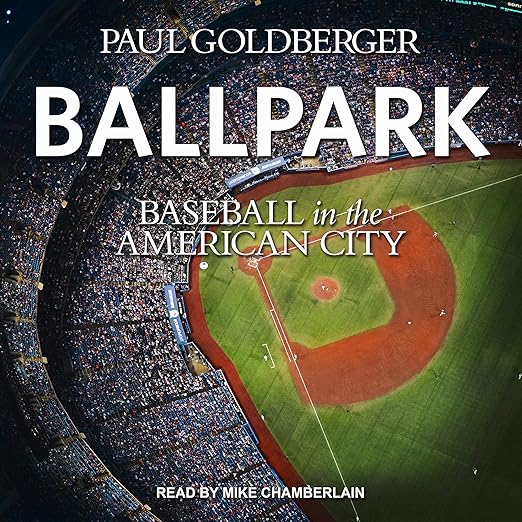
The Short Version
- Narrator: Mike Chamberlain's attentive delivery suits Goldberger's blend of narrative history and architectural criticism.
- Subjects: stadium architecture, urban history, class and design.
- Tone: Opinionated, dense, and quietly passionate.
- Bottom line: A rewarding listen for anyone curious about cities, not just baseball.
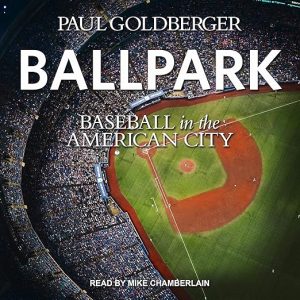
Union Grounds in Brooklyn was, in Paul Goldberger's own memorable description, 'a saloon in the open air,' and that image sets the tone for this entire audiobook: ballparks as genuine architecture, shaped by and shaping the American cities around them, not just backdrops for the game itself. Goldberger, a Pulitzer Prize winning architecture critic, traces the form from those rough 1800s corrals through mourned early parks like Detroit's Tiger Stadium, into the much-maligned concrete stadiums of the 1950s and 60s, and finally to Camden Yards and the design revolution it kicked off.
Grandstands and Bleachers Encoded Class Directly
What elevates this above a straightforward stadium-by-stadium survey is Goldberger's insistence on reading ballpark design as a mirror of broader social change. The earliest parks physically separated bleacher seating for the working class from grandstand seating for the middle class, encoding Victorian-era class distinctions directly into architecture; the featureless multipurpose concrete stadiums of the postwar decades reflected television's growing dominance over the in-person experience. Goldberger builds a genuinely persuasive argument that American urban history can be read through where and how cities chose to build their ballparks.
The book's real momentum comes from Goldberger's clear point of view: this is architectural criticism, not a neutral survey, and he has strong opinions about which eras got it right. One reviewer specifically praises this willingness to take a stance, noting how it connects specific ballpark design choices to bigger cultural trends rather than cataloging facts neutrally. A later chapter takes on the proposed, ultimately unbuilt Oakland waterfront ballpark at Howard Terminal, a speculative inclusion one reviewer flags as slightly dated now that the project has fallen through, though it still works as a case study in how modern ballpark planning actually unfolds.
Camden Yards Reversed Decades of Orthodoxy
Camden Yards gets particular attention as the hinge point of the whole book, and Goldberger is specific about what made it different: rather than another concrete multipurpose bowl, its designers deliberately referenced older, asymmetrical urban ballparks, brick facades, quirky outfield dimensions, a warehouse incorporated directly into the outfield view, reversing decades of stadium design orthodoxy almost overnight and triggering a wave of imitators across the league.
The book also does not shy away from the financing side of stadium construction, who actually pays for these buildings and who benefits, a question that runs underneath the architectural history throughout and gives the book real relevance to ongoing public debates about using tax dollars to fund privately owned sports franchises' stadiums.
The book's one-word title carries a small built-in pun worth noticing: a ballpark is both the specific physical structure the book studies and, in everyday usage, shorthand for a rough estimate, and Goldberger's own approach throughout leans into exactly that looseness, treating architectural history as a discipline of informed approximation and interpretation rather than a field of precise, singular answers.
Chamberlain Balances Narrative With Analytical Asides
Mike Chamberlain's narration suits architectural criticism specifically well: his delivery carries the same attentive, research-grounded intelligence that serves dense nonfiction, moving smoothly between historical narrative passages and Goldberger's more analytical, opinionated asides without losing momentum across an eleven-and-a-half-hour runtime. A reviewer calls every story well told in a fun and informative way, and Chamberlain's pacing is a real part of why that description holds up in the audiobook specifically.
The book also rewards listeners who already care about baseball as a sport, but it does not require that affection to land; the through-line is genuinely urban and architectural history, with baseball as the specific lens. Goldberger connects ballpark design to the rise of public transportation, changes in building materials and engineering, and shifting ideas about what a shared civic space should feel like, giving this real crossover appeal beyond the strict sports-history audience its genre tag suggests.
Goldberger's decades of architecture criticism, including his tenure covering the built environment for major national publications, give him a vocabulary for describing stadium design that goes well beyond typical sports journalism; a listener gets the same analytical rigor here that Goldberger would apply to a skyscraper or a museum, pointed instead at bleachers and outfield walls.
For listeners who have visited multiple ballparks in person, the book offers the specific pleasure of retroactively understanding design choices experienced firsthand but never fully explained, why a particular sightline feels cramped, why a concourse feels either welcoming or like a shopping mall, in ways that deepen an already-existing personal connection to these specific places.
A Snapshot of a Plan That Never Happened
At over eleven hours, this is a substantial commitment, and the book moves through more than 150 years of history with real density; listeners expecting a breezy nostalgia trip through beloved old ballparks should know this leans more academic and argument-driven than that framing implies, closer to a work of criticism than a coffee-table retrospective.
The speculative Howard Terminal chapter, covering a ballpark project that has since been abandoned, is worth flagging directly: it was current and relevant at publication but now reads as a snapshot of a plan that never happened, which one reviewer notes explicitly. That does not undercut the book's larger arguments, but it is a reminder that any book this engaged with ongoing stadium development will have a shelf life on its most current-events chapter.
Fenway and Wrigley as Accidental Case Studies
Survivors like Fenway Park and Wrigley Field, ballparks that predate almost everything else still in regular use, get treated less as nostalgia pieces and more as accidental case studies in what happens when a stadium is never fully modernized; Goldberger uses their continued popularity to make a pointed argument about what fans actually value, regardless of what stadium planners of any given era assumed they wanted.
The eleven-and-a-half-hour runtime rewards patience over multiple sittings rather than a single long drive or flight, given how much specific architectural vocabulary and historical detail accumulates across more than 150 years of building history.
Game Statistics Alone Won't Be Enough
Baseball fans with a genuine curiosity about architecture and urban history, and architecture readers with even a passing interest in baseball, are both well served here; Goldberger's crossover appeal is real, and Chamberlain's narration makes the eleven-plus hours feel purposeful rather than padded. Anyone who has ever wondered why Camden Yards felt so different from the stadium it replaced will get a satisfying, well-argued answer.
Urban planners and city officials weighing a new stadium proposal in their own city would find genuine, practical value in the book's case studies of what public investment in a ballpark has historically delivered, and failed to deliver, for the surrounding neighborhood.
Skip it if the interest is purely in game statistics, player history, or team lore with no patience for architecture and urban planning discussion; this book stays focused on the buildings and the cities around them, with the game itself functioning more as context than subject.
Questions Listeners Ask
Does this audiobook focus more on baseball history or architecture?
Architecture, with baseball as the specific lens. Paul Goldberger reads ballpark design as a mirror of broader American urban and social history rather than focusing on games or players.
Is the chapter on the Oakland waterfront ballpark still relevant to this audiobook?
Less so now. That Howard Terminal project has since been abandoned, and one reviewer flags the chapter as a speculative snapshot rather than current information.
How does Mike Chamberlain's narration handle this audiobook's more academic, argument-driven sections?
Well. His attentive, research-grounded delivery moves smoothly between historical narrative and Goldberger's more opinionated analytical passages across the eleven-plus hours.
Do I need to be a baseball fan to enjoy this audiobook?
Not really. The book's real subject is urban and architectural history, and Goldberger's crossover appeal reaches listeners interested in cities and design well beyond the sports-history audience.