Before You Press Play
- Read by: Chris Orwig narrates his own material, and the warmth reviewers credit him with as a teacher comes through directly in his delivery.
- At its heart: portrait photography technique, creative connection, personal growth through craft
- Vibe: Warm and reflective, part technical manual and part creative philosophy
- Short version: A rewarding listen for photographers ready to think as much about connection as camera settings, best paired with visual reference material.
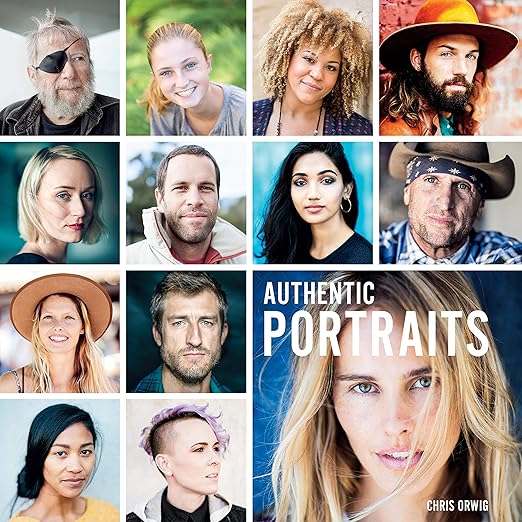
Thirty-three short chapters across seven parts make up Chris Orwig's audiobook on portrait photography, and the structure itself tells you something before you've even started: this is built for repeat reference, not a single linear sit-down listen. Orwig, who narrates his own material, spends the earliest chapters on mindset and connection before he ever gets to camera settings, which tracks with reviewer Dan Clifton's description of a book that 'digs deep into what it mean to make authentic portraits by looking for the light,' both the literal kind and the more figurative kind Orwig keeps circling back to throughout.
Chapter Titles Like Wabi Sabi and the Paradox
The book's seven-part structure moves from philosophy to craft and back again rather than front-loading technique the way a lot of photography instruction defaults to. Part one lays the foundation, with chapters like 'Beneath the Surface' and 'The Paradox of Portraiture,' before part three finally gets into lens choice, exposure settings, and natural light technique. By the time Orwig reaches part five's material on posing and directing subjects, the earlier grounding actually pays off: his practical advice about connecting with a subject reads less like generic people-skills tips and more like the direct application of the book's opening argument, that genuine curiosity is itself a technical skill worth developing.
Reviewer L. Magane-Goyer, a longtime fan who owns Orwig's full catalog, describes a personal struggle around moving away from film photography, and frames this book as speaking to that kind of transition directly rather than just camera settings. That tracks with how Orwig structures the material generally: technical chapters on gear and exposure sit alongside chapters explicitly about personal growth and creative identity, treating the photographer's own development as inseparable from the pictures they end up taking. It's an unusually holistic approach for a book that still delivers plenty of concrete, actionable technical instruction along the way.
A few chapter titles are worth pausing on individually, since they signal how far this book reaches beyond conventional photography instruction. 'Wabi Sabi' borrows a Japanese aesthetic concept centered on beauty in imperfection and transience, applied here to portrait work rather than ceramics or architecture, its more traditional home. 'Thread' and 'Silence' function similarly, single-word chapter titles pointing toward concepts, connection, restraint, patience, that most technical photography manuals wouldn't bother naming as distinct skills worth their own chapter. That vocabulary choice throughout the table of contents previews the book's actual ambition accurately: treating portraiture as much a practice in attention as a technical craft.
Orwig's Own Voice Turns Teaching Into Demonstration
Because Orwig is teaching a craft that's ultimately about connection and presence, not just information, his own narration functions as something closer to a demonstration than a straight reading. A portrait photography teacher whose voice comes across as stiff or disconnected would undercut his own central argument in real time; Orwig's narration instead carries the same warmth and directness reviewer Rafael attributes to him as a teacher, calling him 'a great teacher' who helps photographers build a story rather than just technically correct images. Hearing that teaching quality in his actual voice, rather than filtered through a hired narrator's interpretation, adds real credibility to material that's explicitly about the value of authentic personal connection.
Rafael's review makes a point worth expanding on: that this book is 'not limited only to photographers,' with videographers and other artists finding real value in it too. Given how much of the material is about connection, curiosity, and creative courage rather than camera-specific mechanics, that broader claim holds up structurally; entire chapters, 'Courage,' 'Inner Art,' 'Gratitude,' address creative practice generally rather than portraiture specifically. The book even closes with its own FAQ chapter and a final section called 'The Journey Ahead,' treating the material less like a finished manual and more like an ongoing practice listeners are meant to return to.
Composition and Posing Still Need Your Eyes
The obvious tension in any audio format for a photography book is the visual gap: chapters on composition, natural light principles, and posing technique are inherently visual subjects, and Orwig can describe a lighting setup or a compositional choice in words, but he can't show it. Listeners who learn best by seeing side-by-side example images, the kind a print or ebook edition of this material would include, should treat the audiobook as a strong conceptual companion rather than a full replacement for visual reference material, particularly for the more technical chapters on exposure settings and lens choice.
Because the earlier chapters spend real time on mindset and personal development before reaching camera mechanics, listeners hoping to jump straight to technical instruction may find the pacing slower than expected at first. That's a deliberate structural choice, not padding, but it does mean the audiobook rewards a front-to-back listen more than a skip-to-the-technique approach; Orwig's practical advice in later parts leans on groundwork laid earlier, so pulling chapters out of sequence loses some of the connective argument holding the whole book together.
At seven hours and thirty-seven minutes spread across thirty-three chapters, individual chapters run short, closer to conversational segments than long-form essays, which suits the audiobook format well for listeners who want to absorb one focused idea per sitting rather than committing to long unbroken stretches. That pacing also makes the book easy to use as an ongoing reference, returning to a specific chapter on natural light or a specific chapter on posing without needing to reorient within a longer, more continuous argument the way a single-narrative nonfiction book would require.
Videographers Belong Here Too, Per Rafael's Review
Working and aspiring portrait photographers are the most direct audience, but per Rafael's review, videographers and other visual artists will find real value too, since so much of the material addresses connection and creative courage rather than camera-specific mechanics alone. Listeners in the middle of their own creative transition, the kind L. Magane-Goyer describes around leaving film behind, may find this lands as much as a personal development book as a technical one, which seems to be exactly the dual purpose Orwig intended.
Step-by-step visual demonstration is simply not available in this format, so anyone who learns technique primarily through side-by-side example photos should pair this listen with a print or ebook edition for the more visual chapters. Photographers looking for pure gear reviews or equipment comparisons should also look elsewhere, since Orwig's focus stays firmly on connection, light, and creative philosophy rather than product-by-product technical breakdowns.